Organization: MCAA

FW Spencer Tackles Transportation Challenge with Anaco Husky Couplings

Prefabricating Plumbing for San Francisco 49ers’ New Stadium Cuts Costs in Half

Prefabricating plumbing systems offsite can save time and money, but getting those systems to the jobsite poses its own challenges. For Levi’s Stadium in Santa Clara, CA—future home of the NFL’s San Francisco 49ers—FW Spencer and Son, Inc., had to transport the high-capacity, back-to-back gang toilet systems that it had fabricated at its facility to the jobsite while maintaining a strong joint with a rigid seal. They chose Husky couplings from Anaco because they are designed to withstand joint movement while maintaining full joint integrity.

The Promise of Prefab
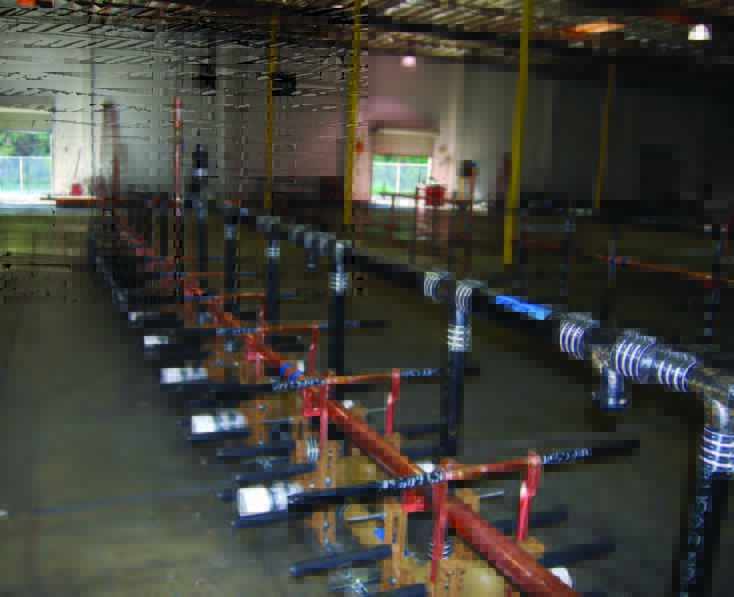
FW Spencer prefabricated the plumbing lines for the new Levi’s Stadium to save time and cut costs. Using Husky couplings from Anaco allowed them to air test the system at their facility and transport the complete system to the site without worrying about joint failure.

Offsite prefabrication for plumbing reduces overall project costs by cutting labor costs and increasing efficiency. In addition, it allows multiple trades to coordinate. By prefabricating plumbing systems, contractors can identify any potential problems before the field work begins, saving time and cutting costs as much as 50 percent.

“One of the driving factors in the rise of prefabricated plumbing systems is the ability to improve productivity,” said Kevin Coyne, vice president and chief estimator at FW Spencer. “Productivity is an important factor. By having the ability to control multiple elements of productivity, including project schedule, cost, safety, quality, and waste, it gives us a competitive edge in the marketplace.”

When joints fail on a jobsite, testing can be expensive and waste a lot of time in manhours. FW Spencer found that the Husky couplings all but eliminate the risk of a leak in the system and costly retesting.

Levi’s Stadium will have the capacity for 68,500 spectators and provide over 1,000 toilets and urinals. FW Spencer chose the Husky HD2000 and Husky SD4000 heavy-duty high-performance couplings by Anaco for the project because of their prefabricated plumbing trees. The rigidity and solid sealing qualities of Husky couplings allow them to withstand joint movement and maintain integrity. Their gaskets are molded from virgin Neoprene and have a unique rib design that provides multiple lines of defense against leakage. Their band-and-shield design is made from high-quality 304 stainless steel for maximum corrosion resistance and strength.

“By using the Husky Couplings by Anaco, we are able to air test the system at our manufacturing facility and then transport the complete plumbing systems to the building site without the worry that there would be joint failure. The Husky product is able to withstand the vigorous transportation movement from our factory to the installation site,” said Coyne. “It was a clear choice to use Husky that has had a reputation of producing high-performance couplings for over 30 years.”

Designed for Durability

Husky couplings are engineered to last through the lifetime of a building. They are able to withstand deflection caused by normal factors as well as extraordinary influences such as earthquakes. Husky high-performance, heavy-duty couplings are designed to withstand extreme forces, from the extended shield width to the additional stainless steel clamps, making them the ideal solution for critical projects, such as hospitals. Because of their design, they can tolerate movement and deflection far in excess of that anticipated in virtually any building application.

For more information, visit www.anaco-husky.com.

MCAA thanks The Wade Group, which includes Anaco, for being a benefactor of MCAA 2014.

U.S. Engineering Fast-Tracks Project Using Trimble Technology

Devastated by Tornado, Joplin, MO, to Get New Hospital in 2015

The new Mercy Hospital Joplin in Joplin, MO, is on schedule to open in 2015, thanks in part to efforts by U.S. Engineering. To meet the needs of this fast-track effort to replace the former St. John’s Mercy Regional Medical Center, destroyed on May 22, 2011, by an EF-5 tornado, U.S. Engineering used a host of Trimble solutions to establish one of the industry’s most efficient, accurate, and repeatable design-to-fabrication-to-installation workflows ever put in place on a hospital project.

Mercy, the sixth largest Catholic health care system in the U.S., initiated plans to build the new $335 million Mercy Hospital Joplin with a design-to-construction-to-commissioning goal of just three years. The decision was made early in the design phase to bring in the major MEP partners in a design-assist role, or modified integrated project delivery (IPD).

As part of the team, U.S. Engineering was contracted to handle the mechanical and plumbing design, fabrication, and installation of the entire project. Given the tight schedule and size and scope of the job, and the survey-accuracy positioning required for every component, U.S. Engineering knew it would have to draw on all of its technology expertise to keep the project on track.

Design to Fabrication

The new 875,000-square-foot Mercy Hospital Joplin, designed to withstand a powerful tornado, will include beds for surgical services, critical care, women’s and children’s services, behavioral health, and rehab. The bottom three floors of the structure will include hospital space along with a seven-story patient tower and a four-story clinic tower rising above the hospital space.

The facility also incorporates heavy duty mechanical, plumbing, and electrical systems. A new 30,000-square-foot central utility plant (CUP) will house emergency equipment and generators located away from the hospital with a strengthened exterior. Utility service access to the CUP from the hospital will be via a 450-foot underground tunnel.

The hospital mechanical and plumbing systems include the necessary components for fuel storage, air supply and return, chilled water, condenser water, HVAC, and plumbing, as well as piping for the tunnel between the hospital and the CUP.

For example, the CUP system includes three steam boilers and boiler feed pumps fed by a high-pressure 12” steam main. The CUP chilled water system includes three 2,000-ton chillers and three chilled water pumps with 24” supply and return mains from the chillers to the tunnel and chilled water return main from pumps to chillers. The CUP also has three cooling towers and three condenser water pumps connected by a 30-inch underground main.

For the project, all of the subcontractors were required to have 3D coordination capabilities. Because of the fast-track nature of the project, the goal was to use the detailed 3D model, which would include all MEP elements, to issue construction documents and facilitate a speedier start to fabrication concurrent to contract documents.

Jeff Kiblen, U.S. Engineering’s project manager of fabrication/3D coordination oversight for the mechanical and plumbing systems on the project, recalled, “We came on board in December 2011, and we were putting in deep underground by March 2012. Most projects of this scope and scale would require six weeks to complete drawings, issue documents, and finish detailing. Because of the modified IPD methodology, we had to be exponentially faster.”

Tech Support

The Mercy Hospital Joplin project broke ground in January 2012. Once the foundation and structural steel had been installed on the site and the first floor deck pour was complete, U.S. Engineering began installing the
hangers and sleeves for the piping and sheet metal components that would be routed overhead.

Kiblen noted, “This was our biggest challenge on the project. On any given day, we’d need to locate hundreds of points on a given floor, which spanned over 100,000 square feet. At the beginning of the project, we had three Trimble RTS robotic total stations to be used by our six-to-eight-member field team.” The pace of the project design, fabrication, and installation drove the need for more robotic total stations, which U.S. Engineering was able to rent from Trimble.

For the hospital project, the team used three Trimble RTS773 Robotic Total Stations connected to the Windows 7 Trimble Field Tablet and two Trimble RTS655 Robotic Total Stations connected to Nomad handheld units. The Trimble robotic total station units integrated radio frequency communication capability instead of Wi-Fi, ensuring no loss of signal.

“The military-grade radio has made a huge difference in connectivity and communication throughout the project,” said Kiblen.

Point-to-Point Precision

Once design of the mechanical and plumbing systems was coordinated and approved, U.S. Engineering used Trimble Point Creator for CAD and Revit (TPC) to create 2D and 3D field points within Revit. “This was the first time that we had used TPC to this magnitude. One great advantage of the tool is the ability to break systems up into more manageable sizes,” said Kiblen. “For instance, the mechanical systems might be broken up as third-floor patient tower exhaust, return and supply air.”

Once the team was ready to move into the field, the points were exported to a Trimble Field Link for MEP robotic total station to lay out the floor penetrations and hanger support embeds.

“Overall, it took us two to three weeks to complete each floor, including setting units, triangulating, and then positioning,” said Kiblen. “On average, the field layout person can routinely layout between 40 and 50 points an hour in good conditions.”

To date, U.S. Engineering has completed the design of the mechanical and plumbing systems and located in excess of 78,000 points for sleeves, embeds, floor penetrations, drains, and hanger supports. U.S. Engineering has also used the TPC and Trimble Field Link for MEP connection to verify as-constructed conditions with the architectural floor plan.

In terms of accuracy, U.S. Engineering is very satisfied. Kiblen said, “Any inaccuracy, especially with sleeve layouts in walls for plumbing, would have created significant fit problems. We needed to be within .25 inches or .5 inches because of the density of ceiling spaces and tight coordination with all the other systems. Thus far, we’ve realized incredible accuracy thanks to our 3D model-to-field workflow.”

The building exterior was completed in November 2013, and the CUP is scheduled to be operational by March 2014—just over two years after construction start, with the main structure expected to open in early 2015.

For more information, visit www.trimble.com.

A. D. Winston Speeds Processes, Increases Efficiency with Victaulic

Grooved Couplings Cut Installation Time from One Day to Under One Hour

To install the mechanical system for the International Gem Tower, one of New York City’s largest HVAC installations, A. D. Winston Corporation turned to Victaulic, a global manufacturer of mechanical grooved systems and services. Contractors at A. D. Winston are well versed in working with mechanical systems in the five boroughs of New York City. The firm specializes in hotel, institution, residential, commercial, and health facilities.

“We decided to institute the Victaulic system because of the significant cost savings,” said Salvatore Barbera, president of A. D. Winston. “This was our first experience using them (Victaulic) in this magnitude, but we were installing such a significant amount of piping and knew they would allow us to be more competitive in terms of speeding up the process and cost savings.”

3D Renderings Increase Efficiency

Since the early 20th century, New York City’s West 47th Street has been the diamond trade capital of the Americas, but it has remained virtually unchanged. In 2010, construction began on a state-of-the-art, 35-story tower that is the city’s only commercial condominium designed specifically for the diamond, gem, and jewelry trade, with retail and commercial space available on the top floor.

The 800,000-square-foot job includes two large mechanical rooms on the 6th and 34th floors. The 34th-floor mechanical room includes three cooling towers using a 20” pipe hookup to the heat exchanger and six pumps. The 6th-floor mechanical room contains the hot water system and secondary condenser water pumps for distribution to the air handling units. Thousands of feet of piping in a variety of sizes were used for the job, including 2.5”- through 14”-diameter pipe for the chilled water system and 2.5”- through 8”-diameter pipe on the condenser lines.

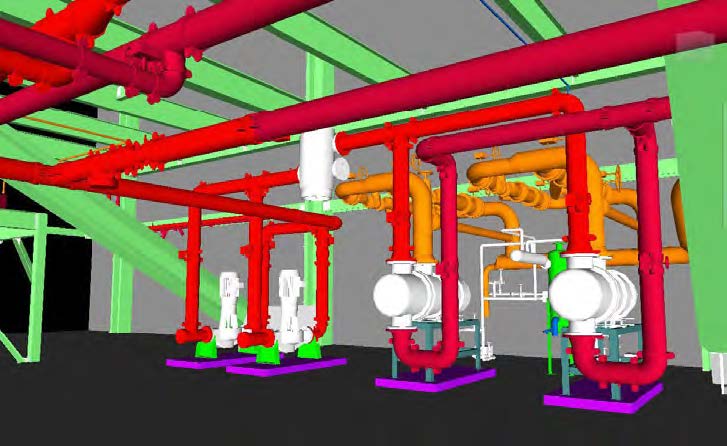
To simplify the installation in the two mechanical rooms, A. D. Winston solicited Victaulic’s Construction Piping Services to provide 3D isometric renderings that enabled them to coordinate efficiently and effectively with other trade groups (plumbers and electricians). With the renderings, A. D. Winston predetermined the lengths to cut the pipe to keep the installation moving. As a result of the isometric drawings, A. D. Winston was able to plan ahead and cut piping down so it could be transported efficiently using the elevator shaft instead of lifting 21’ lengths by crane.

By having the Victaulic Construction Piping Services team complete the 3D project renderings, A. D. Winston was also able to have their Victaulic materials bagged and tagged using the coordinated isometric drawings and bill of materials. The process increased organization and cleanliness of the job, which led to speed and efficiency on site.

“I’ve been enlightened about how Victaulic can help us be very, very competitive in the market to win more projects to keep more people working.”

— Salvatore Barbera, President, A. D. Winston

“The bag-and-tag system was like putting together a puzzle,” said Joe Casale, project manager at A. D. Winston, who oversaw the International Gem Tower project. “Everything came boxed and labeled according to where it needed to be installed, along with a bill of materials, which made for easy coordination. When you needed a part you’d just locate the box, look at the bill of materials, find it, and install it.”

Barbera estimates that Victaulic’s bag-and-tag process saved hundreds of field manhours that would otherwise have been spent on material handling and product logistics. Parts were packaged and shipped when and where they were needed.

Grooved Products Speed Installation

A. D. Winston used Victaulic grooved mechanical systems to complete its work on the International Gem Tower, one of New York City’s largest HVAC installations, in just 19 months.

When installing 14” pipe in the tight 6th-floor mechanical room, the contractor was surprised by the speed of installation. “I’ve been around AC and mechanical systems for 25 years and knew about Victaulic systems prior to this job,” said Casale. “I have seen Victaulic installed all over the city, I know that they work, and I’ve never had a problem. I knew they were a lot quicker than welding and that they provide a nice, clean, neat job, but I was surprised at how fast we could hang a 14” joint. We cut joining time in half, if not more, over welding the joints.”

According to Casale, in the past his team did not associate large-diameter piping with being quick to install. A 14” weld would typically require a full day to complete. However, since using Victaulic Advanced Grooved System (AGS) couplings, which start at 14” in diameter, Casale experienced firsthand the speed and ease of joining Victaulic’s large-diameter products. Casale’s 14” AGS couplings were installed in under one hour.

“Victaulic grooved mechanical systems are high-quality and very easy to use and just as effective as welding,” added Casale. “I’ve seen pressure tests on the couplings, and I was amazed at how much pressure they could handle. When you consider this, in addition to the fact that they are safer and more environmentally friendly, it’s a night-and-day difference.”

Environmental health and safety on the jobsite is always important, noted Casale. With welding, the team has to think about smoke and breathing it in, eye safety, the risk of fire and potential for burns, and increased electrical needs. Victaulic grooved mechanical systems eliminate all of those issues. Installation simply requires clamping the systems into place and tightening with two nuts using a hand ratchet. Additionally, A. D. Winston eliminated the costs associated with cornering off the area for fire safety and for an extra person on fire watch.

“I was surprised at how fast we could hang a 14” joint. We cut joining time in half, if not more, over welding the joints.”

— Joe Casale, Project Manager, A. D. Winston

With Victaulic grooved mechanical systems, A. D. Winston was able to complete the installation in 19 months. The company and the developer for the International Gem Tower are already exploring additional possibilities to incorporate Victaulic grooved mechanical systems on future jobs.

“I’m a welder and have not always been open to using grooved mechanical systems,” confessed Barbera. “But after this project, I’m sold. I’m a big fan. I think it’s a good product. I’ve been enlightened about how Victaulic can help us be very, very competitive in the market to win more projects to keep more people working. Victaulic helped give our client a good impression of A. D. Winston, and we intend to find new ways to work with Victaulic.”

For more information, visit www.victaulic.com.

Are You Ready for the January 4, 2014, Lead-Free Compliance Deadline?

Ferguson Offers Guidelines for a Smooth Transition to Lead-Free Products

The Reduction of Lead in Drinking Water Act (U.S. Public Law 111- 380) goes into effect nationwide on January 4, 2014. It reduces the allowable lead content of all products that come in contact with drinking water or water for human consumption. Beginning in January, no one can install or sell products that are not deemed lead free for water systems designated for human consumption, including cooking.

If you ignore the new law, you could be facing significant financial issues. Most notably, after January 4, 2014, there is no outlet for products that do not meet the lead law criteria. How the law will be applied to ongoing jobs—those that began before the new requirements went into effect—remains an open question. Some states have already enacted new requirements. Differences exist in the interpretation of which products fall within the scope of the law. States and localities must abide by the federal law but can be more stringent in their own regulations.

Because this legislation creates challenges and opportunities for both contractors and distributors, Ferguson offers these tips to help contractors check their readiness and prepare to comply with the new legislation.

1. Educate yourself and your associates as soon as possible. Talk to your legal counsel. “Lead free” is defined as having not more than a weighted average of .25% lead when used with respect to the wetted surfaces of pipes, pipe fittings, plumbing fittings, and fixtures. The U.S. Environmental Protection Agency (EPA) will oversee the new law. The EPA has not issued any official guidelines to date and is not likely to do so until after the law goes into effect. A draft list of frequently-asked questions (FAQs) is available; it is expected that the FAQs will be finalized and distributed within a few months. See the bottom of this article for education resources.

2. Inspect your existing stock immediately. Look in fabrication shops, jobsite trailers, storerooms, etc., for products that are not lead free and that are used exclusively in potable water. Items to inspect include but are not limited to lavatory faucets, kitchen faucets, brass supplies and stops, brass fittings, cast copper fittings, potable-only backflow products, and low-pressure brass/bronze valves. Anything not installed prior to January 4, 2014, that is used only in potable water cannot be returned to most manufacturers and will essentially be scrap. Some products that contain lead today can be used in other, nonpotable applications (e.g., brass/bronze valves) and will continue to be available in 2014. Work with your distributors and manufacturers now, before it is too late.

3. Talk to local plumbing inspectors about jobs in progress. Enforcement of the law will most likely be the responsibility of local plumbing inspectors. It is important to understand how they will treat jobs in progress. The law is clear about installation after the January 4, 2014, deadline, but what about the units, floors, and sections that are completed in 2013? Will completed portions of the project need to pass inspection prior to the end of the year, or does the whole project need to be lead free? So far, the EPA has been silent about inspection and is upholding the January 4, 2014, cutoff date for sales and installation.

4. Meet with your distributors. Discuss open projects, as there may be availability issues in late 2013 for both compliant and noncompliant products. Jointly decide on transition plans. Most lead-free products have a higher cost and sales price. Review open bids for future projects and consider whether rebidding is needed. Consider whether distributors have any material stocked for you for current projects. Working together minimizes risks for both parties.

5. Learn to identify the difference between lead-free and noncompliant products. There are no standards in place; marking and identification vary from product to product and manufacturer to manufacturer. Many valve manufacturers are changing the color of the handles and attaching tags to the valves. Warning labels are beginning to appear on noncompliant products. Most products that are certified have NSF 61 Annex G or NSF 372 certification on the packaging or the product itself. Talking with your distributors and significant manufacturer partners will help.

6. Understand the differences among lead-free products. Different manufacturers replaced the lead with different metal alloys. Lead-free products may have some subtle installation differences. Discuss the products with your distributors and manufacturers’ representatives. Consider obtaining samples of low-lead solder, flux, and valve components to see how they react differently from other products. Some products now require more heat and therefore more installation time. Estimators and field personnel will need education about the new product requirements.

7. Communicate, communicate, and communicate! This law is tough for the entire industry and we are all trying to limit risks. Working together at every stage, from vendor to installer, we can help each other through this transition.

Education Resources

For more information, visit www.ferguson.com.

Nelson Stark Saves 20 Percent on Labor Using Viega ProPress for Stainless

Cincinnati, OH, plumbing contractor Nelson Stark Company is installing thousands of feet of Viega ProPress systems for both copper and stainless steel in sizes ½” to 4” at Mercy Health—West Hospital, currently under construction on 60 acres in Ohio’s Green Township. It is the latest addition to the Mercy Health system, which has more than 80 network locations throughout Cincinnati.

“Mercy West is a brand new hospital being built on a very challenging schedule,” said Mike Wells, project superintendent for Nelson Stark. “The stainless has been nice from a cost savings standpoint. The cost savings is the main reason we went with Viega ProPress for stainless.” The Nelson Stark Company, founded in 1940 as Stark Plumbing, specializes in commercial and industrial plumbing, including hospital additions, research facility construction, commercial development, and public works.

Viega ProPress Saves Time and Money

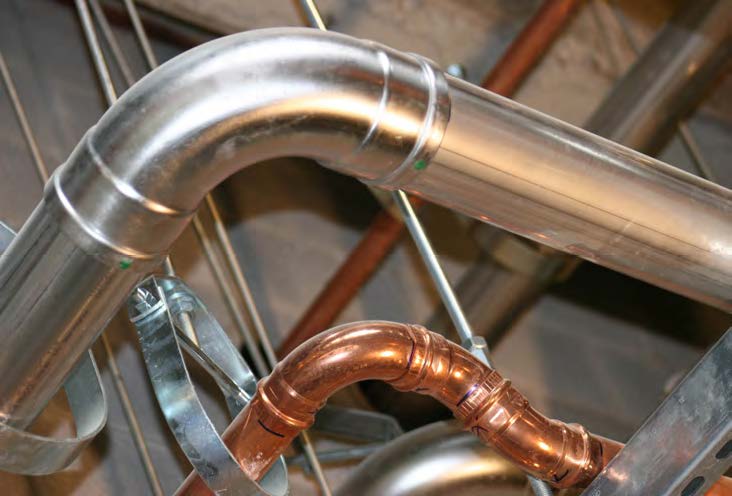
Plumbers installed a combination of Viega ProPress for stainless pipe and fittings and Viega ProPress copper fittings for the potable water system at the new 250-bed medical facility. Viega stainless products were chosen for the system mains because of the high-quality attributes of stainless, as well as its cost effectiveness in comparison with copper.

Wells appreciates the fast, secure installation that Viega press technology brings to the jobsite. He estimated that Viega ProPress systems saved his team at least 20 percent on labor.

“One area that Viega ProPress helps is that it’s obviously quicker from a labor standpoint,” Wells said. “We don’t have to worry about a fire watch or burn permits. Viega ProPress has helped tremendously in that aspect.”

Wells believes that the Mercy Health—West Hospital project will finish on schedule and his team will be able to provide their customers with a brand new hospital in just less than two years.

“You can truly see the time saved by using Viega ProPress. You can cut the pipe and have that water running at 10–20 percent and still have a successful tie-in.”

— Mike Wells, Project Superintendent, Nelson Stark

“We first heard about the Viega ProPress system approximately 10 years ago,” Wells said. “It saves us a tremendous amount of time and allows us to give the customer a good system in a short amount of time and save them some money. It has become a true asset to our company.”

Pre-Fab Speeds Installation Time

The plumbers on Nelson Stark’s staff worked side-by-side with other utility installers in a warehouse near the construction site, mapping out the materials for the utilities in each hospital corridor on large racks. The racks were later transported to the site and permanently installed floor by floor as the construction crews completed each level. The prefabricated rack used in construction saves time when building large facilities like the Mercy Health—West Hospital.

“Using Viega ProPress allowed us to complete the joint-effort installation with this modularly prepared, innovative type of construction,” said Jeff Read, vice president at Nelson Stark. “The installers put together each run of pipe for the 150’ corridors with the fittings but didn’t press them. Once it was sized and laid out correctly, they attached the fittings to the racks so that when the racks arrived at the hospital construction site, all our installers had to do was make the connections.”

While Nelson Stark has been installing Viega ProPress for copper for many years, this was their first opportunity to install Viega ProPress for stainless steel.

“Transitioning that copper to the stainless was a challenge for us because we’d never done it before,” Wells said. “It was nice to be able to call our rep, because he would walk us through being able to transition those fittings.”

Wells explained that in existing buildings, older valves don’t always allow for a perfect shutdown with the water systems.

“The first time I did a shutdown with the Viega ProPress system, I was sold,” Wells said. “You can truly see the time saved by using Viega ProPress. You can cut the pipe and have that water running at 10–20 percent and still have a successful tie-in. With using the old soldering system, it was truly a challenge, because it’s hard to get those valves to shut down. With Viega ProPress, we’re saving the customer money by cutting our labor hours down.”

“We’ve installed thousands of Viega ProPress fittings, and we’ve had a really good experience. Being able to use the same tool to press both stainless steel and copper fittings was a huge benefit.”

— Todd Elliot, Project Executive, Nelson Stark

“At the end of the day,” Wells said, “we as a contractor are obligated to give the customer a clean system. With the Viega ProPress system, we feel it does simplify that part of the job. We feel better giving the customer that clean system less the flux and the solder.”

Overall, the plumbing installation required more than 3,800 feet of large-diameter 316 stainless steel pipe and approximately 900 Viega ProPress fittings for stainless steel as well as approximately 7,500 Viega ProPress fittings and valves for copper. For Mercy Health— West Hospital, Nelson Stark had two plumbers prefabricating Viega ProPress for the main corridors and 60 plumbers on site in the individual rooms and public restrooms at the facility.

Nelson Stark Company is installing thousands of feet of Viega ProPress systems for both copper and stainless steel at Mercy Health—West Hospital. Having one tool that can press both types saves time and labor.

“On 2” and larger pipe, we use Viega ProPress the majority of the time. We’ve installed thousands of Viega ProPress fittings, and we’ve had a really good experience,” said Todd Elliot, project executive at Nelson Stark. “Being able to use the same tool to press both stainless steel and copper fittings was a huge benefit.”

For more information about Viega products, visit www.viega.com.

Message from Mike Farrington, MS/C Chairman: Safe Water and Sound Solutions

This issue of Smart Solutions leads off with tips for contractors from Ferguson on making a smooth transition to full compliance with the federal Reduction of Lead in Drinking Water Act, which goes into effect January 4, 2014. The Manufacturer/Supplier Council supports the efforts to make drinking water safer that are embodied by the new regulations. You can learn more by downloading the Plumbing Contractors of America’s (PCA) Guide to the Reduction of Lead in Drinking Water Act or watching PCA’s archived webinar about the legislation.
In this issue, you can also learn from experts at Siemens how to select the right damper actuators to get the most out of new or existing HVAC systems. Clients are increasingly concerned about improving energy-efficiency, and in this issue, you’ll learn about products to meet clients’ demands and grow your business. By using BuildingAdvice technology to demonstrate energy cost savings, TempControl Mechanical Service won contracts to provide comprehensive preventive maintenance services for multiple buildings. Industrial Cooling Corporation’s use of a BITZER scroll compressor for a recip retrofit took more time than a conventional replacement but reduced the unit’s power consumption. The choice of advanced plastic Delta Cooling Towers led to increased energy efficiency for a West Virginia hospital, along with better HVAC performance and fewer maintenance requirements.

Of course, increasing productivity remains a goal for contractors. In this issue, learn how A. D. Winston Corporation used Victaulic mechanical grooved systems and 3D renderings to complete its work on a New York City skyscraper in just 19 months. To meet a project timetable that was slashed from 24 months to 15 months, MLP turned to customized, engineered plumbing solutions from Zurn that dramatically cut down manhours. Nelson Stark Company also realized significant labor savings by installing Viega ProPress and using prefabrication techniques. De-Cal, Inc., found that using the PipeWorx Welding System from Miller Electric Mfg. Co. significantly improved productivity by as much as 30–40 percent. Using Wade’s HydroMax® siphonic roof drainage system saved installation time and material costs for a Wal-Mart in Illinois.

Finally, you can read why Doubl-Kold of Washington State selected BAC products to respond to the need for more cold storage when the state’s apple production blossomed and how the Sauer Group Inc. used Anvil’s pipe supports and rollers to support a massive water tower for a NASA rocket and spacecraft launcher. These are just a few examples of how our supplier partners can help you exceed your clients’ expectations.

Mike Farrington, Chairman

Wade HydroMax Siphonic Roof Drainage System Saves Costs, Installation Time

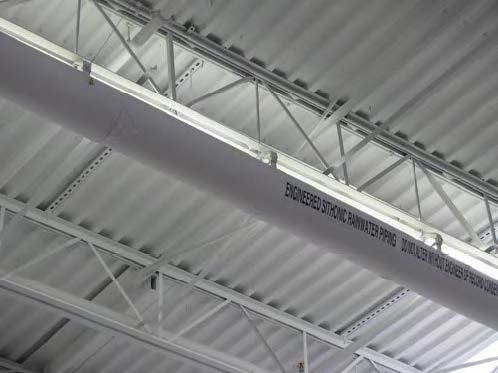
Using Wade’s HydroMax® siphonic roof drainage system, a Wal-Mart in Chatham, IL, reduced the number of large pipes needed from 14 to three, thus saving installation time and material costs. Mercy Hospital in Des Moines, IA, turned to Wade’s HydroMax siphonic system to solve a space conflict—there was no room left in the ceiling space for the drainage pipes needed.

Siphonic roof drainage systems operate under the principle of negative pressures. A siphonic roof drain contains a baffle plate instead of the traditional dome. The baffle plate, when covered by a small amount of water ponding on the roof, prevents air from entering the piping system, which allows the storm water to flow at high velocity, using the entire diameter of the pipe to remove water from the roof.

Water ponding levels on a siphonic system are significantly less than ponding levels of a gravity drain for equal GPM (gallons-per-minute) discharges. A gravity system requires larger-diameter pipe because it only uses approximately one third of the pipe diameter to evacuate water from a roof. The remaining two thirds is dedicated to allowing the air necessary for a gravity system to function. Smaller-diameter siphonic pipes translate into smaller hangers and couplings and less insulation.

With a siphonic system, pipe can be installed with no pitch. With storm piping being the only system in today’s crowded ceiling chase installed with a pitch, the no-pitch feature allows for storm drainage designs that historically were impossible. The technology also reduces the client’s storm drainage costs up to 40 percent.

Working with Wal-Mart

When Wade first started work with Wal-Mart, the store used 14 12” or 15” gravity pipe systems dropping through the store rooms, interfering with the desired racking configuration and eliminating valuable racking space. The Wade HydroMax siphonic system used only three 12” rainwater pipes located in corners to allow continuity and increase racking space. As a result, Wal-Mart saved money on materials. Installation was quicker because there were fewer pipes, and the ponding depths on the roof were lower. Moreover, because the system required fewer connections, the job required less below-grade pipework.

Solving Hospital Headaches

Mercy Hospital faced major coordination problems in the heavily-serviced ceiling space, which was congested with ductwork, fire sprinklers, electrical, and plumbing components as well as hospital gas lines and other specialty services. It needed to route a sloping gravity rainwater pipe from the roof drain locations to the service cores, but no space was available.

Mercy Hospital used the Wade HydroMax siphonic roof drainage system where the pipework ran completely flat, so it did not need to be installed in the ceiling, which was already congested with traditional and hospital-specific building components.

Mercy used the Wade HydroMax siphonic roof drainage system where the pipework (approximately half the diameter of the gravity-designed system) ran completely flat. This solution meant the pipework could be zoned for coordination and find a winding route to the services core, where the pipe could then drop to below grade. Not only did the system solve the problem, but cost of the storm drainage system to Mercy was reduced, and the hospital realized all the technical benefits, such as self-scouring and lower ponding on the roof.

Saving with Siphonics

In addition to cost savings, contractors can save time and money and provide solutions for complex situations by using siphonic drainage systems:

  • Smaller-diameter pipework (approximately half that of gravity systems) means lower materials costs.
  • Horizontal pipes can be installed flat, without grading.
  • Pipes self-scour by running fullbore with higher velocities.
  • Below-grade drainage is significantly reduced (the common range is from 20 to 60 percent).
  • Rainwater down pipes can be routed to the engineer’s preferred locations, freeing up valuable building space.
  • Routing rainwater down pipes to the perimeter of buildings eliminates below-grade drainage under the building floor.
  • Services can be easily coordinated because pipework runs flat.
  • Fewer pipes means reduced construction time and cost.
  • Rainwater pipes can be routed to pond retention or used in rainwater harvesting.
  • Efficient water flow reduces ponding on the roof.

Wade HydroMax has also been used successfully for rainwater harvesting schemes where the pipes can be routed directly to rainwater harvesting tanks. The architectural benefit of no-pitch piping allows water from all areas of the roof to be routed to the collection tank location. Other uses include green roofs.

Siphonic roof drainage systems are an engineered solution. Any siphonic roof drain used in the United States must be tested in accordance with ASME 112.6.9:2005. All siphonic roof drain designs require the engineer of record to design the system in accordance with ASPE Plumbing Engineering & Design Standard 45:2007 – Siphonic Roof Drainage. IPC 2012 requires siphonic roof drains to be in compliance with ASME 112.6.9:2005 and the designs in accordance with ASPE Plumbing Engineering & Design Standard 45:2007.

Wade HydroMax offers design assistance to ensure a smooth progression from concept to the engineer sign-off. Communications between the manufacturer to the engineer of record and then to the mechanical contractor are important to ensure proper installation at the jobsite. The cost savings and simplified installation of siphonic roof drainage create a win-win for the contractor and the building owner.

For more information, visit www.wadedrains.com.

With Miller’s PipeWorx System, De-Cal Welders Work Twice as Fast as Stick Welders

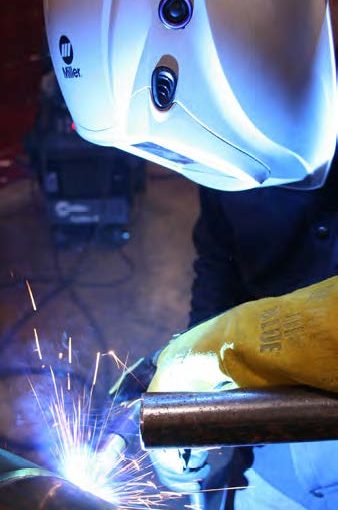
To meet growing demand, Michigan based De-Cal, Inc., opened its own fabrication shop with four multiprocess pipe welding systems (the PipeWorx Welding System from Miller Electric Mfg. Co.), along with a series of weld positioners. The speed and ease of use of the PipeWorx welding process has helped De-Cal refine its pipe welding processes to significantly improve productivity by as much as 30–40 percent and grow business.

Located in Warren, MI, De-Cal has worked since 1992 to establish itself as one of the premier mechanical contractors in the Mid-Atlantic states. With additional locations in Youngstown, OH, and Pittsburgh, PA, De-Cal finds itself in the heart of steel country, as well as the region’s burgeoning oil and gas industry.

The company added a new element to its business in 2011 when it built a fully functional fabrication shop at its Youngstown location. The expansion was designed initially to support the needs of their own mechanical contracting business but quickly grew to take in work from other companies as their capabilities fit a regional demand for welding and fabrication services.

When the fabrication shop opened, most of the local welding talent had been certified to the ASME codes using only the stick and TIG welding processes in fixed positions. De-Cal worked with UA Local 396 (plumbers, pipefitters, steamfitters, HVAC) to begin certifying welders in MIG and flux-cored processes to UA and ASME codes.

“The guys have bought into that real well,” said Ray Montgomery, manufacturing project manager for De-Cal. “Once I got one guy qualified, and I could have him work a job right next to a guy welding stick, I could show that he’s doing twice as much welding.”

The great bulk of material that comes through the De-Cal fab shop is carbon steel and stainless steel. One recent project—an extensive piping system for coke production—featured both. The first phase involved schedule-80 carbon steel pipe from 6” to 16” in diameter, while the second phase involved 10” to 16” schedule-80 stainless steel pipe. De-Cal has standardized, for the most part, on .035” solid wire for the root pass and .045” flux-cored wire for the hot and cover passes in both applications.

A few customers still prefer TIG and stick and are reluctant to consider change, but De-Cal has achieved numerous certifications under ASME Section 9 that included extensive radiographic and bend testing to prove the quality of these processes.

“We’ve had instances where a customer has given us a job to quote and given us a spec that says, ‘no MIG, no flux-cored,’ and I’ve been able to go back to them and say, ‘We want to perform welding using the same procedures that are approved under our ASME code program,’” said Montgomery. “And just about in every instance, I’ve got approval to do that.”

One of the primary contributors to this success has been the conversion of most root pass applications to the regulated metal deposition (RMD®) process. RMD is a modified short-circuit MIG process in which the welding system anticipates and controls the short circuit, then reduces available welding current to create a consistent metal transfer. Precisely controlled metal transfer provides uniform droplet deposition, making it easier for the welder to control the puddle. The smooth metal transfer also compensates for high-low misalignment between pipe sections and creates more consistent root reinforcement on the inside of the pipe than other short-circuit MIG processes. The process also maintains a consistent arc length regardless of electrode stick-out. It compensates for operators that have problems holding a constant stickout, and it enables a better view of the weld puddle—making the process much easier to learn than TIG welding.

“The RMD process is by far the biggest advancement that I see,” said Montgomery. “Being able to easily do a root weld, get full penetration, have a nice appearance on either side without the welder having to struggle is, to me, the biggest thing.”

Similar improvements in productivity occurred as the shop transitioned over from stick to flux-cored welding for the fill and cap passes. Fluxcored welding provides a number of benefits over stick welding that help improve productivity and quality, including faster travel speeds, increased deposition rates, and increased deposition efficiency— which ultimately means that less filler metal is wasted in the process.

“By using this process and utilizing weld positioners, a welder can routinely weld a continuous pass without stopping,” said Montgomery. “It’s much more efficient, the welders like doing it, and the weld appearance is very uniform.”

For more information, visit www.millerwelds.com.

Using BuildingAdvice Technology, TCMS Demonstrates Savings, Secures Building Portfolio Maintenance Contract

Technology Illustrates Rapid Return on Investment to Clients

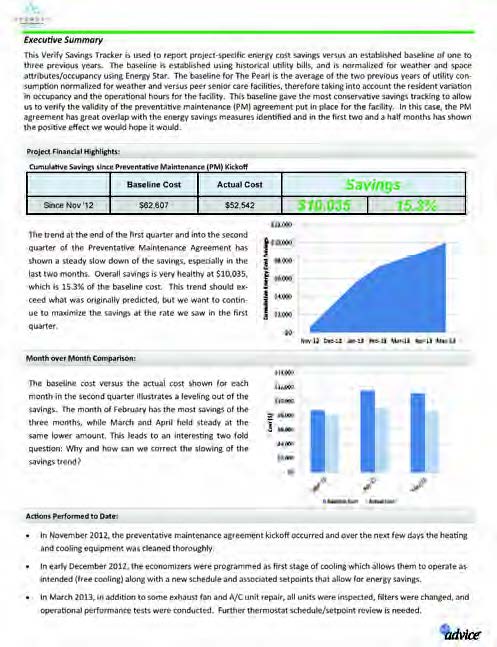
Temp-Control Mechanical Service (TCMS) was confident that the BuildingAdvice™ suite of energy services from AirAdvice would help them win a preventive maintenance (PM) contract and deliver measurable energy cost savings to The Avamere Group, a family of more than 40 senior living facilities in the Pacific Northwest. In their first meeting with Avamere, TCMS uncovered concerns about operating costs and a less-than-robust PM program implemented by onsite staff with little HVAC experience. To demonstrate their capacity, TCMS proposed an action plan that included surveying, benchmarking, and collecting cost data at three of Avamere’s facilities.

Survey data were presented to the engineer and the administrators at each of the facilities. One location, the Pearl, was chosen as the first building to test the efficacy of TCMS’ PM program and its ability to deliver energy savings. The premise was that a robust PM program should pay for itself in measurable energy cost savings. TCMS submitted a PM contract proposing approximately $11,000 worth of maintenance work for the Pearl’s 40,000-square-foot facility.

“The power of definitively proving that our PM pays for itself in less than eight months is an absolute differentiator in our market.”

— Bill Moore, TCMS Principal

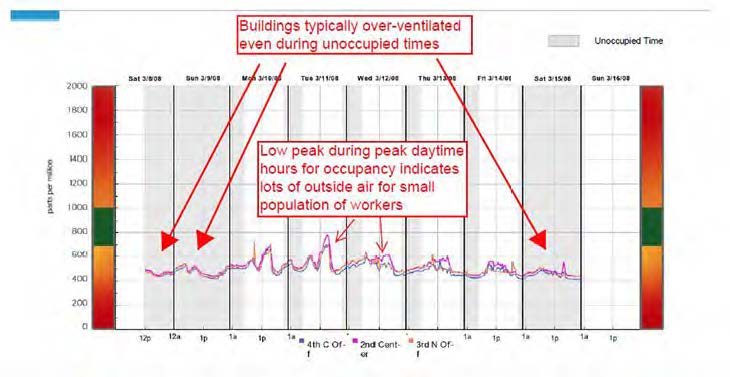
With BuildingAdvice, TCMS monitored a relatively new facility and pinpointed some reasons for its poor energy performance, such as overventilation in the hours when the building was unoccupied.

TCMS benchmark data demonstrated that the Pearl, a relatively new building, was performing poorly. Equipment and systems had indeed suffered the ill effects of poor PM. The building scored a 21, indicating that 79 percent of building types in the same category nationally performed better. More importantly, the Pearl was spending over $17,000 more annually on energy bills than average-performing buildings, suggesting that the PM program would pay for itself in less than one year.

“Our final decision [to move forward with the PM proposal for the Pearl] was based on TCMS’ ability to measure the actual operational cost savings their program generated, something their competitors were unable or unwilling to do,” said Rickard Miller, chairman of The Avamere Group.

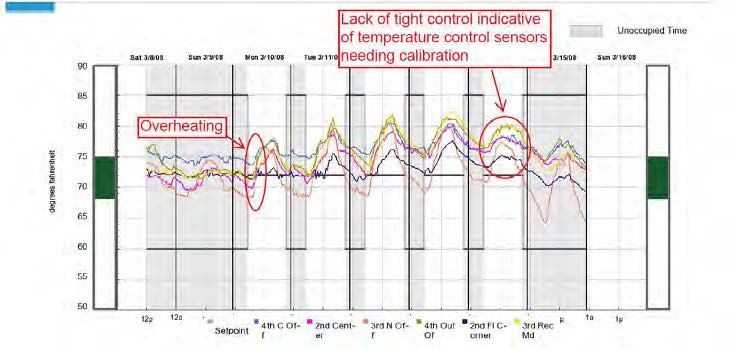
Using the BuildingAdvice platform, TCMS began to assess control issues in the facility. Having already collected schedule information, the wireless sensor arrays included with the BuildingAdvice system allowed TCMS to compare temperature, humidity, carbon dioxide, and light readings during occupied and unoccupied times for over one week. Using graphs to display how a facility’s systems actually operate, especially during unoccupied times, has a tremendous impact on owners and operators who have very little idea what happens when no one is there.

The data provided valuable clues about sources of waste that could be easily remedied. Poorly installed economizers proved to be a significant opportunity for improvement. TCMS used the BuildingAdvice system to create an energy model for the building that could help forecast the savings generated by each measure and by the PM in total. As it turns out, the scope of needed energy measures identified by the BuildingAdvice audit matched the scope of work proposed for the PM program.

“The BuildingAdvice program, especially the reporting, really helped us engage the customer in meaningful discussions about their facility,” said TCMS Principal Bill Moore. “The reports made it tangible for them. From the benchmark report that clearly showed their building performing below average to the audit, which forecasted savings by measure, the reports created a storyboard. Avamere saw how their practices created waste and that, working together, our PM and their ongoing diligence could drive sustained savings. It moved them from being an observer to a participant, and that is likely to spill over to the rest of the portfolio.”

TCMS began implementing their PM program in late November 2012 and completed their efforts by mid-December. To measure and prove their effectiveness, TCMS tapped another BuildingAdvice reporting system, SavingsTracker, to track the actual energy savings generated by TCMS’ sustainable PM program. The results were immediate.

In less than three months, the PM yielded $5,562 in savings, almost 18-percent savings on utility bills compared with the prior two-year average. In just over six months the program generated over $10,000 in measurable savings. In fact, Avamere achieved a complete return on its investment in the initial PM program for the Pearl within seven months. “The power of definitively proving that our PM pays for itself in less than seven months is an absolute differentiator in our market,” said Moore. “We now use this SavingsTracker graph in all of our first meetings to drive this message home in our sales process.”

TCMS used BuildingAdvice technology to illustrate how an effective PM program would reduce energy use and save the client money.
With the SavingsTracker from BuildingAdvice, TCMS demonstrated exactly how much clients saved as a result of TCMS maintenance. The ability to show that their work pays for itself rapidly gives TCMS a strong competitive advantage.

Early success prompted Avamere to engage TCMS to benchmark and survey 20 more buildings in their portfolio to determine whether the buildings could realize similar savings. TCMS has already been awarded contracts for three additional buildings, and more candidates are in the queue.

TCMS sales teams will use previous studies (benchmarks, assessments, and audits) to inform their quarterly PM process to ensure waste is continually eliminated and to systematically identify retrofit opportunities that meet Avamere’s capital investment guidelines. They will use the SavingsTracker reporting system when they meet with the customer quarterly to remind them how much they are saving and to begin positioning projects uncovered through the audits.

TCMS attributes their success with Avamere to 1) a well-executed quarterly PM program that included measurement to identify waste, 2) a comprehensive scope of work that corrected that waste, and 3) a continuous monitoring program that documents actual savings results that the customer believed. The credibility that BuildingAdvice added positioned TCMS for an ongoing, long-term revenue stream in a growing portfolio of buildings.

For more information, visit www.airadvice.com.

Delta’s Advanced Plastic Cooling Towers Are the Cure for Hospital’s HVAC Ills

Quiet, Energy-Efficient Products Meet Client’s Demanding Specs

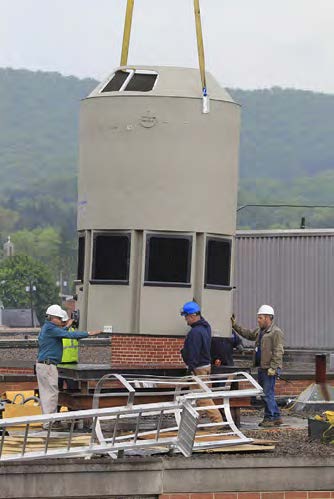
To overcome recurring cooling tower-related HVAC performance problems, Davis Memorial Hospital of Elkins, WV, recently purchased two high-density polyethylene (HDPE) cooling towers, manufactured by Delta Cooling Towers, to support its two 300-ton chillers. The new towers were selected to meet the hospital’s demanding specifications for high performance, minimal maintenance, and minimal noise.

Hospitals Have Unique Requirements

Hospitals contain diverse, demanding environments that require dependable performance of the HVAC system. Operating rooms, critical care facilities, data centers, imaging centers—plus worker productivity—all, to some extent, depend on the reliable operation of the HVAC system, particularly in warm weather. When cooling towers are sluggish or out of service for maintenance, added stress is placed on chillers, and, in turn, the performance of the HVAC system often decreases.

Such was the case with Davis Memorial Hospital. A subsidiary of Davis Health System, the 160,000-square-foot hospital was founded in 1904, fully renovated in 1994, and is now undergoing an expansion of 72,000 square feet. The modern hospital includes a 90-bed medical facility, with nine intensive care and 36 telemetry (monitored) beds, with services ranging from emergency treatment to acute inpatient care, cancer treatment, diagnostic services, pulmonary rehabilitation, women’s health services, and many types of surgery

Like many building owners, the hospital management was looking for more advanced cooling tower technology that would optimize performance while minimizing maintenance requirements.

“I researched various cooling tower technologies on the Internet and found a unique line of cooling towers that features a seamless plastic shell,” explained Steven Johnson, director of Davis Memorial Support Services. “The one that attracted my attention was a line that was made of HDPE, manufactured by Delta Cooling Towers. Of course, there were a lot of other models available, but most of them seemed to be the metal-clad design.”

For many cooling tower users, metal-clad models have become outmoded because they are vulnerable to corrosion from salt air, industrial gasses, and even the chemicals used to treat the recirculating water. Conversely, HDPE cooling tower shells are virtually impermeable to corrosive elements, including water treatment chemicals such as chlorine, as well as ultraviolet rays.

A Closer Look at New Technology

Johnson and engineers from Davis Memorial decided to visit the Delta Cooling Tower manufacturing site for a plant tour so that they could get a closer look at the design and building of the manufacturer’s product line, which includes models ranging from 10 to 2,000 cooling tons.

“We were all impressed with the plant tour,” Johnson said. “Not only was management helpful in explaining the features and benefits of various product models, but they also helped us confirm our preliminary specs for the cooling towers we had in mind. We were quite surprised to learn that this line of cooling towers was about 20 percent less expensive than many conventional designs.”

Johnson was also pleased with the standard warranty offered on all products. While many metal-clad cooling towers are warranted for only one year, the HDPE-based cooling tower shells from Delta carry a standard 15-year warranty. The Davis Memorial team selected a 250- ton TM Series unit and a 180-ton Paragon Series tower.

Efficiency, Noise Reduction Impressive

While avoiding downtime and unscheduled cooling tower maintenance were critical requirements for Davis Memorial Hospital, other features of the Delta design also had significant value.

“The variable-speed, direct-drive motors that run the fans on our new towers also provide unexpected benefits,” Johnson said. “First of all, these drives are far more efficient than we initially realized. The fan motors on our old towers were 30 horsepower each and consumed considerably more energy than the new ones, which are only seven horsepower each and at least 50 percent more energy-efficient.”

Johnson explained that the hospital’s old fan motors were either on or off. With the new variable-speeds drives, they are set up so that they only run at 100 percent on hot days.

“The new direct-drive fans are usually running at about 40 percent,” Johnson noted. “Running at 100 percent, they are only pulling four amps, which is much less energy than before.”

Johnson added that the new direct drives are also far less maintenance intensive, which results in even greater savings. With no belts, shafts, bearings, or other external parts to service, the direct-drive motors are virtually maintenance free.

Another important benefit of the new direct drive cooling towers is that they run quietly. “Drives using belts often require adjustments, or you will hear them squeal,” Johnson explained. “We’re a hospital, so quiet is expected. Also, we’re located right in the middle of a residential community. In the past, we received complaints from people in the neighborhood if the belts were squealing, particularly if it happened at night when they were trying to sleep. That was a serious problem, so our maintenance people often had to fix the belts in the middle of the night. With the direct-drive fan motors, we don’t have that problem.”

Johnson said his new cooling towers have not only solved his chiller and HVAC problems, but have exceeded expectations. “These new cooling towers have virtually eliminated unscheduled emergency maintenance,” he said. “That not only makes us happy, our chiller maintenance contractor is also very pleased.”

John Flaherty, president of Delta Cooling Towers, estimated that with the hospital’s combined savings on energy, water usage, maintenance, and chemicals, the payback for the new cooling towers should be within two years.

For more information, call 800-BUY-DELTA (289-3358) or visit www.deltacooling.com.

Siemens Provides Contractor Tips on Selecting Damper Actuators That Make the Most of HVAC Systems

In recent years, HVAC trade magazines have cited that more than one third of the commercial HVAC systems in the United States are broken. They also point out the poor state of HVAC equipment across much of the K–12 market. Installing upgraded HVAC equipment and effective building control systems in new and existing buildings significantly improves occupant comfort and productivity, but it is the damper actuators that move the equipment and allow the user to deploy control strategies. Because damper actuators enable HVAC systems to deliver measurable, sustainable energy savings, Siemens offers these tips on selecting the right product for your project.

As you upgrade facilities with improved environmental building controls, check damper actuator operation to ensure you maintain your system’s energy savings. If you need to replace the actuator, consider the following:

  • How much torque is required to move the equipment?
  • For retrofits or new installations, how much torque is required from the actuators?
  • What are the characteristics of the HVAC system?

The size, quantity, and ultimate selection of actuators required depend on the factors below:

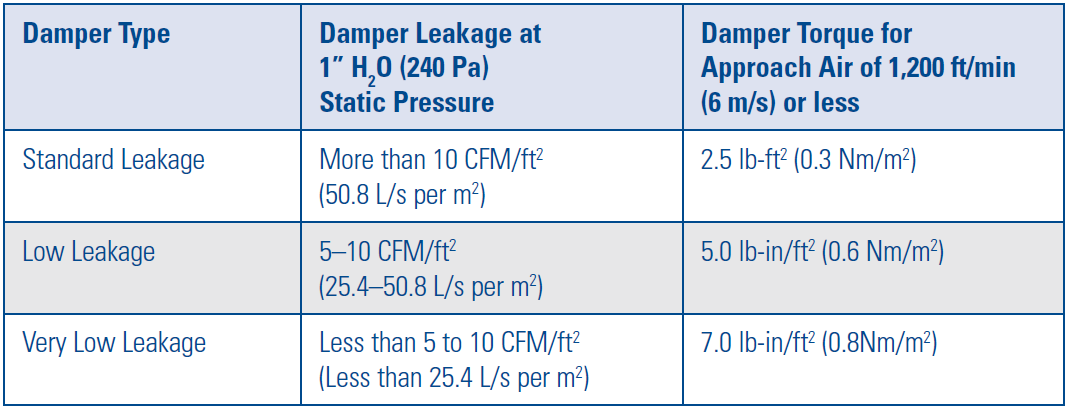
  • Type of damper seals (standard, low, or very low leakage)
  • Number of damper sections
  • Approach air velocity
  • Static pressure
  • Control signal and other features required for operation
  • Quality and environmental operating conditions of the damper installation

Calculating Torque Requirements

Follow these steps to determine how much torque is needed to move the equipment:

  1. From the damper or equipment manufacturer, calculate the damper torque rating (DTR) for the damper at the most severe operating conditions. If it is not available, use the table below to estimate the leakage type, static pressure, and air velocity.
  2. Calculate the damper area (DA) in square feet (L×W) from the damper dimensions.
  3. Calculate the total damper torque (TDT) in pound-inches using the following formula: TDT = DTR × DA.
  4. Apply a safety factor to that torque (20 percent more than the calculation determined is advised).

Damper Actuator Selection Criteria

Given the required torque, decide the following damper actuator selection criteria:

Does the equipment need to close in the event of a power loss to stop cold air from entering the building or freezing other equipment?

If so, then a spring return (SR) actuator is needed where a physical spring or another mechanism like capacitors move the actuator/equipment position to the closed position in the absence of power. If the answer is “no,” damage to the equipment or building will occur in the event of a power failure, as in the case of an interior space, and a fail-in-place or non-spring return (NSR) actuator can be used.

What input power will the actuator need to operate: 24 VAC, 24 VDC, or 120 VAC? What type of control is needed for the equipment/application: two-position (open/closed), floating control, or modulating the equipment in signals of 0–10 VDC voltage or 4–20 mA current signals?

Once voltage and signal requirements are understood, determine what size connection is required to operate the equipment. A self-centering shaft adapter connection is especially useful when high torque actuation is required and provides many advantages over other shaft connection methods:

  • Save installation time through quick connection to the equipment shaf
  • No call-backs from slipping shafts
  • Long life and successful operation on a wide range of equipment shaft sizes

Other features to consider include using low-voltage plenum-rated product when local codes allow plenum-rated actuators to be installed without the need for conduit, saving cost and eventual metal disposal concerns. When proof of equipment closure is required, built-in dual adjustable auxiliary switches not only save time by eliminating a complicated installation but also can be set in five-degree increments for maximum control system adaptability. Also, consider protection of the actuator from outdoor elements and the connection methods needed when you cannot connect directly to the equipment shaft.

Finally, ensure the control system is deploying an efficient control strategy to the equipment and actuators in operation.

For more information, visit www.usa.siemens.com.

Industrial Cooling Corporation Retrofits Reciprocating Compressor with BITZER Scroll

Project Saves Thousands, Lowers Power Consumption, and Reduces Noise

Industrial Cooling Corporation (ICC) of Metuchen, NJ, recently retrofitted a 10-ton reciprocating compressor with a BITZER scroll compressor (ESH736-4SU) to keep overall client costs down, reduce power consumption, and minimize noise. Replacing large, inefficient recips with high-efficiency screw compressors on chillers and rooftop units is standard practice in many areas, but it is unusual to convert smaller recips to scrolls.

Because scroll compressors are taller than recips, Daniel Greenhalgh, the job foreman, had to modify the sheet metal panel above the compressor compartment to gain 5”. Once the recip was removed and the scroll mounted in the cabinet, Greenhalgh mounted an APR valve on the left side of the new compressor. He then installed a solenoid valve on the APR outlet and electrically paralleled it with the liquid-line solenoid to allow the compressor to pump down. A discharge check valve was also installed for pumpdown and to make sure no liquid refrigerant backed up into the compressor dome.

Mike Chiovaro, ICC account executive, explained that the APR valve is a capacity modulation and dehumidification device for direct expansion A/C systems. By regulating refrigerant flow, it allows direct expansion systems designed for full load to maintain acceptable air quality during varying load conditions. He added that the active portion of the coil stays below dew point at all times, thereby keeping the system in the dehumidification mode and ensuring longer run-times.

Isolation refrigerant ball valves were installed on all three lines of the APR to allow for complete isolation. “This enabled us to be sure the system was charged and operating to the original specifications,” said Chiovaro. “After pulling down the system and charging with R22, we then opened the APR isolation valves and checked operation. We created a low load on the unit to make sure the APR reacted correctly.”

After completing the startup procedures, the BITZER scroll was running at full load (no APR operation) with 75° F intake air and 50° F discharge air and only using 13 amps. The scroll used 2 amps less than the second-stage recip compressor beneath the scroll that was running unloaded with the same temperatures and voltage.

When the customer walked into the room to inspect the installation, he commented on how quiet the new scroll compressor was compared with the old recip model. He did not hear it running at all, because the recip compressor below it was also running.

Chiovaro said the installation required more time to retrofit, but the overall cost was thousands less than installing a “drop-in,” and the customer benefited by seeing lower power consumption and lower sound levels in his data center.

Steps in the Retrofit

  1. Reclaim the R22 refrigerant (to be reused at completion).
  2. Remove and dispose of failed compressor.
  3. Modify sheet metal panel, located above stage-one compartment.
  4. Install mounting plate and set new BITZER scroll compressor (model ESH736-4SU).
  5. Modify refrigerant piping to meet compressor discharge and suction connections.
  6. Provide and install one new liquid line filter drier.
  7. Provide and install one new discharge check valve.
  8. . Provide and install one new APR valve.
  9. Provide and install all needed piping, fittings, refrigerant solenoid, and ball valves to install the APR.
  10. Install a new contractor.
  11. Terminate and reconnect power.
  12. Evacuate and charge circuit with reclaimed refrigerant.
  13. Start up system and record pressures, amperage, voltage, superheat (adjust if needed), and sub-cooling.

For more information, visit www.bitzer.de/eng/Home.

BAC Proves a Fruitful Choice for Doubl-Kold

Contractor Meets Needs of Record Northwest Apple Harvest

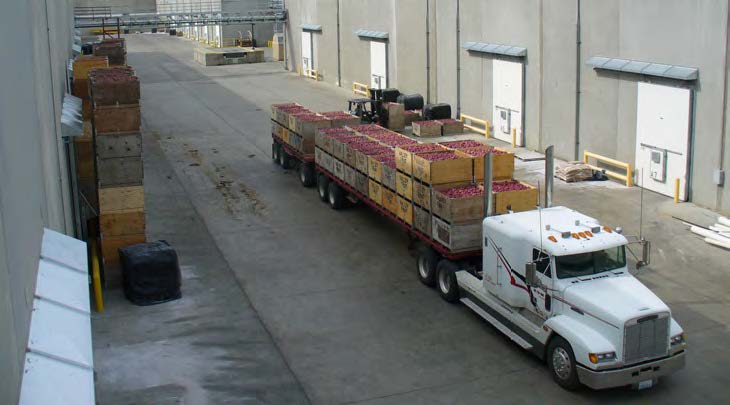
Washington State had a record apple harvest in 2012, so Double-Kold of Yakima, WA, stepped up to expand storage capacity rapidly for growers across the state by relying on Baltimore Aircoil Company’s (BAC) products. After apples are harvested in the fall, they need to be stored in cold rooms for several months to supply various markets for the entire year.

In 2012, the apple crop in the east was very low, and most of Michigan’s apple crop was damaged by hail storms. Washington, however, had perfect weather—a warm summer with just enough rain and a mild spring with nearly no frosts. Additionally, many of the orchards in Washington were redesigned to be high-density orchards. Therefore, Washington State provided two thirds of the apples for the entire United States in 2012, a 20-percent increase from its previous record high.

As a result of the high crop yield, available cold storage rooms for the apples were maxed out. Doubl-Kold, a leader among industrial refrigeration contractors in the Pacific Northwest, has been serving and providing solutions to the area’s fruit industry for over 30 years. They are noted for their expertise in cold storage designs and installations. Together with their local BAC representative, Doubl-Kold has been integral in the overall expansion of cold storage availability. In addition to new construction cold storage, Doubl-Kold has stepped in and offered advice in making existing cold storage rooms more efficient. They recognize that Washington farmers need an evaporative condenser that is easy to maintain and has high capacity.

From November through April, Doubl-Kold purchased several hundred tons of BAC’s VCA evaporative condensers as part of the refrigeration system for these apple orchard cold rooms. Doubl-Kold selected the VCA because of its wide tonnage range in capacity (87 to 1,443 R-717 tons in a single unit), reliability, and ease of maintenance. This industry workhorse is made of heavy-duty, hot-dip galvanized steel panels. With options ranging from equipment controls to access packages, the VCA was designed with the operator in mind. The many access options make it easy to maintain and inspect. Also, the entire drive system is located at the base of the unit, providing unrestricted access to the premium efficient independent fan motors, axial fans, and bearings. Two large access doors are standard with every sideblow VCA, and one door is included on end-blow units.

According to Ken Adams, vice president of sales at Doubl-Kold, “At the average apple orchard there are six to 20 cold storage rooms, and each room needs an evaporative condenser. Some of the apple orchard cold rooms are over 40 years old and have BAC condensers that are over 20 years old. This year, due to the apple harvest increase, many of my customers upgraded and replaced condensers in order to increase their capacity.

“In 2012, the apple harvest yielded approximately 130 million boxes of crops; in 2013, it is projected there will be 150 million boxes of crops,” Adams continued. “To keep the apples cool for the 2013 season, there will need to be a 20-percent increase of cold storage facilities to 800 cold rooms.” Adams also noted that not building new cold rooms—or not cooling them as efficiently as possible—could potentially result in a loss of up to $500 million for all of the apple orchards in the Pacific Northwest region.

Doubl-Kold is using its expertise in industrial refrigeration along with shrewd market analysis to anticipate client needs. Using BAC products helps Doubl-Kold meet its customers’ unique needs.

To learn more about BAC products or to contact your local BAC representative, visit www.BaltimoreAircoil.com/SS.

Sauer Group Selects Anvil Products to Support the World’s Tallest Launch Pad Water Tower

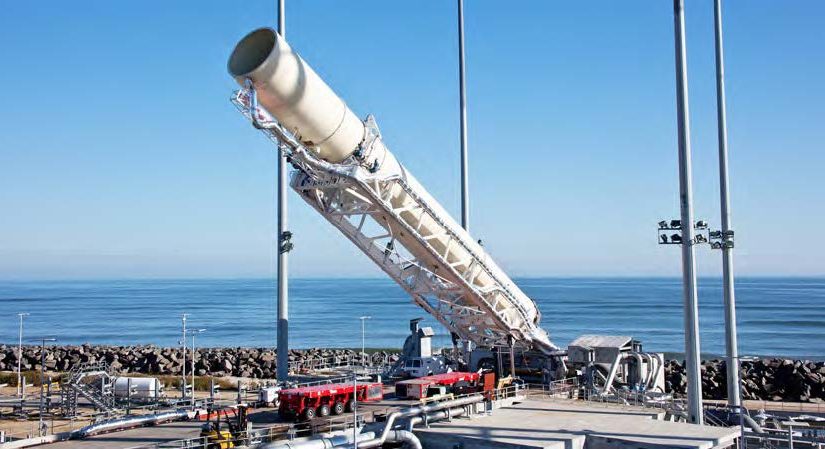
To support a massive water tower for a NASA launch pad, Sauer Group Inc. employed Anvil pipe supports and rollers for their durability and history of quality manufactured products. When rockets and spacecraft launch from NASA’s flight facility at the Mid-Atlantic Regional Spaceport (MARS) on Wallops Island, VA, the engine exhaust generates an enormous amount of heat and vibration. To keep the launch pad cool, stable, and safe, a special deluge system pumps water from a 307-foot water tower, the tallest in the world. The Sauer Group’s support structure keeps the deluge system safe during tumultuous takeoffs.

The Sauer Group relied on custom-built pipe slide assemblies—Anvil Figure 439s—to support the deluge piping system as it branched off of the launch pad water tower. The slide assemblies were attached to structural frame supports.

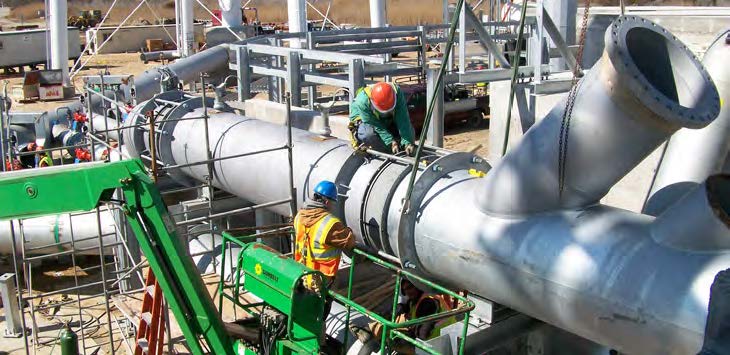
For previous projects, Anvil pipe rollers were used to accommodate lateral movement in horizontal pipe applications. The 48” vertical header on the launch pad water tower required 360-degree support after the header turned 90 degrees to horizontal and was threaded through a welded steel channel structural support system. Four custom pipe rollers were at each of the support points inside the channel frames.

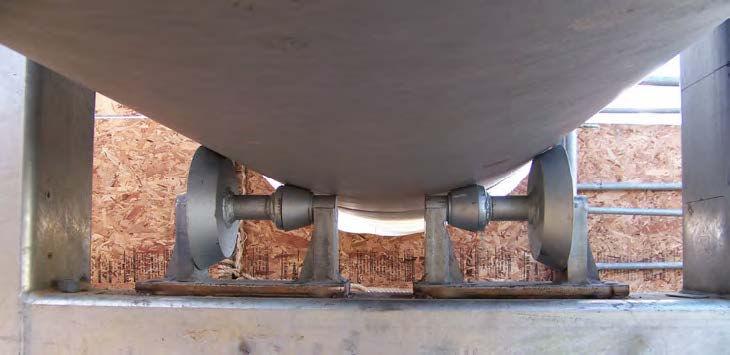
Sauer Group employed Anvil’s Figure 76SD fabricated roller for large-diameter pipe and custom-built Anvil Figure 439 structural H slide assembly, shown here, to support the deluge system pipe for the launch pad water tower.

The other pipes in the deluge system ranged in size down to 8” in diameter and also required custom slide assemblies (Anvil Fig. 439). Anvil worked with engineering to design the supports and provided assistance during installation, demonstrating their flexibility and willingness to go above and beyond to meet these unique customer needs. Anvil piping products used on the project were specially fabricated pipe rollers (Anvil Fig. 76SD) and structural H slide assemblies (Anvil Fig. 439). Missions will launch from MARS to resupply the International Space Station.

For more information about Anvil’s products, visit www.anvilintl.com.

With Timetable Shortened Dramatically, MLP Turns to Zurn Plumbing Solutions

Customized Products Help Contractor Minimize Installation Time, Save Client Millions in Financing

In urgent need of more space, Erie County Medical Center Corporation (ECMCC) shortened the construction timeline for its new long-term care facility from two years to 15 months. MLP Plumbing & Mechanical, Inc., of Cheektowaga, NY, met the challenge by relying on Zurn products. Zurn Industries, LLC, helped MLP eliminate contractor hours by providing customized, engineered solutions to fit jobsite dimensions and install easily. As a result, the ECMCC saved millions of dollars financing its $103-million project.

The existing 87-year-old Erie County nursing home was running out of space. The compressed schedule enabled ECMCC to open its new, 390-bed Terrace View Long-Term Care Facility in Buffalo, NY, in February 2013. The new facility is grouped into small, 12-bed households, each with its own living room, fireplace, kitchen, and dining areas. Each floor has a large outdoor terrace and an indoor terrace lounge.

“I chose Zurn products because I was looking to save time on a necessarily fast-paced job,” says Chad Krajewski, MLP plumbing foreman, who worked with two MLP colleagues on this project: Mike Balon, foreman, and Bill Quefflec, project manager.

“Many construction projects are now ‘hurry-up’ and clients want them to be completed in record time while still significantly cutting labor costs,” Krajewski said. “Zurn solutions are a great option for contractors.”

Zurn Industries supplied five labor-saving products for the ECMCC project:

Z1231-EZ Lavatory Carriers are concealed arm lavatory carriers pre-assembled at the factory. Onsite, the scale on the adjusting bar allows the installer to quickly set centerline dimensions. Krajewski said these carriers were significant time-savers.

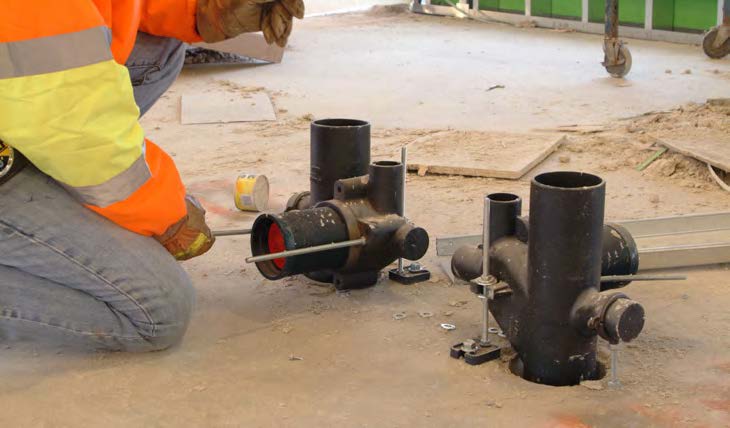
The -TC Neo-Loc Test Cap Gaskets for drain outlets allowed workers to set the drains, then prepare and pressure test the line without additional test balls. The gaskets also acted as a seal for drain outlets, protecting the system from infiltration of loose debris or waste. Once testing was finished, the gaskets were easily removed

Z415-BZ and Z1400-BZ Leveling Drains and Cleanouts enabled the contractor to adjust leveling and height of drains and cleanouts after the pour was complete, eliminating the need to break up a floor to fix a drainage problem. MLP Plumbing estimates this saved them anywhere from 10 minutes to an hour per drain or cleanout.

The Z1035-Q stabilizer held floor drains in place while concrete was poured and allowed the height of drains to perfectly match the floor thickness. This solution removed the need to “box out” to prevent the drain from moving. The pre-assembled stabilizers were “one of the most effective labor saving products used at this project,” Krajewski said.

“Many construction projects are now ‘hurry-up’ and clients want them to be completed in record time while still significantly cutting labor costs. Zurn solutions are a great option for contractors.”

— Chad Krajewski, Plumbing Foreman, MLP Plumbing & Mechanical, Inc.

The -DP Top-Set Deck Plate option enabled each roof drain to be installed by one worker instead of the traditional two. The Zurn deck plate allows a roof drain to be secured to a corrugated roof deck with an easy-to-install plate. It also reduced the need for a scissor lift, saving equipment rental costs. The plate saved MLP about 15–20 minutes per drain and effectively doubled the workforce by allowing one worker to do the job of two.

“As a foreman in the field,” Krajewski said, “it is comforting to know that Zurn provides a variety of customizations that help a product or installation meet specific site requirements.”

Zurn products collectively saved many manhours. Because of the sheer size of the project—about 275,000 square feet spread over five levels—every labor-saving solution had a big impact in terms of time and money.

Chad Krajewski, MLP plumbing foreman, installed the Zurn Z1209-F Water Closet Carrier, in a Buffalo, NY, nursing home—one of many Zurn products that helped MLP keep installation time to a minimum.

For more information about Zurn, visit www.zurn.com.

Popular Rental Equipment Can Meet Contractors’ Immediate Needs

The need for specialized equipment may arise so infrequently that a company cannot afford to purchase it. Moreover, storing, maintaining, and, in some cases, certifying equipment can create additional headaches. To meet their short-term needs, some contractors choose to rent equipment from sources such as Lifting Gear Hire Corporation (LGH). Some of the most popular rental equipment includes the following:

Modular spreader beams range in capacities from 24–1,000 tons and have spans ranging from 3’ to 100’. These beams are designed for one-man assembly. Most spreader beams can be manually handled onsite, reducing assembly time and the need for lifting equipment. They also have a variety of top and bottom rigging available.

Air chain hoists have capacities ranging from .5–50 tons. These hoists are designed for maximum strength-to-weight ratio. They function well in most working environments, use uncomplicated electronic controls, , and employ motors that function well in adverse working conditions. They can be chained to any height and can lift up to 50 times their own weight.

Come-a-longs are a versatile tool used for a variety of lifting or moving needs. They can be used in any angled position, even upside down. Come-a-longs are ideal for use in tight corners and have a capacity ranging from 0.75–9 tons. Come-a-longs are designed with low headroom and have a freewheeling capability that makes one-handed operation feasible. Because the braking mechanism is totally enclosed, the equipment is protected against dirt and moisture.

For more information, call 800-878- 7305, e-mail sales@lgh-usa.com, or visit www.lgh-usa.com.

Pyke Mechanical Chooses High-Efficiency BITZER Screw for Compressor Retrofit

When the Miami International University of Arts and Design needed to upgrade its chiller, Pyke Mechanical was able to install a new, high-efficiency BITZER Screw compressor at only marginally higher cost than rebuilding the original compressor. The conversion went so well that Pyke plans to install BITZER screws whenever an upgrade opportunity presents itself.

BITZER’s Senior Application Engineer Dave Streby used the system conditions to determine the best BITZER model to match the desired capacity and recommended BITZER’s CSH8553-110-4PU. It operates at 45° saturated suction temperature, and 120° condensing temperature provides 109.9 tons of air conditioning capacity. The model comes standard with a 4-1/8” suction service valve and a 3-1/8” discharge service valve and has an integrated oil separator. The compressor uses 460 volts, 136 run load amps, and 895 locked rotor amps with direct-on-line starting.

Pyke Mechanical’s technicians completed the retrofit conversion as follows:

Step 1:  Removed the existing screw compressor and external oil separator, including all components and piping. Removed all piping associated with the heat exchanger on this circuit, as the BITZER CSH screw compressor provided the required capacity without the use of an economizer.

Step 2:  Installed two 7’-long U channels for mounting the BITZER CSH screw. The channel was attached to the base frame by drilling 3/4” holes. The BITZER CSH was attached to the mounted channel with 5/8” bolts after holes were drilled to match the footprint.

Step 3: Repiped the existing suction and discharge connections from each end of the existing compressor to the top of the CSH8553-110-4PU screw compressor. The existing piping was only removed to allow one 90° elbow in the suction piping and two 90° elbows in the discharge piping.

Step 4: Removed the existing economizer piping to the original screw compressor, capped it off, and left it in place.

Step 5: Reused the existing suction and discharge pressure transducers. The suction transducer was reinstalled into the BITZER service valve. The discharge transducer was installed into the upper pipe plug underneath the BITZER discharge service valve. The upper connection allows for the system pressure to be read by the controller.

Step 6: Installed liquid injection oil cooling using the existing piping from the economizer. Pyke also used the existing solenoid valve and only required two feet of 5/8” copper tubing and 4-5/8” 90° elbows to allow 8” of tubing rise from the inlet to the compressor.

Step 7: Installed the liquid injection controller inside the control cabinet and drilled a 3/8” hole through the panel to route the sensor cable to the compressor. Mounted the liquid injection sensor 6” from the discharge service valve and insulated the sensor. With the existing operating parameters, liquid injection oil cooling is not required, but Pyke decided to install liquid injection to address a “worst case scenario.”

Step 8: Because the existing compressor used only one capacity control solenoid, Pyke installed a stand-alone controller to control the BITZER capacity control solenoids. A simple dual-set-point capacity controller is suitable. Pyke installed the BITZER capacity controller into the control cabinet and then installed the temperature probe into the same location as the existing system probe on the fluid outlet piping.

Step 9: Evacuated and charged the system, checked all the electricals, and then bump-started the compressor to ensure proper rotation.

Since this initial retrofit conversion, Pyke has installed two more BITZER retrofit screws at Miami International University of Arts and Design. John Marinello, vice president of Pyke, said that he and his technicians were impressed with how quietly a BITZER Screw runs.

For more information, visit www.bitzer.de/eng/Home.

Weld Positioners Improve Productivity and Quality

The Team Industries positioner includes steel-hardened insert jaws with small-bore adapters to eliminate the need for modified C-clamps.

While most weld positioners will improve the productivity of a pipe welder, a positioner designed specifically for the pipe welding industry to reduce welder fatigue increases the quality of the welder’s work.

“Having a good positioner in a fabrication shop is a must regardless of shop size,” said Ned T. Hawkins of Michigan’s W. Soule. “A good positioner is like adding another fitter to your project without the added expense.”

Positioners designed for a broad market base do not meet the productivity and ergonomic needs of the pipe welder. Pipe welding requires a wide range of rotational speeds to suit the range of pipe diameters and welding processes involved with each project.

Team Industries, Inc., began building weld positioners designed exclusively for welding pipe in 1997. Their products include features that provide ergonomic advantages, such as programmable acceleration and deceleration, a bi-directional foot controller, air tool quick disconnects, variable rotation, and up to 135° tilt capacity. Several accessories can also be supplied with the positioner, including a universal gripper, self-centering quick disconnect jaws, thru-hole purge assemblies, and even a fan for welder comfort. Infinitely variable rotational speed control (.36 to 3.69 RPM) and a gear reduction option permit welding of piping of all sizes (small bore through large bore heavy wall). Thru-hole purging systems save welder time and reduce the cost of inert gasses.

The Team Industries positioner includes steel-hardened insert jaws with small-bore adapters to eliminate the need for modified C-clamps.

Team has also designed a variable height welding positioner that incorporates additional ergonomic features, such as a push-button hydraulically actuated system for smooth height adjustment and a self-leveling system. These features offer a huge advantage over manual height adjustment positioners, which require considerably more time and effort at each height change.

The workstation concept incorporated into Team’s positioners improves the safety of the working environment for the welder. For example, positioners are equipped with 120V power outlets and air inlet filter/lubricator for air tool quick disconnects, reducing the propensity for trip hazards when using the positioner.

For more information, visit www.weldpositioner.com.

Auburn Mechanical Finds Aquatherm a Perfect Fit for Jail’s Tough Pipes

To fix a decades-old leaky piping system in Seattle’s King County Jail, Auburn Mechanical used Aquatherm’s polypropylene-random (PP-R) pipe systems to combat the aggressive water degrading the existing pipes. Aquatherm’s products not only provided an ideal solution but also cut installation time and cost when compared with copper piping.

The King County Jail houses over 1,000 inmates and employs over 350 people in downtown Seattle. With three towers, each with 20’-high floors, the 385,274-square-foot facility is equivalent to a 17-story building. Built in the mid-1980s, the jail used copper for the distribution system, with 4” and 6” galvanized steel mains distributing water in the sixth floor mechanical rooms. After roughly 11 years, however, the building’s domestic water piping system began leaking.

Stephen Swinburne, architect and project manager for King County’s Facilities Management Division, said the county had been “band-aiding and selectively fixing leaking sections of pipe since the early 1990s.” In 2004, it was clear that a repipe was necessary, but the bids came in too high, and the project was shelved.

‘Hostile’ Water Takes its Toll

In 2009, pipe samples revealed that the hot water recirculating system was in the worst condition, followed by the hot water and cold water, respectively. The county embarked on a massive renovation project that included $3.6 million for repiping. Engineering tests found that the failures in the copper piping stemmed from aggressive water, high water velocity, and potential installation problems. So the ideal pipe system would be rust-, scale-, and corrosion-proof—and easy to install. Relatively new to North America, German-manufactured Aquatherm has been used in plumbing and HVAC applications in more than 70 countries for nearly four decades. Aquatherm’s heat fusion process involves no flames and is virtually leak-proof. The pipe and desired fitting are simply inserted onto an Aquatherm welding device and heated for a specified time (typically only seconds for the smaller sizes), then joined together. At the time of installation, copper prices were at all-time highs, so the PP-R pipe system cost less than soldered or press-fit copper.

The county selected Aquatherm for the project and Auburn Mechanical of Auburn, WA, to install the piping. Founded in 1975, Auburn provides a full range of preconstruction, mechanical, and building services. The firm was well suited to handle the live change-over job where the majority of water lines had to remain active and security was paramount.

Getting Up to Speed on the Job

Auburn’s field foreman, Brent Delvecchio, oversaw the Aquatherm installation, which began in June 2011. Delvecchio specializes in high-rise mechanical installations (typically using galvanized steel and copper), and he knew working with Aquatherm would be a learning experience.

Delvecchio and his staff completed the initial half-day Aquatherm factory-certified training, which is a prerequisite to offering the company’s 10-year, multimillion dollar insurance policy covering product liability, labor, personal injury, and property damage. The Auburn staff then gradually became adept with the fusion process, installing 6” and 8” Aquatherm Greenpipe® cold water mains and 4” hot water mains with 3” risers to all water closets and 1-1/2” to 3/4” branches for supply lines running to the individual cells.

“[Installation] has sped up over the time that we’ve been working with it. You’ve got to learn to work with it. It’s a lot like gas pipe (HDPE), and you can’t work yourself into a corner. You’ve got to plan ahead and learn the tricks,” Delvecchio said.

One such trick for connections in tight spaces is leaving the fitting on the welding iron longer than the pipe, which allows the fitting and pipe to be handled separately. The Auburn staff created some onsite Aquatherm-specific prefabrication stations, which also increased installation speed.

Facing Challenging Conditions

With all work occurring between 7 p.m. and 6:30 a.m., the Auburn staff had to adjust to working in a jail— and always had to be within sight of a jail officer escort. In the confined spaces, there were instances where making the heat fusion connections was challenging. “Working in the jail is like crawling into an attic and going down a long corridor, since the floors are 20’ slab-to-slab, and then you have to cut the ceiling out. You’re completely blocked, and it’s a totally tight space,” said Delvecchio.

“There have been four big water shutdowns on this job,” Delvecchio continued. “The flushometers on the toilets get stuck if you do a big shutdown, and even a 20-second shutdown would foul 80–150 flush valves, because the flakes in the galvanized steel would clog things up considerably. And you don’t want to go into 500 to 600 jail cells to fix all those stuck valves,” Delvecchio said.

Aquatherm Products Preferred

Swinburne said that despite the difficulty of fusing pipe in tight spaces, he is recommending Aquatherm for other county jobs on a case-by-case basis. “It has many benefits over copper and other alternatives,” he noted.

The construction team and county officials have been pleased with the project. Auburn Mechanical Principal Kim Johnson said, “My favorite thing about [Aquatherm] is that if you have a leak, it is not typically going to be a catastrophic leak. It will not completely blow apart because of the way it’s connected. That’s not the case with other types of pipe. We have had only three leaks on this whole project—and they have been because guys didn’t fuse it correctly, but for the most part that doesn’t happen.”

Asked about the pros and cons of Aquatherm, Delvecchio concluded, “It is far superior to other plastic products on the market for water distribution. This is going to revolutionize the commercial industry as we know it.”

For more information, visit www.aquatherm.com.

ACCO Builds on WennSoft Technologies to Increase Efficiency and Return on Investment

Move to Mobile Streamlines Paperwork, Saves Time

In 2012, ACCO Engineered Systems of Glendale, CA, trained more than 200 service technicians to use its new MobileTech system, tailored for ACCO by WennSoft, and immediately realized more benefits from the system than expected. The new technology speeds up and even eliminates some paperwork and improves communication. By using the streamlined, electronic quoting features, ACCO has already realized a return on its investment in MobileTech.

Laying the Foundation for Mobile Success

ACCO has long understood the value of mobile technologies and has been planning a mobile strategy for years. Their first step toward a mobile solution began in 2005, when the company implemented WennSoft Signature, built on Microsoft technologies, as its new operational software solution. Chris Leu, director of information technology enterprise applications for ACCO, said the ultimate goal of the switch was to go mobile. “WennSoft had a complete system,” he said. “Even back in 2005 they had a mobile strategy.”

At the time, however, ACCO was not ready to add mobile capabilities. Instead, the contractor planned to hold out for better device options. Leu said, “In 2005 we didn’t have tablets, Androids, or iPhones. Back then it was very expensive and challenging to put that technology together.”

The administrative staff once spent every Wednesday inputting labor from work orders. Now they simply double-check the information as it is submitted, freeing them to focus on more valuable tasks.

Implementing Mobile to Simplify Business

By the end of 2008, ACCO was ready to add WennSoft MobileTech to its existing WennSoft solution. The company conducted a pilot run through at the beginning of 2009, with several goals:

  • Incorporate maintenance contracts and service calls.
  • Speed up the payroll process by having techs electronically enter time at the end of each job, rather than completing a written work order.
  • Enhance the quoting process by having techs submit recommended work electronically rather than through a paper-based process.

Gathering valuable input from its service techs through the pilot program, ACCO worked with WennSoft to tailor the MobileTech solution to its needs. Leu said, “We worked with WennSoft to come up with a tailored screen, so the techs would see the same paperwork they were used to looking at for the last 25 years—just electronically.”

Increased Efficiency and Return on Investment

Following training of service techs throughout all locations in March 2012, ACCO saw the benefits of the switch to mobile. Because the electronic dispatch system automatically fills in the name and location for each job, the time to complete work orders was reduced. Many service techs can now process a work order in less than a minute, allowing more time to focus on customer needs.

When ACCO service techs identify a potential repair, they use WennSoft MobileTech to submit a quote directly to the appropriate person in the office, saving administrative time, eliminating the chance of losing paperwork, and enhancing the opportunity for new business.

Additionally, electronic dispatching reduced the number of calls in which the service techs arrived at an incorrect location. In the past, techs would rely on phone calls or pages to determine where to go. Phone calls were often misunderstood or pagers, limited to 240 characters, would not show the complete address, leaving the techs to guess the location.

Additionally, electronic dispatching reduced the number of calls in which the service techs arrived at an incorrect location. In the past, techs would rely on phone calls or pages to determine where to go. Phone calls were often misunderstood or pagers, limited to 240 characters, would not show the complete address, leaving the techs to guess the location.

Through MobileTech, ACCO has also met its initial goals. Service techs electronically enter their labor at the end of each job, rather than doing paperwork at their leisure and driving to the office to turn it in. “The techs can spend a minute on each job to enter labor, and with one click, it is sent to the office,” said Leu. “After that, they don’t have to worry about the call anymore. That’s a pretty big advantage.”

By entering labor in the field, service techs also relieve the billing team. The administrative staff once spent every Wednesday inputting labor from work orders. Now they simply double-check the information as it is submitted, freeing them to focus on more valuable tasks. “The company used to shut down from a service perspective every Wednesday,” said Leu. “It was a big weekly challenge to process payroll, especially when you have about a dozen locations and a couple hundred techs.”

With real-time information, ACCO can now bill on a daily basis, rather than its previous two-week schedule. The sales team also benefits—they can access information that they can act upon daily, rather than waiting 10 days for the information to become available. “It improves our visibility of what’s happening on a service call, so we can be a lot more proactive,” said Leu. “I know our sales team likes it, because I hear from them right away if the system ever goes down.”

Furthermore, the solution streamlines the quoting process. Previously, service techs would fill out work authorization forms for recommended repairs they identified while on a job.

“The electronic quoting has paid for the entire project. The nice thing is we’ll get that return every year, minus maintenance and the cost of replacing equipment.”

— Chris Leu, Director of Information Technology Enterprise Applications, ACCO

The techs would then hand the forms to an administrator who, in turn, gave them to a project manager or sales member to analyze and discuss with the customer to get approval for the work. Now, when the techs electronically submit a quote, it bypasses the administrator and goes directly to the appropriate person. This saves administrative time, eliminates the chance of losing paperwork, and enhances the opportunity for new business.

ACCO hardly deals with paperwork through its fully integrated system. All documents are automatically filed in WennSoft’s document imaging system and immediately show up on sales reports, which saves the company the time of tracking down paperwork. “There’s almost no touching of a piece of paper,” said Leu. “We used to have nice, extensive filing systems at all our locations, but most of them have been shut down for two to three years.”

Through these efficiencies, ACCO has achieved a quick return on investment from its MobileTech solution. “The electronic quoting has paid for the entire project,” said Leu. “The nice thing is we’ll get that return every year, minus maintenance and the cost of replacing equipment.”

Overall, ACCO finds that the mobile solution adds value to the company. ACCO is growing without adding resources, and its staff is now dedicated to more valuable tasks rather than re-entering information or moving paperwork around the office. Leu said, “Ultimately, it improves what we can deliver to the customer.”

For more information, visit www.wennsoft.com.