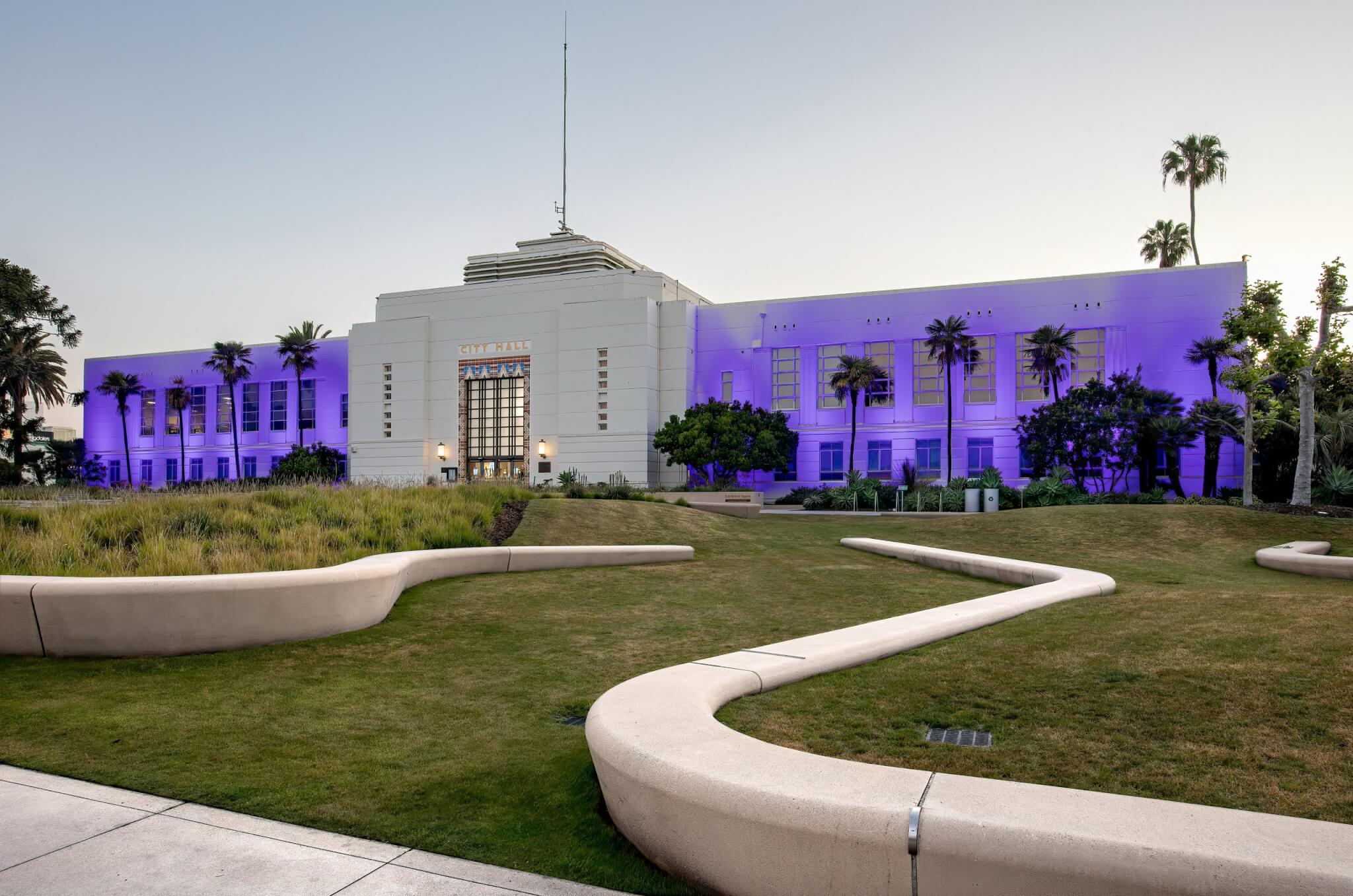
MCAA member companies continue to collaborate on current projects, finding and creating innovative techniques and solutions. Read below to learn more about CPMCA member Murray Company’s work on the Santa Monica City Hall Building.
Murray Company was brought on by general contractor Hathaway Dinwiddie to install Southern California’s first-of-its-kind fully functioning plumbing system that complies with the Living Building Challenge (LBC) requirements set forth by the International Living Future Institute.
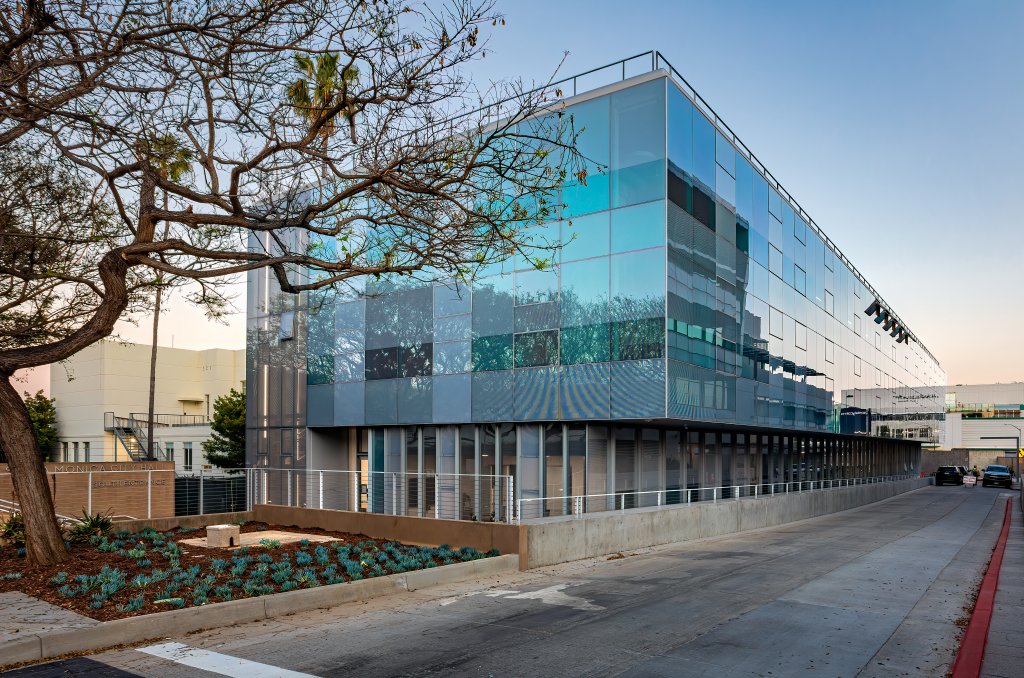
The project is a 50,000-square-foot building attached to a registered historic landmark, the Santa Monica City Hall Building. The building, located in Santa Monica, Calif., will house the City Building & Safety Permit Services Center, in addition to City staff offices and ancillary spaces currently housed in multiple leased spaces throughout the city.
The City is pursuing a full LBC certification which provides the most sustainable design, construction, and operation of the facility. The LBC is the most stringent sustainability standard for the construction industry. It focuses on 20 imperatives, including energy, water, construction waste and urban agriculture. Regenerative power will use the natural environment to bring this unique building to life.
The building façade is heavily fritted to minimize heat gain and energy solutions like PhaseChange, an organic material found in the walls designed to melt and absorb heat in its space. This heat absorption prevents high temperatures from entering the building, creating a thermal mass barrier. These are just some of the ways the building attains its Net Zero and sustainability goals.
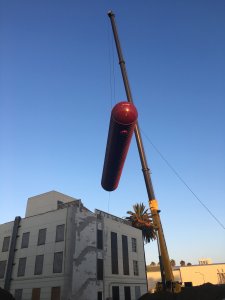
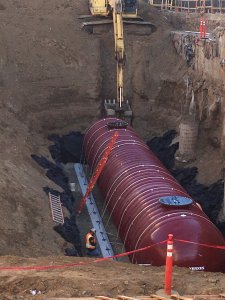
This 3-story, above-grade concrete structure (plus a basement) includes mechanically operated glazing vents, photovoltaics, gray water treatment for irrigation demand, and rainwater treatment for potable water use within the building. The Murray Company team installed a 40,000 gallon underground rainwater collection tank (measuring 10 feet x 74 feet) that collects rooftop rainwater from the storm and overflow drains as well as the carport canopies adjacent to the building. The rainwater distribution piping used for this application is 316 stainless steel with Shurjoint couplings that have an internal gasket rated for potable water use (EPDM-w).
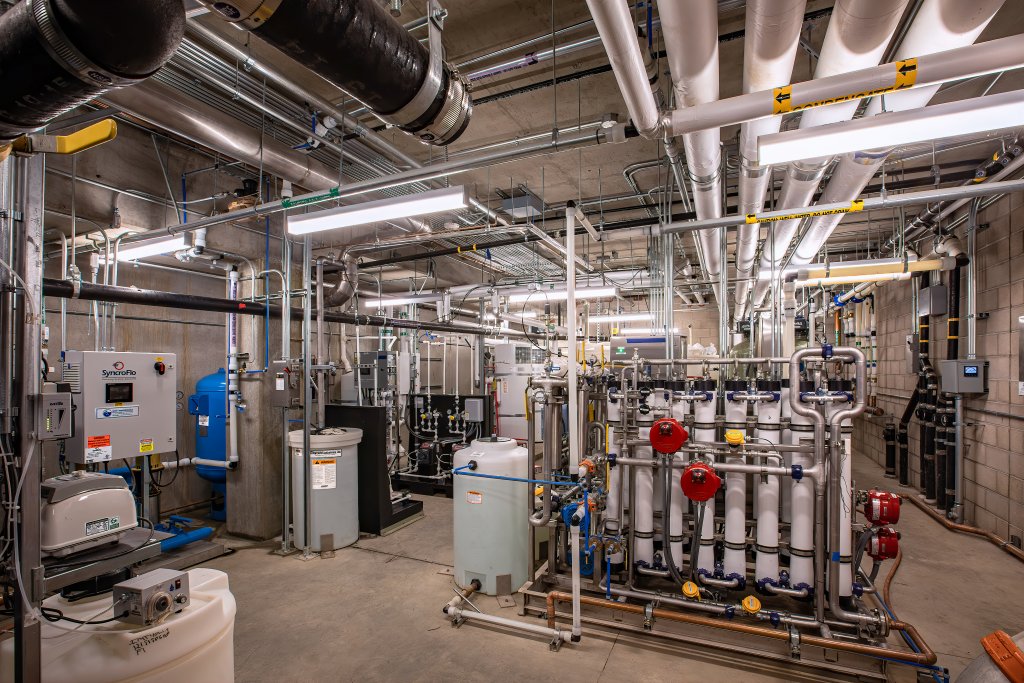
Additionally, the site includes a chemical injection water treatment system called On-Site Hypochlorite Generation (OSHG) system, manufactured by PSI Water Technologies, Inc. This allows the potable water system to be dosed with chlorination and fluoride that will be integrated into the potable water distribution system throughout the facility.
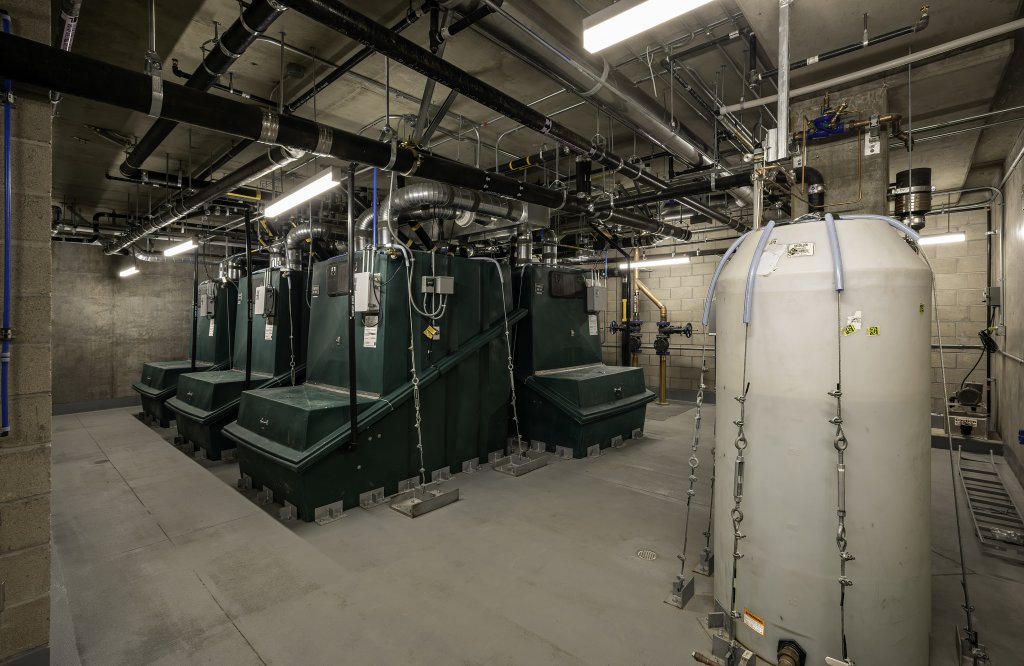
Another unique feature is the 100 percent waste conversion to compost system, which ties in a foam flush toilet system to expend only 3 tablespoons of water per flush. Six compost bins were key to the water strategy, providing a 50 percent reduction in the need for potable water demand.
Murray Company’s crew included team captain Steve Molina (Project Manager) alongside Virginia Brown (Project Executive), Aina Cortez (Project Engineer), Jason Hernandez (General Superintendent), Gerald Bender (Detailer) and Mike Bogroff (Foreman). The team’s innovation and adaptability to the demands of this extraordinary project are the new way forward for plumbing and construction.