Organization: MCAA

Find the Latest from Aquatherm LP and Tyler Pipe & Coupling in MCAA’s Virtual Trade Show
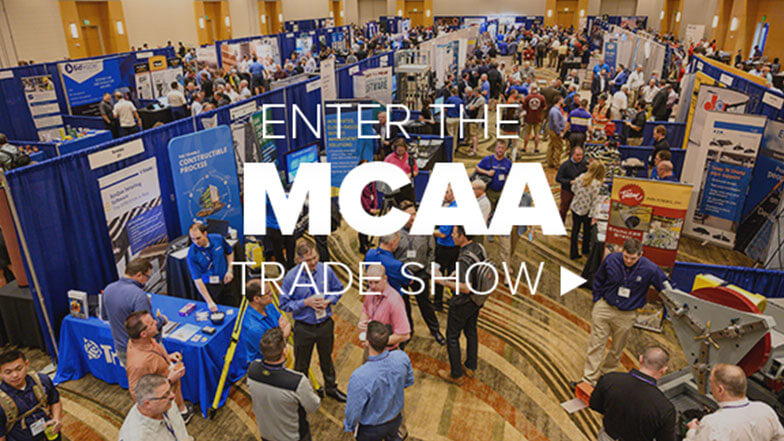
MCAA’s Virtual Trade Show connects our contractor members with the members of MCAA’s Manufacturer/Supplier Council.

Participating companies highlight and link to new products, product lines, services, solutions or web pages of particular interest. Here are just a few of the recent additions:
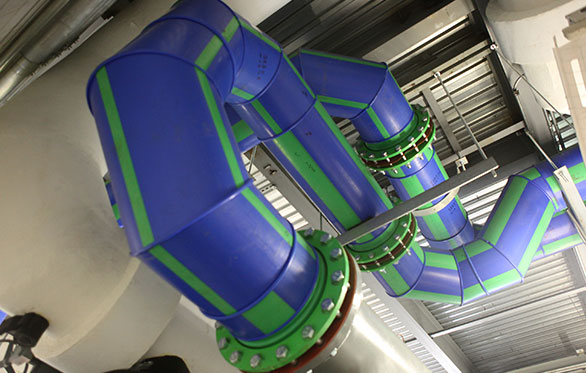
Aquatherm LP
Engineered from scale- and corrosion-resistant polypropylene, Aquatherm Blue Pipe® is ideal for commercial heating and cooling systems and many other non-potable applications. It is available in sizes ranging from ½-in. to 24-in. to handle any size project. Aquatherm pipe and fittings are connected using virtually leak-free heat fusion, and have an anticipated life span of 50+ years.

Tyler Pipe & Coupling
Tyler Pipe & Coupling produces quality cast iron soil pipe and fittings and no-hub couplings in the heartland of America. Visit our website to see how quality cast iron is made right here in the USA.

Need Something Else?

Find many more smart solutions in MCAA’s Virtual Trade Show!

Speaking of Smart Solutions

Visit the Smart Solutions Case Studies area of our website to learn how other mechanical contractors found their win-win with cost-saving and productivity-enhancing applications from members of MCAA’s Manufacturer/Supplier Council.

This section of our website also includes tips and ideas to help your company save money and enhance your productivity. Don’t miss it!

Connect With Additional Manufacturer/Supplier Training

Save yourself time and let MCAA connect you to the latest Manufacturer/Supplier member’s training opportunities. Visit the Manufacturer/Supplier Training area of the Resource Center to get started. 

Foundations of Field Leadership Online: Registration NOW OPEN!

Courses begin April 16, 2026

If you want to fast-track your new and aspiring field leaders, MCAA has just the program! Once a week for 8 weeks, FFL students spend 90 minutes online with an experienced field leader, who will walk them through best practices and practical strategies of running work and running a crew. From Planning to Leadership, from Documentation to Safety: our instructors break down the ‘why’ and the ‘how’ of things that every foreman must understand to be successful.

Foundations of Field Leadership (FFL) is taught by senior field leaders with extensive experience running mechanical jobs. The program is based on the input of 42 mechanical field leaders from MCAA member companies across the country. The topics covered in this course were identified by these 42 experts as being the most important things for new field leaders to learn.

Each lecture is a combination of best practices, lessons learned, and tips and tricks provided by the field leaders themselves – based on their experience and leveraging their extensive knowledge of the role of a field leader. The course is made up of weekly online lectures with real-time student interaction, quizzes, and short video assignments.

We have currently had over 500 students graduate from past FFL courses, and we look forward to welcoming more during the next round of classes. Here are a few comments from our past FFL grads on their weekly classes:

  • “Very easy to listen to the instructor, very knowledgeable and personable.”
  • “I like learning from someone with a lot of experience and learning how to do the job more efficiently.”
  • “I appreciated [the instructor’s] content. I’ve been in the trade for 25 years and have only been running work for the last 3 years. I’ve either been in or around all the situations [the instructor] spoke about today and appreciated his insight. Great ways to handle things.”
  • “The information was delivered clearly and was easy to understand. It gave everyone the chance to apply their thoughts and comments.”
  • “[I appreciated the instructor] acknowledging the fact that being in this class is a step forward in my career, and it feels good to know my hard work and dedication hasn’t gone unnoticed by my company.”

Registration is now open for our next round of classes, which begin April 16th. There is no limit on how many new or potential field leaders an MCAA member can enroll, but registration will be done on a first-come, first-served basis. Visit the FFL course webpage to learn more about this exciting opportunity for new and future field leaders, and to sign your people up today!

MCAA Government Affairs Update for the Week of February 9, 2026: The Latest Developments Impacting Our Industry

As part of its ongoing commitment to protecting your livelihood and setting the stage for a bright future, MCAA has secured the services of Longbow Public Policy Group to advise our MCAA Government Affairs Committee (GAC). GAC Chair, Jim Gaffney will be passing along information relative to our industry on a regular basis.

On Monday, February 9, 2026 MCAA Lobbying Firm, Longbow Public Policy Group provided the following information:

Trump Administration

  • Last Friday, the Office of Personnel Management released a final rule anticipated to result in the conversion of approximately 50,000 career civil servants to a new category of federal employment that would lack traditional civil service job protections. Employees reclassified under this new schedule could be removed by political appointees and replaced without violating civil service laws. Under the new rule, Trump Administration appointees at federal agencies will recommend positions for conversion to this new category, but the final determination will be made by the President through executive order. The rule is expected to primarily affect career officials who draft, edit, interpret, or influence policy, including senior career leadership such as regional directors and heads of operating units across cabinet departments and independent agencies. The final rule is intended to empower political leadership at federal departments and agencies to ensure that people holding key career government posts can be held accountable if they do not faithfully and vigorously advance administration priorities.
  • Last Wednesday, the Internal Revenue Service (IRS) published a proposed rule revising regulations for the Clean Fuel Production Credit (Section 45Z) established by the Inflation Reduction Act (IRA) and amended last year by the One Big, Beautiful Bill Act (OBBBA). The proposal is intended to support expanded sales of domestically produced biofuels, including low-emissions transportation fuels, by implementing OBBBA changes extending the credit for fuel sold on or before December 31, 2029 and broadening the definition of qualifying sales to include transactions involving wholesalers, dealers, and other intermediaries. The Section 45Z credit consolidates prior biodiesel and sustainable aviation fuel incentives and applies to fuels produced after December 31, 2024. The proposed rule also sets detailed eligibility requirements for producers and facilities, clarifies how emissions rates will be calculated for both sustainable aviation fuel (SAF) and non-SAF transportation fuels, and establishes new restrictions related to foreign and foreign-influenced entities. Biofuel producers are still awaiting updated Department of Energy emissions models necessary to take advantage of this credit.
  • Administrators of MCAA health plans should take note that last Thursday, the Trump Administration launched TrumpRx, a new direct-to consumer website intended to lower prescription drug costs by steering patients to manufacturer discounts and cash-pay offers. The platform does not sell drugs directly but instead serves as a clearinghouse linking users to pharmaceutical companies’ own websites or providing coupons for use at pharmacies. At launch, TrumpRx features discounted drugs from five participating manufacturers—AstraZeneca, Eli Lilly, EMD Serono, Novo Nordisk, and Pfizer—with a heavy emphasis on GLP-1 obesity and diabetes drugs. However, analysts caution that because direct-to-consumer purchases may not count toward insurance deductibles or out-of-pocket limits, TrumpRx is expected to be of greatest benefit to people who do not have prescription drug coverage.
  • To advance its goal of reducing U.S. reliance on China and strengthening domestic supply chain resilience,the Trump Administration last Monday announced that the Export-Import Bank of the United States (EXIM) approved up to $10 billion in financing to launch Project Vault, a new public-private partnership establishing a U.S. Strategic Critical Minerals Reserve aimed at strengthening supply chain security and domestic manufacturing. Project Vault is designed to support U.S. production and processing of critical minerals while delivering a net positive return for taxpayers and advancing national security objectives tied to energy infrastructure, advanced manufacturing, defense, aerospace, electric vehicles, and consumer electronics. Participants include GE Vernova, Boeing, Western Digital, and Clarios, alongside global commodity suppliers such as Mercuria, Hartree Partners, and Traxys. This comes as Vice President JD Vance separately unveiled plans last Wednesday for a preferential trade bloc of allied nations for critical minerals, proposing coordinated price floors enforced through adjustable tariffs. The proposal is intended to prevent cheap minerals from undercutting domestic producers and help unlock private investment in mining and processing.
  • The Labor Department Inspector General’s Top Management and Performance Challenges report released last Monday indicates that the Occupational Safety and Health Administration (OSHA) could use more inspectors. The ranks of OSHA inspectors have declined from 846 in February 2024 to 736 in June 2025—making it increasingly difficult to inspect a meaningful share of the nation’s 11.6 million worksites. The report notes that in 2026, OSHA and its state partners together are expected to field just 1,720 inspectors responsible for overseeing approximately 144 million workers. The Inspector General warns that a lack of qualified inspectors can lead to fewer inspections, weaker enforcement in high-risk industries like construction, and heightened risks of worker injuries, fatalities, or compromised health. Concern about the dwindling ranks of OSHA inspectors comes as Bureau of Labor Statistics data shows that in 2024 employer-reported nonfatal workplace injuries and illnesses fell to their lowest level since 2003, with 2.5 million injuries reported—down roughly 3% from 2023. The decline was driven by a 26% drop in illness cases, including a 46% reduction in respiratory illness cases to the lowest level reported since the onset of COVID-19 in 2019.
  • As the MCAA continues discussions on federal permitting reform with the Trump Administration, last week we received notice of the Food and Drug Administration’s plans to start accepting requests to participate in its new PreCheck Pilot Program aimed at streamlining the review and inspection process for the construction of pharmaceutical manufacturing facilities. Facilities will be selected for the pilot program based on their alignment with national priorities, including the products to be manufactured, the stage of facility development, timelines for supplying the U.S. market, and the use of innovative approaches in facility design and construction.

Congress

  • Last week, the House voted 217–214 to end a four-day partial government shutdown, approving a bipartisan funding package that provides full fiscal year (FY) 2026 appropriations for the Departments of Labor, Energy, Transportation, Health and Human Services, Defense, Treasury, Justice, State, and Education, along with several independent agencies, while the Department of Homeland Security (DHS) remains on a continuing resolution (CR) that expires February 13th. If DHS funding continues on a CR or lapses after February 13th, key infrastructure, shipbuilding, and disaster-response investments in the House-passed FY2026 Homeland Security Appropriations bill will not go forward, including $26.4 billion for FEMA’s Disaster Relief Fund, $40 million for deferred Coast Guard shoreside maintenance, $30 million for cutter and boat maintenance, and $98 million for Waterways Commerce Cutters. Democrats and Republicans remain far apart on a DHS funding deal due to disagreements over the Trump Administration’s immigration enforcement policies. Last Thursday, House Minority Leader Hakeem Jeffries (D-NY) and Senate Minority Leader Chuck Schumer (D-NY) sent Republicans a letter restating policy demands to “rein in ICE” they have made for weeks, including barring ICE agents from wearing masks and requiring that they wear body cameras. Senate Majority Leader John Thune (R-SD) called Democrats’ demands “unrealistic” and Senate Republicans are preparing a clean, full-year continuing resolution to fund Homeland Security for the remainder of this fiscal year because they doubt they can reach agreement with Democrats ahead of the current February 13th deadline. The DHS funding fight is also unfolding amid the Trump Administration’s efforts to ease tensions in Minnesota over immigration enforcement. Last Wednesday, President Trump ordered Border Czar Tom Homan to draw down roughly 700 federal law enforcement officers in Minnesota, about a quarter of those deployed during the immigration enforcement surge in the state, citing increased cooperation from state and local authorities.
  • MCAA health plan trustees should know that the appropriations package signed into law last Tuesday ending the partial government shutdown included a series of pharmacy benefit manager (PBM) reforms, including new transparency requirements, provisions delinking PBM compensation from drug list prices, and a requirement for full rebate pass-through in Medicare Part D. The package also extended Medicare telehealth flexibilities for two years and the hospital-at-home program for five years, continued funding for community health centers, delayed in-person requirements for tele-mental health services until January 1, 2028, and required the Department of Health and Human Services to issue guidance within one year on delivering telehealth services to individuals with limited English proficiency. The legislation comes as the Federal Trade Commission secured a settlement with Express Scripts and affiliated entities Caremark Rx and OptumRx to resolve allegations that the companies inflated insulin list prices through anticompetitive rebating practices that increased patient out-of-pocket costs. Against this backdrop, Senate Finance Committee Ranking Member Ron Wyden (D-OR), along with Sens. Catherine Cortez Masto (D-NV), Peter Welch (D-VT), and Ruben Gallego (D-AZ) released a Dear Colleague letter outlining a broader framework to lower prescription drug costs by expanding Medicare drug price negotiations, reducing out-of-pocket costs by further cracking down on PBMs, and bolstering domestic pharmaceutical innovation through the tax code and increased funding for federal research, including at the NIH.
  • Last week, the House Republican majority shrank yet again after House Speaker Mike Johnson (R-LA) swore in Democrat Christian Menefee to represent Texas’ 18th Congressional District, filling a seat left vacant by the death of Rep. Sylvester Turner (D-TX) after nearly a year without representation for the Houston-area district. Menefee’s swearing-in narrowed the House GOP majority to 218–214, leaving Speaker Johnson with just a one-vote margin on party-line legislation.
  • Last Tuesday, the MCAA policy team engaged with the House Energy and Commerce Subcommittee on Energy as it held a hearing entitled “Oversight of FERC: Advancing Affordable and Reliable Energy for All Americans,” featuring testimony from all five Federal Energy Regulatory Commission commissioners focused on rising energy costs, grid reliability, and the challenge of meeting rapidly growing electricity demand driven by data centers, manufacturing, and artificial intelligence. During the hearing, Republicans warned that the electric grid is under severe stress from baseload retirements, permitting delays, and infrastructure constraints. They urged FERC focus on its role as an economic regulator to ensure reliability, affordability, and U.S. competitiveness. Democrats countered that electricity prices are rising nationally due to interconnection failures and outdated grid planning, criticized Trump Administration actions to block new clean energy projects, and emphasized that large data centers must pay their fair share without shifting costs to residential and small business ratepayers. FERC Chair Laura Swett stressed the Commission’s bipartisan mission and commitment to legal durability, regulatory certainty, and staffing capacity. She highlighted FERC’s efforts to streamline permitting, reduce interconnection delays, expand blanket authorizations, and establish transparent rules for serving large data center loads while protecting consumers. FERC Commissioners also underscored the urgency of “speed to power” (the ability to bring new generation, transmission, and large loads online quickly enough to keep pace with rising demand without compromising reliability or driving up costs) particularly following Winter Storm Fern. Throughout the hearing, the Commissioners emphasized protecting affordability through fair cost allocation, ensuring new large loads cover the infrastructure costs they trigger, advancing durable long-term solutions rather than temporary fixes, and maintaining bipartisan consensus to provide regulatory predictability and support timely investment in energy.
  • Last week, the MCAA policy team also monitored the House Education and Workforce Subcommittee on Health, Employment, Labor, and Pensions’ hearing entitled, “Building an AI-Ready America: Adopting AI at Work,” which examined how AI is being deployed across workplaces and what that means for productivity, job quality, and worker protections. Subcommittee Chairman Rick Allen (R-GA) emphasized the need to balance innovation with worker safeguards, including the continued applicability of the National Labor Relations Act (NLRA) and the importance of improved federal data collection to understand the workforce impacts of AI. Democratic Ranking Member Mark DeSaulnier (D-CA) warned that unchecked AI adoption could widen power imbalances in the workplace through surveillance and hiring and other processes driven by discriminatory algorithms. Witnesses outlined competing approaches to managing AI in the workplace. Bradford Kelley of management law firm Littler Mendelson argued that existing federal workplace laws, including Title VII, the NLRA, and the Fair Labor Standards Act, are largely sufficient to address AI-related misconduct and cautioned that premature or fragmented AI-specific regulation could stifle innovation and create compliance uncertainty. Revana Sharfuddin of the Mercatus Center at George Mason University contended that current federal data systems are insufficient to measure AI’s task-level effects on workers and recommended targeted investments in Bureau of Labor Statistics and Census Bureau surveys to better track AI adoption, job redesign, and labor-market impacts. Tanya Goldman of Workshop emphasized that workers are already experiencing harm from opaque AI-driven hiring systems, wage setting software, surveillance, and algorithmic management. She called for stronger enforcement resources, transparency and disclosure requirements, human oversight and appeal rights, regular impact assessments, and preservation of states’ ability to enact additional worker protections. The hearing took place amid new reporting on a surge of private-sector investment in AI systems designed to enable robots to perform complex physical tasks in construction, energy, logistics, manufacturing, and other traditionally blue-collar industries. These technologies are heightening concerns that AI-driven job disruption will extend beyond office work and underscoring the urgency of developing clearer data, oversight, and worker protection frameworks.

Around the Country

  • As the MCAA policy team continues working with the Trump Administration on accelerating deployment of nuclear technology, last week we were informed that the Department of Energy’s (DOE) Office of Environmental Management is restarting uranium recovery operations at the Savannah River Site’s H Canyon facility in South Carolina, enabling the production of high-assay low-enriched uranium for advanced reactors as well as the recovery of isotopes for scientific research, medical applications, and commercial uses. H Canyon is the only production-scale, radiologically shielded chemical separations facility in the U.S. The announcement followed a separate move last Tuesday in which DOE said it is partnering with nuclear fuel company General Matter to assess returning the Hanford Site’s Fuels and Materials Examination Facility in Washington State to service for advanced nuclear fuel cycle technologies and materials. Under that partnership, DOE signed a lease granting General Matter access to the 190,000-square-foot facility, with the company responsible for site characterization, evaluating potential upgrades, and leading engagement with local communities and stakeholders to determine feasibility. Finally, DOE’s Office of Nuclear Energy awarded more than $19 million to five companies last Thursday to research and develop recycling technologies for used nuclear fuel. The companies getting the funding are Oklo, Alpha Nur, Curio Solutions, Flibe Energy, and SHINE Technologies.
  • MCAA members operating in Vermont should take note that last Wednesday, the General Services Administration announced the release of a final Environmental Assessment and Finding of No Significant Impact for the Richford, VT Land Port of Entry project, clearing the way for construction to begin this fall. The project will modernize and expand the nearly century-old port of entry at the U.S.–Canada border between Richford, Vermont and Abercorn, Quebec, replacing facilities that no longer meet current U.S. Customs and Border Protection design and operational standards. Planned upgrades include new officer work areas, secure inspection and holding spaces, and major plumbing, mechanical, and electrical improvements, along with exterior enhancements such as reconfigured traffic lanes, mechanical gates, guardrails, and bullet-resistant inspection booths to improve safety, security, and traffic flow for both commercial and non-commercial crossings. The project is expected to cost between $36 million and $44 million.
  • MCAA members involved in energy infrastructure and pipeline construction and maintenance in the Midwest should be aware that last Tuesday, the Trump Justice Department’s Environment and Natural Resources Division and Civil Division filed a statement of interest in a case before the U.S. District Court for the Western District of Wisconsin involving the potential shutdown of Enbridge’s Line 5 pipeline as it crosses the Bad River Reservation. The filing seeks to reverse the district court’s injunction that would require Enbridge to cease pipeline operations by June 16th, arguing that an immediate shutdown would disrupt the nation’s energy supply chain and drive up costs for consumers. The Trump Justice Department emphasized that the case has been under appeal before the U.S. Court of Appeals for the Seventh Circuit since 2023 and warned that imposing operational restrictions while appellate review is ongoing would be premature. Citing President Trump’s declaration of a national energy emergency, DOJ officials said there are no readily available alternatives to transport the energy products currently flowing through Line 5, and that shutting down the pipeline would harm U.S. energy security and economic stability.

  • The rapid expansion of data center development is being shaped by both growing private-sector capital interest and increasingly divergent state policy approaches focused on infrastructure readiness. Prologis, the world’s largest owner of industrial real estate, said it is weighing a dedicated co-investment vehicle focused on data centers, citing rising demand, with a decision expected in the coming months. Prologis expects to break ground on $4 billion to $5 billion in new developments in 2026, with data centers accounting for roughly 40% of the projected value, up from about 10% of its $3 billion in development starts last year. At the same time, states are adopting different strategies to manage that growth. In Pennsylvania, Gov. Josh Shapiro (D) announced “Governor’s Responsible Infrastructure Development” standards that would condition public support for data centers on developers funding their own power generation, hiring and training local workers, engaging communities, and meeting water and environmental requirements in exchange for faster permitting and tax incentives. By contrast, Texas is attracting hyperscale demand by moving projects with power and permits already secured, as evidenced by the Texas Commission on Environmental Quality’s approval of Pacifico Energy’s 7.65-gigawatt GW Ranch project in the Permian Basin. The project is a gas-fired, private-grid power complex designed specifically to support large-scale data center development without drawing on the public grid.
  • As the MCAA defends President Biden’s MCAA-supported 2022 executive order mandating the use of project labor agreements (PLAs) on federally funded construction projects costing $35 million or more, there is a new legal battle involving the Baltimore–D.C. Metro Building and Construction Trades Council, which on January 30th filed a lawsuit in federal court in Virginia against the Metropolitan Washington Airports Authority (MWAA). The suit alleges that MWAA is unlawfully failing to require PLAs on large construction projects at Ronald Reagan Washington National Airport and Washington Dulles International Airport. The complaint argues that MWAA’s decision to forgo PLAs on projects exceeding $100 million violates both a 2022 MWAA resolution and President Biden’s 2022 PLA executive order. The Council is seeking an injunction barring MWAA from awarding federally eligible large-scale construction contracts without a PLA, asserting that continued non-compliance undermines labor stability and the union’s bargaining position with airport contractors.

It’s Not Too Late to Join Us at MCAA26 — Featuring Newly Inducted Pro Football Hall of Famer Drew Brees

If you’ve been waiting for the right moment to register, here’s the good news: there’s still time to attend the 2026 MCAA Annual Convention—and every reason to do so.

This year’s speaker lineup delivers timely insights, fresh perspectives and real-world takeaways tailored to today’s mechanical contracting landscape. One of our keynote speakers, Drew Brees, was just inducted into the Pro Football Hall of Fame as part of its 2026 class, announced during the NFL Honors awards show Thursday night—bringing even more excitement to an already standout program. Brees brings a remarkable legacy to the stage—Super Bowl XLIV champion and MVP, 13-time Pro Bowler, and one of the most accomplished quarterbacks in NFL history. Beyond his on-field achievements with the Chargers and Saints, he is widely recognized for his philanthropic leadership through the Brees Dream Foundation, which has contributed more than $50 million to support communities in need. His blend of discipline, leadership and service makes his appearance at MCAA26 especially meaningful.

What truly sets the MCAA Annual Convention apart is the quality of networking. From structured sessions to casual conversations at social events, attendees have countless opportunities to build meaningful relationships with peers, partners and future collaborators. These are connections that don’t end when the convention does—they continue long after, strengthening businesses and the industry as a whole.

MCAA26 is more than a convention—it’s a chance to reconnect with colleagues, gain valuable insights and be part of the conversations shaping the future of our industry. With hotel rooms still available, an outstanding speaker roster and unmatched networking opportunities, now is the perfect time to register.

We look forward to welcoming you to Phoenix this March.

Register today!

Rob Cross of Baker Group Named MCAA’s 2026 Innovator of the Year

At Baker Group, innovation didn’t start with a new tool. It started with capacity.

As project demand surged, the contractor had to rapidly expand its ability to deliver. Fabrication space more than doubled. Off-site manufacturing output increased. Logistics between shops and jobsites were tightened. Production steps were automated. New material handling methods were introduced. Formal quality controls, including ISO 9000 standards, were put in place.

The company wasn’t experimenting. It was scaling.

Helping lead that effort was Rob Cross, who spearheaded the operational transformation and was recognized this year as the MCAA’s Innovator of the Year at the MEP Innovation Conference in Austin.

Colleagues say Cross’s impact comes less from pushing technology and more from empowering people to use it. As his nomination declared, “Rob champions everyone under him to be great stewards of tech and innovation. He doesn’t stand in the way. He lets his talented team drive the innovation.”

Cross credits his collogues as well.  “I have been fortunate enough to work for Baker Group who has given us the flexibility to try new things and when the great team behind us come up with ideas, they run with it,” he said. “When we fail, we learn from the mistakes. We continue to make improvements along the way. Being an innovator is not done in a vacuum. It is working with a great team of people that are all trying to move our industry forward.”

The results show up in throughput, coordination, and predictability. In a market defined by larger, faster, and more complex projects, Baker Group has built the operational capacity to keep pace. Cross’s recognition reflects that work.

MEP Innovation Conference Signals a Shift From Jobsite Thinking to Manufacturing Discipline

A nationwide winter storm swept across much of the country as this year’s MEP Innovation Conference began, disrupting flights and forcing last-minute travel changes. Even so, more than 600 contractors, technology leaders, and operations executives made it to Austin, Texas, filling ballrooms and breakout rooms with a clear purpose: figure out how to build smarter and faster in a market that isn’t slowing down.

Over the course of the conference, attendees moved through more than 40 education sessions, including general sessions, breakouts, roundtables, and workshops. The tone was practical and candid. Speakers talked less about what might happen someday and more about what they are doing right now inside their shops and on their jobsites.

Across sessions, the same themes surfaced repeatedly. Fabrication capacity is expanding. Data is becoming a daily management tool instead of an afterthought. Artificial intelligence is moving from experiments to real workflows. Contractors are standardizing processes and building internal systems that look increasingly like manufacturing operations rather than traditional construction sites.

The conference’s headline general session focused on one of the strongest forces driving that shift: the surge in data center construction. Leaders from Poole & Kent, Dynamic Systems Inc., and Google — including Adam Snavely, Rick Gopffarth, and Steve Ford — described the scale and speed now expected on hyperscale projects. Schedules are tighter, tolerances are smaller, and the volume of work favors contractors who can fabricate assemblies off-site, plan logistics precisely, and deliver repeatable results.

In that environment, traditional approaches struggle to keep up. Data center construction is proving disruptive in both scale and speed, with forecasts pointing to an enormous pipeline of work that can overwhelm labor, fabrication capacity, and supply chains all at once. No single contractor can muscle through it alone. Success depends on tighter coordination between trades, deeper planning with owners and vendors, and a level of collaboration that looks more like manufacturing than conventional construction. For many attendees, the takeaway was clear: this isn’t about adopting the latest tool. It’s about building systems, partnerships, and operational discipline strong enough to handle a wave of work that can’t be delivered the old way.

That mindset carried into the smaller rooms. Breakouts and roundtables focused on dashboards and key performance indicators, connecting field and fabrication data, and applying AI to automate routine tasks such as estimating, document review, and reporting. The most valuable sessions often came from contractors walking through what didn’t work first, then explaining how they corrected course.

The conference also recognized leaders who are pushing the industry forward inside their own organizations and communities. Innovator of the Year honors went to Rob Cross of Baker Group for mechanical, Mark Lotspeich of Dynalectric Oregon for electrical, and Jennifer Clark of General Sheet Metal for sheet metal, each recognized for implementing new processes, testing emerging tools, and building teams that can adopt change without disrupting day-to-day operations.

An additional Industry Advocacy Award went to Angie Simon of Heavy Metal Summer Experience for her work recruiting high school students into mechanical, electrical, and sheet metal careers. At a time when labor shortages remain a constant concern, her efforts to introduce younger workers to the trades addressed a challenge that technology alone cannot solve.

Taken together, the week’s discussions pointed to an industry that is no longer experimenting at the edges. Contractors are investing in fabrication facilities, formalizing data practices, and building internal technology leadership. Innovation is showing up less as flashy tools and more as steady operational improvements that compound over time.

By the close of the conference, the message was straightforward: The companies that treat construction like a system — measured, repeatable, and data-driven — are pulling ahead. The rest are feeling the pressure to catch up.

In Austin, that shift didn’t sound theoretical. It sounded underway.

Don’t Miss Next Year’s Event!

The 2027 MEP Innovation Conference will take place January 25-27, 2026 in Tampa, FL. Watch this site and the National Update for an announcement when registration opens this fall.

Resource Highlight: UA/MCAA’s Utilizing the Industrial Relations Council to Effectively Resolve Labor-Management Disputes

The UA and its signatory contractor partners are experiencing unprecedented labor and construction demand, helping them grow union market share. Maintaining this market share requires access to reliable, cost-effective resources for resolving jobsite and bargaining disputes. The UA/MCAA’s Utilizing the Industrial Relations Council to Effectively Resolve Labor-Management Disputes explains how the Industrial Relations Council can be used to effectively resolve labor-management disputes. It’s just one of MCAA’s educational resources that are free to MCAA members as a benefit of membership.

The white paper covers:

  • Introduction and History of the Industrial Relations Council
  • Rules, Regulations, and Policies of the Council
    • Negotiation Matters
    • Grievance/Arbitration Matters
  • Recent Trump Administration Actions Against the Federal Mediation and Conciliation Service (FMCS)
  • Alternatives to the FMCS
  • Comparative Benefits of the Council
    • Expertise
    • Speed of Resolution
    • Cost

CLRC Reports First Year Settlements Hold Steady for Union Craft Workers in Construction

The Construction Labor Research Council (CLRC), a longstanding MCAA partner, reports an average increase of 4.7 percent in the first year of new settlements reached in 2025 for union craft workers in the construction industry, the same as in 2024. The findings appear in the CLRC 2025 Year End Settlements Report. The report covers the first year of newly bargained settlements to assist readers in understanding current trends. It also covers all years of negotiated settlements to assist in projecting future labor costs.

In addition to a general overview, the report provides various detailed data cuts, including by geographic region and specific craft.

For additional information, contact Carey Peters, Executive Director, at 865-414-2678 or clpeters@clrcconsulting.org.

Inspire Your Field Leaders to Strive for Greatness at the 2026 Field Leaders Conference

April 7-9, 2026 | Houston, TX

MCAA’s Field Leaders Conference is where field leaders realize their importance and value as professionals and members of the management team. When your field leaders join us in April, they will learn the skills they need to be business, and results, oriented managers focused on growing company profits and brand. Register them today!

SESSION HIGHLIGHT

What Does it Mean to be a Great Foreman?
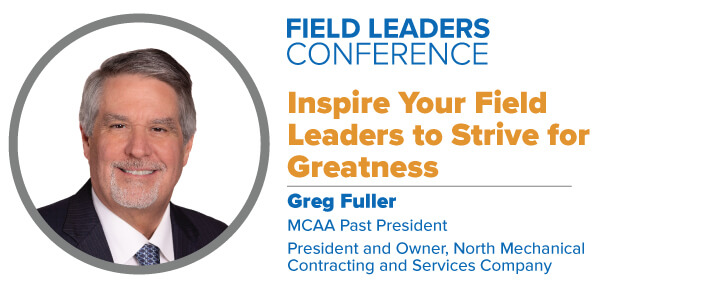
with Greg Fuller, MCAA Past President & President and Owner, North Mechanical Contracting and Services Company

Your foremen didn’t get where they are by coasting. They’re good at what they do, and they can get even better by cultivating the attributes of great foremen. Greg Fuller, whose career spans from apprentice to company president and MCAA President, will lead a discussion of the top 10 attributes of great foremen. He will inspire your field leaders with new ideas and energy, to look at their role differently through an important professional lens, so they come back highly motivated to strive for greatness.

Greg Fuller is the President and Owner of Indianapolis-based North Mechanical Contracting and Services Company. Greg began learning about the craft at age five when he’d meet his father on jobsites. His journey continued into his teen years when he stocked shelves in his father’s small plumbing service company while gaining new insights into the business. After completing his apprenticeship, he joined North Mechanical and moved up to Project Manager when the position opened with the departure of the owner’s son.

Financial Assistance Opportunities

The United Association’s (UA) International Training Fund (ITF) is offering $5,500 grants for UA/MCAA Foreman Administrators who attend one of the 2026 MCAA Field Leaders Conferences. These are UA members who have completed the UA Education and Training Department’s Foreman Certification Course 2012 and are responsible for proctoring and maintaining the integrity and security of the UA Foreman Certification Examination at their local union training center. Find additional information about these grants and learn how to apply.

Find the Latest from Anaco-Husky and Galloup Company in MCAA’s Virtual Trade Show

MCAA’s Virtual Trade Show connects our contractor members with the members of MCAA’s Manufacturer/Supplier Council.

Participating companies highlight and link to new products, product lines, services, solutions or web pages of particular interest. Here are just a few of the recent additions:

Anaco-Husky
Follow the Leader, choose Husky SD 4000 Heavy Duty Couplings. Visit our website and check out the new members of the Husky family.

Galloup Company
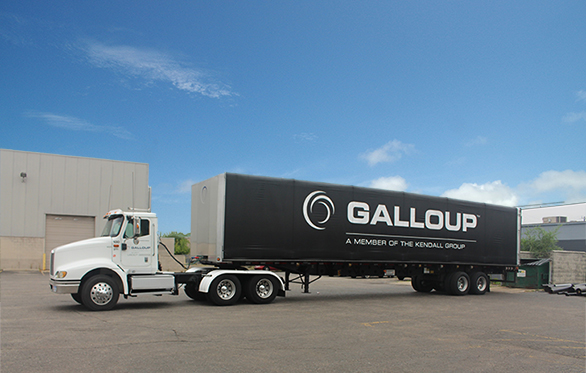
Galloup is a premier industrial distributor of pipe, valves and fittings, dedicated to service and support. Serving Michigan, Indiana and Ohio with nine facilities, including two distribution centers.

Need Something Else?

Find many more smart solutions in MCAA’s Virtual Trade Show!

Speaking of Smart Solutions

Visit the Smart Solutions Case Studies area of our website to learn how other mechanical contractors found their win-win with cost-saving and productivity-enhancing applications from members of MCAA’s Manufacturer/Supplier Council.

This section of our website also includes tips and ideas to help your company save money and enhance your productivity. Don’t miss it!

Connect With Additional Manufacturer/Supplier Training

Save yourself time and let MCAA connect you to the latest Manufacturer/Supplier member’s training opportunities. Visit the Manufacturer/Supplier Training area of the Resource Center to get started. 
MCAA’s Safety Statistics & Awards Program: Recognizing Members Who Put Safety First

Application Deadline: Close of Business March 20, 2026

MCAA’s Safety Statistics & Awards program rewards MCAA members’ safety performance, because safety is your top priority. All applicants receive a valuable benchmarking report that will allow them to compare their own 2025 incidence rates with the aggregate rates of the other participating MCAA companies overall, those in the same size category, and with the U.S. Bureau of Labor Statistics incidence rates. Those who qualify also receive a certificate of commendation. Apply today! Applications are due by close of business on March 20, 2026.

The program provides six awards categories including awards for zero recordable cases, zero lost workday cases, recordable cases incidence rates that are 25% or more below the industry average, lost workday cases incidence rates that are 25% or more below the industry average, and two that are a mix of these items.

To apply for this commendation, complete a simple reporting form with data from your company’s OSHA Form 300A. Online submissions are due by close of business on March 20, 2026.

Have Questions or Need Personal Assistance?

Contact MCAA’s Michael Nahas.

MCAA Government Affairs Update for the Week of February 2, 2026: The Latest Developments Impacting Our Industry

As part of its ongoing commitment to protecting your livelihood and setting the stage for a bright future, MCAA has secured the services of Longbow Public Policy Group to advise our MCAA Government Affairs Committee (GAC). GAC Chair, Jim Gaffney will be passing along information relative to our industry on a regular basis.

On Monday, February 2, 2026 MCAA Lobbying Firm, Longbow Public Policy Group provided the following information:

Trump Administration

  • As this week begins, Congress is racing to close a tentative deal the White House and Senate Democrats made late last week to fund the government following the expiration of the stop-gap funding measure enacted in November after the lengthy government shutdown. The deal separates the Department of Homeland Security (DHS) appropriations bill from a broader package containing the five remaining appropriations measures and advances a short continuing resolution (CR) to keep DHS funded at current levels until February 13 while lawmakers debate proposed changes to immigration enforcement. Senate leaders had been expected to quickly clear the remaining bills covering roughly $1.2 trillion in funding for Defense, Labor-HHS, Transportation-HUD (which includes funding for the Pipeline Safety Hazardous Materials Administration), Financial Services-General Government, and State and Foreign Operations funding fiscal year 2026 appropriations for approximately 96% of federal government operations. However, floor action stalled late last week after Sen. Lindsey Graham (R-SC) objected to expedited consideration of the funding package. This week, we will see if divisions within the narrowly divided House GOP majority over both the short-term DHS funding measure and new limits Democrats are pushing on immigration enforcement will further delay finishing the fiscal year 2026 funding bills.
  • Because MCAA has been engaged in ongoing permitting reform and decarbonization discussions with the Trump Administration, this week we got advance notice of President Trump’s surprise Executive Order (EO) 14377, “Addressing State and Local Failures to Rebuild Los Angeles After Wildfire Disasters” and the Interim Final Rule (IFR) the U.S. Small Business Administration (SBA) released on Thursday to implement it. The IFR enables SBA disaster loan borrowers to bypass certain state and local permitting requirements for rebuilding if the borrower has been unable to obtain required permitting approvals for 60 days or longer. Borrowers may have their builders self-certify compliance with state and local regulations and immediately begin rebuilding. The IFR requires builders to certify to the SBA that: (1) all required permit applications and approval requests were properly submitted more than 60 days earlier; (2) the delay in rebuilding is due to government inaction; and (3) all applicable building codes, health and safety requirements, inspections, and any other processes required to obtain a certificate of occupancy have been, and will be, met. More on the certification process and the related forms with the attestations contractors must sign is available here. While the situation in California prompted the Executive Order and the SBA rule, the rulemaking is not limited to California. It establishes a standard of general applicability for rebuilding funded with SBA disaster loans in any federally declared disaster area where state or local permitting delays are the “but-for” cause of delays of 60 days or more. The IFR applies retroactively to disaster loans approved on or after January 1, 2025. Although the rule took effect upon publication on January 29, 2026, the SBA is accepting public comments here through March 2, 2026 using RIN 3245-AI71.
  • The MCAA also saw progress last week on permitting reform on the regulatory front, with the White House Council on Environmental Quality (CEQ) Permitting Innovation Center last Thursday launching a pilot called CE Works. CE Works is a digital platform designed to streamline categorical exclusion determinations under the National Environmental Policy Act (NEPA). The pilot begins at the Bureau of Land Management’s Moab Field Office, with additional agency partnerships expected. The program was developed in coordination with the General Services Administration to modernize federal permitting technology pursuant to President Trump’s April 15, 2025 memorandum “Updating Permitting Technology for the 21st Century.” CEQ says the tool will help cut red tape and accelerate timelines for infrastructure and energy projects.
  • The MCAA’s outreach to the Department of Labor, to the extent it was channeled through the Secretary’s office, is becoming more complicated as the investigation into Labor Secretary Lori Chavez-DeRemer, her Chief of Staff, and her Deputy Chief of Staff continues. Both the Chief of Staff and Deputy Chief of Staff have been placed on administrative leave during the investigation. This week scrutiny of the Secretary expanded to the U.S. Senate Judiciary Committee as Chairman Chuck Grassley (R-IA) sent Secretary DeRemer a letter demanding her response to multiple allegations currently being investigated by the Labor Department’s Inspector General. Chairman Grassley asked the Secretary to respond by February 11, 2026, about allegations that while on official travel she took staff to a strip club in Portland, Oregon and fabricated other official work trips for personal travel at taxpayer expense. The Chairman also requested details about the Secretary’s travel to Palm Beach and four visits to Las Vegas last year, two of which included a staffer with whom she allegedly had an inappropriate relationship. Through her personal attorney, the Secretary has denied any wrongdoing, but she has not remarked on any of the allegations herself.
  • MCAA health plan trustees need to know that last week the Labor Department’s Employee Benefits Security Administration (EBSA) published its long-awaited proposed rulemaking to implement section 12 of President Trump’s April 15, 2025 Executive Order (EO) 14273, “Lowering Drug Prices by Once Again Putting Americans First.” The 78-page proposal is intended to help trustees of self-insured health plans gain greater transparency into the direct and indirect compensation received by pharmacy benefit managers (PBMs). It would require both providers of PBM services and affiliated providers of brokerage and consulting services to disclose compensation information to fiduciaries of ERISA self-insured group health plans. This is intended to enable fiduciaries to satisfy their legal obligation under ERISA to assess both the “reasonableness of the compensation” in light of the services being provided and the potential for or existence of conflicts of interest that may impact the quality of services provided. These disclosures would be provided on an initial basis prior to the self-insured group health plan entering into a service contract or arrangement and then on a semiannual basis thereafter. To ensure further transparency, the proposed rule includes provisions permitting the responsible plan fiduciary to audit PBM disclosures for accuracy. The rule also requires PBMs to detail the authority they retain to change a plan formulary and how often they expect to do so and requires PBMs to state affirmatively when they are acting as a plan fiduciary and list any relevant conflicts of interest. EBSA is also proposing a Prohibited Transaction Exemption intended to ensure that a covered service provider’s failure to comply with the proposed requirements will not result in a prohibited transaction by a responsible plan fiduciary acting diligently and in good faith with this regulation and other applicable laws and regulations. Comments are due by March 31, 2026 and should be submitted through the federal eRulemaking portal using RIN 1210-AB37.
  • MCAA health plan trustees may also be interested to see that the Centers for Medicare and Medicaid Services (CMS) released the list of 15 new medications selected for the Medicare drug price negotiation program under Medicare Part B (medical/outpatient coverage, including certain physician-administered drugs)andPart D (prescription drug coverage). The selected drugs treat conditions including HIV, type 2 diabetes, chronic lung disease, depression, and include Botox for Medicare-covered uses such as chronic migraines and overactive bladder. The medications to be negotiated this year include: Anoro Ellipta, Biktarvy, Botox and Botox Cosmetic, Cimzia, Cosentyx, Entyvio, Erleada, Kisqali, Lenvima, Orencia, Rexulti, Trulicity, Verzenio, Xeljanz and Xeljanz XR, and Xolair. According to CMS, these drugs accounted for approximately $27 billion in combined Medicare Part B and Part D spending between November 2024 and October 2025—about 6% of total Part B and Part D drug spending during that period. A CMS fact sheet on the update is available here.
  • We wanted to be sure that MCAA pension plan trustees were aware that last Tuesday the Pension Benefit Guaranty Corporation (PBGC) released its fiscal year (FY) 2025 Annual Report showing continued improvement in the financial condition of its Multiemployer insurance program, reflecting in part the ongoing effects of the Special Financial Assistance (SFA) program. The Multiemployer Program reported assets of $4.9 billion and liabilities of $2.3 billion as of September 30, 2025, resulting in a positive net position of $2.6 billion—an improvement of $516 million during the fiscal year. PBGC reported paying $6.2 billion in SFA to 48 financially troubled multiemployer plans in FY 2025, helping stabilize plan funding and contributing to the program’s long-term solvency outlook, even as the program also paid $169 million in traditional financial assistance to insolvent plans. Last week, PBGC also released its FY 2024 Projections Report showing the Multiemployer Program is expected to remain solvent for at least the next 40 years.
  • As MCAA continues engaging the Trump Administration on its plans for implementing President Trump’s Executive Order on “Preparing Americans for High-Paying Skilled Trade Jobs of the Future,” we wanted to make you aware that last week the Department of Labor announced that National Apprenticeship Week 2026 will be held April 26 through May 2. The theme will be “America at Work: Making America Skilled Again Through Registered Apprenticeship.” National Apprenticeship Week will feature events across all 50 states and U.S. territories highlighting how Registered Apprenticeship expands career pathways for workers and helps employers meet workforce needs in industries such as the skilled trades, nuclear, energy, shipbuilding, advanced manufacturing, and artificial intelligence.
  • MCAA contractors and workers engaged in pipeline, industrial piping, and energy infrastructure inspection and repair projects may see increased compliance scrutiny and potential retrofit demand following new federal safety guidance from the Pipeline and Hazardous Materials Safety Administration (PHMSA) warning hazardous liquid pipeline operators about the integrity risks associated with the long-term use of Type A repair sleeves, citing multiple incidents that resulted in significant environmental damage and industry costs. PHMSA said incident data shows that failures of Type A sleeves—steel sleeves welded around a pipeline but not welded to the carrier pipe—have been linked to improper installation, moisture intrusion, corrosion fatigue, inadequate cathodic protection, and pressure cycling, particularly where annular spaces are not properly sealed. The advisory highlights recent pipeline releases in South Carolina, North Carolina, and Pennsylvania where leaks originated beneath aging Type A sleeves and urges operators to strengthen integrity management by improving recordkeeping, validating inline inspection data, inventorying and assessing all installed Type A sleeves as potential integrity threats, conducting fatigue analyses for sleeves subject to pressure cycling, and enhancing leak detection and monitoring practices. PHMSA also reminded operators that unauthorized or poorly executed sleeve installations may be subject to enforcement under existing pipeline safety regulations, while emphasizing that the advisory does not impose new regulatory requirements but provides technical guidance to prevent future failures.

Congress

  • As part of our legislative efforts to advance federal permitting reform through Congress, last week MCAA engaged with the Senate Environment and Public Works Committee in connection with its second permitting reform hearing this Congress. Witnesses included LiUNA General President Brent Booker, Bechtel CEO Brendan Bechtel, and Dustin Meyer of the American Petroleum Institute, among other energy and infrastructure stakeholders. The hearing underscored bipartisan concern that current federal environmental review and permitting processes continue to delay or cancel major energy infrastructure projects—particularly interstate natural gas pipelines, liquefied natural gas export facilities, and cross-border oil and gas development—creating uncertainty for contractors, workers, and investors. Witnesses also emphasized that extended litigation timelines and state-level water quality certifications under Section 401 of the Clean Water Act have frequently been used to stall pipeline projects, discouraging capital investment, and contributing to higher regional energy costs.

    The MCAA succeeded in prompting members at the hearing to acknowledge broad agreement that federal permitting reform should be project- and technology-neutral, provide certainty for approved projects, reduce redundant administrative reviews, and impose clear timelines and limits on judicial review while preventing future administrations from unilaterally terminating previously approved projects. These priorities reflect the core principles the MCAA has consistently advanced in its ongoing engagement with lawmakers and industry stakeholders. Committee Chair Shelley Moore Capito (R-WV) and Ranking Member Sheldon Whitehouse (D-RI) both stressed the need to act on legislation this year, although Senator Whitehouse cautioned that progress would remain difficult unless the Trump Administration lifts its pause on previously approved offshore wind and other renewable energy projects approved during the Biden Administration.
  • Last Monday, Senate Health, Education, Labor, and Pensions Committee Republicans announced the creation of a new task force to combat fraud in federal spending, citing concerns that waste, fraud, and abuse are siphoning taxpayer dollars away from programs intended to support families, workers, patients, and retirees. The initiative follows heightened scrutiny of alleged large-scale misuse of federal welfare funds in Minnesota. The Task Force will be organized through the committee’s health, education, labor and pensions subcommittees. The Labor & Pensions component of the task force will be led by Sens. Markwayne Mullin (R-OK) and Tim Scott (R-SC), who will examine fraud affecting federal labor programs, retirement security, and worker benefits, with a focus on improper payments and misuse of funds intended for workers and seniors. Committee leaders said the task force will pursue aggressive oversight and investigations across federal programs and has launched a public tip portal to allow whistleblowers and citizens to report suspected fraud involving taxpayer dollars. MCAA will be watching to see if this Task Force raises issues about multiemployer pension plans or the Special Financial Assistance Program. Meanwhile, the Senate Homeland Security and Governmental Affairs Committee last Monday indefinitely postponed a scheduled hearing on “Examining Fraud in State and Federal Programs.”

Around the Country

  • The Trump Administration’s decision to freeze federal funding for the Gateway Development Commission’s $16 billion tunnel project will halt construction of the Hudson River rail tunnel linking New York City and northern New Jersey if it is not lifted by this Friday, February 6. Federal funds have been frozen since the government shutdown in October 2025. Project backers warn that a construction pause could jeopardize the entire multi-billion dollar project, and that stopgaps, such as additional backing from the Port Authority of New York and New Jersey, won’t be sufficient to close the funding gap. The pause follows public comments last year from President Trump suggesting that the Gateway project had been “terminated,” even as Trump Administration officials sent mixed signals about whether the promised funding will ultimately be released. New York and New Jersey lawmakers from both parties have vowed to fight the funding freeze, arguing that the Gateway Project is critical to the Northeast Corridor, regional economic stability, and thousands of union jobs.
  • On the decarbonization front, MCAA contractors performing work on power plants, industrial facilities, and pipelines should note that last Wednesday, the Environmental Protection Agency (EPA) proposed Phase 1 of its reconsideration of the Biden-era “Good Neighbor Plan,” moving to approve State Implementation Plans (SIPs) related to the 2015 eight-hour ozone National Ambient Air Quality Standards (NAAQS) for Alabama, Arizona, Kentucky, Minnesota, Mississippi, Nevada, New Mexico, and Tennessee. Under the proposal, these states would not be subject to additional federal “Good Neighbor Plan” requirements and could proceed with implementing the remainder of their SIPs. The original rule imposed stringent emissions-control obligations on sectors including power generation, natural gas pipeline operations, cement and steel manufacturing, metal mining, chemical production, and petroleum and coal product facilities.
  • As the MCAA continues advocating for federal policies supporting nuclear energy deployment and expansion of the domestic nuclear supply chain, last week both federal agencies and private industry advanced complementary initiatives strengthening the U.S. nuclear industry. The Department of Energy (DOE) last Wednesday issued a Request for Information (RFI) seeking state input on the potential establishment of Nuclear Lifecycle Innovation Campuses, envisioned as integrated, full-cycle nuclear hubs that could co-locate advanced reactors, data centers, advanced manufacturing, and key fuel cycle capabilities such as fabrication, enrichment, used fuel reprocessing, and waste disposition. DOE invited states to outline their interest in hosting a campus and identify priorities including workforce development, infrastructure investment, economic diversification, and technology leadership, while emphasizing reliance on private and state capital, targeted and time-limited federal support subject to appropriations, and strong financial assurances to protect taxpayers. Responses to the RFI are due April 1, 2026. Separately, advanced nuclear fuel startup Standard Nuclear announced it raised $140 million in Series A financing to scale domestic production of TRISO and HALEU-based fuels for next-generation reactors, with backing from investors including Decisive Point, Chevron Technology Ventures, StepStone Group, and Andreessen Horowitz. Based in Oak Ridge, Tennessee, the company has begun producing HALEU TRISO fuel and plans to expand annual output beyond two metric tons by mid-2026; has secured authorization to receive HALEU feedstock; participates in DOE’s Fuel Line Pilot Program; and has formed a joint venture with Framatome to supply commercial quantities of advanced reactor fuel. The expansion is intended to reinforce the domestic nuclear fuel supply chain as demand grows for advanced reactors supporting clean energy, defense, and data-center power needs.
  • MCAA members operating in New York should be aware that last Wednesday, the New York Department of Environmental Conservation (DEC) intervened in the Federal Energy Regulatory Commission’s (FERC) review of the proposed Constitution Pipeline Company LLC project, reiterating the state’s opposition to construction of roughly 100 miles of natural gas pipeline across New York. The DEC urged FERC to reject the company’s request to reissue a federal certificate and to declare that the state waived its authority under the Clean Water Act to act on the project’s water quality certification, warning it could seek judicial relief if FERC acts contrary to a 2017 U.S. Court of Appeals for the Second Circuit ruling that upheld New York’s earlier permit denial. The pipeline’s developer, a subsidiary of Williams Companies, maintains the project is meeting all environmental requirements and is needed to improve regional energy reliability.
  • MCAA members operating in Michigan should be aware that on January 23rd, Michigan Attorney General Dana Nessel filed a federal antitrust lawsuit against BP, Chevron, Exxon Mobil, Shell, and the American Petroleum Institute, alleging the companies operated as an unlawful cartel for decades to suppress competition from renewable energy and maintain dominance in the transportation and energy markets. Filed in federal court, the lawsuit claims violations of the Sherman Antitrust Act, Clayton Act, and Michigan Antitrust Reform Act, asserting that the defendants coordinated through trade associations, abandoned renewable technologies, manipulated patents and litigation, and misled the public and policymakers about the costs of fossil fuels. Michigan argues these actions inflated home and transportation energy prices, reduced consumer choice, delayed the deployment of cost-effective renewable alternatives, and exacerbated the state’s broader energy affordability and climate-related economic impacts.

Remembering Ed Kahalley

MCAA is saddened to share that Ed Kahalley, Executive Director of Mobile MCA, Inc., has suddenly passed away.

MCAA extends its deepest condolences to Ed’s family, friends, and colleagues.

Robert Bedinger will serve as the association’s Interim Executive Director.

MCAA Mourns Allen “Al” Stone Jr.

MCAA is saddened by the loss of Allen “Al” Cyril Stone Jr., who died January 24, 2026 in his home at the age of 90. Our thoughts are with Maureen, Kathleen, David, Susan C., Stephen, Susan M., Tom, Sharon and the extended Stone family during this difficult time.

Allen was born in Chicago, Illinois to Allen Cyril Stone Sr. and Nora Therese (Brown) Stone on July 18, 1935. He went to high school at St. Rita and went on to join the U.S. Marine Corps, proudly serving in the Korean War.

Upon his return he completed the pipefitters apprenticeship at UA Local 597and worked for Economy Mechanical. In 1972, he was tasked with the role of project manager for the heating of Sears Tower. Following completion of the project, he became president of Economy Mechanical of Colorado and the family moved to Littleton. In 1988, he purchased Braconier Plumbing and Heating. He served on multiple boards, committees and councils in the mechanical industry throughout his career.

Allen is survived by his wife loving wife of 63 years, Maureen M. Stone of Denver and his children Kathleen M. Carpenter, David Carpenter, Susan C. Stone, Stephen A. Stone, Susan M. Stone, Thomas J. Stone (Sharon); grandchildren Mary M. Thurston (Justin), James A. Carpenter, John M. Stone, Shannon M. Stone, Kirsten R. Wade (Dylan), Matthew K. Stone; great grandchildren Declan, Wolf, and Scarlet; and his beloved nieces and nephew and their families. He was preceded in death by seven siblings, Patricia Scherner, Lenore O’Brien, Donald Stone, Jeanne Duffy, Dolores Dore,  Margie Kasper and Eileen Stone; nephew Mike O’Brien; and nieces Therese Yurczak and Nora Stone. 

Allen’s love of golf brought him great joy and countless lifelong friends both at Pinehurst and at Rancho Las Palmas Country Clubs. Family and friends meant everything to him.

Memorial donations may be made to Emmaus Catholic Hospice.  6160 S. Syracuse Way, Suite 250, Greenwood Village, CO 80111, https://emmauscatholichospice.org/donate/. The family wishes to extend their gratitude to Emmaus for the wonderful care they provided to Allen.  

Allen was an amazing husband, father, grandfather, great-grandfather, businessman and friend. He has left an amazing legacy and will be greatly missed by all who were lucky enough to know him.

Funeral services will be held February 4, 2026 at 11 AM at the Holy Name (3290 W. Milan Avenue, Englewood, CO 80110) followed by a Celebration of Life from 1 PM to 4 PM at Pinehurst Country Club (6255 W. Quincy Ave, Denver, CO 80235).

Resource Highlight: MCAA’s Electrical Safety for the Mechanical Construction and Service Industry Safety Training Video

Year after year, electrocutions remain one of the top four leading causes of death among the construction trades. MCAA’s Electrical Safety for the Mechanical Construction and Service Industry Safety Training Video highlights the ways in which workers can protect themselves. It’s just one of MCAA’s educational resources that are free to MCAA members as a benefit of membership.

The video highlights how workers can avoid becoming one of these statistics by:

  • Understanding the electrical concepts of path to ground and path of least resistance
  • Keeping their powered equipment in good working order
  • Using Ground Fault Circuit Interrupters (or GFCIs) when necessary
  • Recognizing work situations that are particularly hazardous and knowing how to handle them safely

This video is available in both English and Spanish, part of MCAA’s continued commitment to helping ensure the safety of all our industry’s workers.

Explore the the full range of resources for mechanical service contractors, including resources that are also of interest to mechanical construction and plumbing contractors, using the blue Find A Resource bar on our website or browse our collection of 700+ safety and health resources.

Have Questions or Need Personal Assistance?

Contact MCAA’s Executive Director for Safety, Health, and Risk Management.

Connect With the Latest Training from ATP Learning Solutions and Watts Water Technologies at MCAA.org

The Manufacturer/Supplier Training area of MCAA’s website connects our contractor members with training opportunities available from the members of MCAA’s Manufacturer/Supplier Council.

Participating companies highlight and link to new webinars and training opportunities across their product lines, services, solutions or web pages. Here are just a few of the recent additions:

ATP Learning Solutions
ATP Learning Solutions offers technical expertise, instructional design, and attention to detail. We deliver high-level customized educational solutions designed to meet your training needs, using your content or ours.

Watts Water Technologies
Watts eLearning system provides access to a wide selection of products and solutions from our family of brands. Courses can be accessed anytime, anywhere; perfect for your busy schedule!

Interested in More Training from Our Supplier Partners?

Be sure to visit the Manufacturer/Supplier Training area for all the latest offerings.

UA ITF Offers 2026 MCAA Field Leaders Conference Grants

April 7 – 9, 2026 | Houston, TX

MCAA’s Field Leaders Conference provides field leaders with the skills they need to be business- and results-oriented managers focused on growing company profits and brand. Now there’s another reason to attend – financial assistance from the United Association’s (UA) International Training Fund (ITF) in the form of a $5,500 grant. Register now for the first 2026 Field Leaders Conference (April 7 – 9, 2026 in Houston, TX) and apply for your grant.

These $5,500 grants are available for U.S.-based UA/MCAA Foreman Administrators who attend one of the 2026 MCAA Field Leaders Conferences. These are UA members who have completed the UA Education and Training Department’s Foreman Certification Course 2012 and are responsible for proctoring and maintaining the integrity and security of the UA Foreman Certification Examination at their local union training center.

Find the Latest from SLOAN and Xylem Bell & Gossett in MCAA’s Virtual Trade Show

MCAA’s Virtual Trade Show connects our contractor members with the members of MCAA’s Manufacturer/Supplier Council.

Participating companies highlight and link to new products, product lines, services, solutions or web pages of particular interest. Here are just a few of the recent additions:

SLOAN
Smart systems mean smarter ingishts. As Sloan expands the capabilities of its SC Pro Argus System, the results are more connected products, greater product visibility, and proactive maintenance.

Xylem Bell & Gossett
The next generation of variable speed ECM smart circulators is here. The ecocirc+ 20-18 replaces up to 70 pumps for heating, cooling and potable water applications and is the most reliable, efficient and easy-to-install smart circulator available today.

Need Something Else?

Find many more smart solutions in MCAA’s Virtual Trade Show!

Speaking of Smart Solutions

Visit the Smart Solutions Case Studies area of our website to learn how other mechanical contractors found their win-win with cost-saving and productivity-enhancing applications from members of MCAA’s Manufacturer/Supplier Council.

This section of our website also includes tips and ideas to help your company save money and enhance your productivity. Don’t miss it!

Connect With Additional Manufacturer/Supplier Training

Save yourself time and let MCAA connect you to the latest Manufacturer/Supplier member’s training opportunities. Visit the Manufacturer/Supplier Training area of the Resource Center to get started. 

New NCPWB Technical Bulletin Explores ASME PCC-1 Guidelines for Pressure Boundary Bolted Joint Assembly

The National Certified Pipe Welding Bureau (NCPWB) has released a new Technical Bulletin that delves into ASME standard PCC-1, Guidelines for Pressure Boundary Bolted Joint Assembly. The bulletin explains what PCC-1 is, and shares lessons learned to help contractors maximize the probability of a leak-free joint. The bulletin also includes requirements for an industry standard certification program for bolted joint assemblers and a troubleshooting guide to assist should a leak occur.

Foundations of Field Leadership Online: Registration Opening February 10th for Spring Courses!

Courses begin April 16, 2026

If you want to fast-track your new and aspiring field leaders, MCAA has just the program! Once a week for 8 weeks, FFL students spend 90 minutes online with an experienced field leader, who will walk them through best practices and practical strategies of running work and running a crew. From Planning to Leadership, from Documentation to Safety: our instructors break down the ‘why’ and the ‘how’ of things that every foreman must understand to be successful.

Foundations of Field Leadership (FFL) is taught by senior field leaders with extensive experience running mechanical jobs. The program is based on the input of 42 mechanical field leaders from MCAA member companies across the country. The topics covered in this course were identified by these 42 experts as being the most important things for new field leaders to learn.

Each lecture is a combination of best practices, lessons learned, and tips and tricks provided by the field leaders themselves – based on their experience and leveraging their extensive knowledge of the role of a field leader. The course is made up of weekly online lectures with real-time student interaction, quizzes, and short video assignments.

We have currently had over 500 students graduate from past FFL courses, and we look forward to welcoming more during the next round of classes. Here are a few comments from our past FFL grads on their weekly classes:

  • “Very easy to listen to the instructor, very knowledgeable and personable.”
  • “I like learning from someone with a lot of experience and learning how to do the job more efficiently.”
  • “I appreciated [the instructor’s] content. I’ve been in the trade for 25 years and have only been running work for the last 3 years. I’ve either been in or around all the situations [the instructor] spoke about today and appreciated his insight. Great ways to handle things.”
  • “The information was delivered clearly and was easy to understand. It gave everyone the chance to apply their thoughts and comments.”
  • “[I appreciated the instructor] acknowledging the fact that being in this class is a step forward in my career, and it feels good to know my hard work and dedication hasn’t gone unnoticed by my company.”

Registration opens February 10th for our next round of classes, which begin April 16th. There is no limit on how many new or potential field leaders an MCAA member can enroll, but registration will be done on a first-come, first-served basis. Additional classes may be offered based on demand.

Visit the FFL course webpage to learn more about this exciting opportunity for new and future field leaders, and to sign your people up today!