Organization: MCAA

Chart Your Course at the 2026 WiMI Conference: Registration Now Open

June 8 – 10, 2026 | Coronado, CA

Like a compass guiding explorers across new terrain, the WiMI Conference is designed to help attendees gain clarity about their professional direction, strengthen their sense of purpose, and build meaningful relationships with others navigating similar paths. This year’s theme — COMPASS: Charting Your Course, Connecting Your Purpose — reflects the journey many professionals take as they grow within the mechanical contracting industry.

Through dynamic keynote presentations, engaging workshops, and interactive roundtables, participants will explore the many directions of leadership, personal growth, and professional development. COMPASS invites attendees to pause, reflect, and recalibrate — embracing where they’ve been, where they are today, and where they’re headed next. Together, the WiMI community will chart the course forward with confidence, authenticity, and connection.


Setting the Direction: Opening Day

The conference will begin with a welcome from WiMI Chair Wendy Glauber, who will officially kick off the event and set the tone for a powerful and collaborative experience. Attendees will also hear remarks from MCAA President Curtis Harbour, highlighting the importance of supporting and advancing women across the mechanical contracting industry.

The opening general session will feature Stephanie McShane, who will present Career Path Mapping, a session focused on helping professionals gain clarity and direction in their careers. Career path mapping helps demystify professional progression by identifying opportunities within organizations and empowering individuals to create and own their own development roadmap. This session will encourage attendees to actively shape their careers with intention and confidence.


Innovation, Leadership, and Impact

Day two begins with an energizing general session from technology futurist Crystal Washington, titled Future-Proof Yourself: Innovate and Thrive in Times of Uncertainty.

The new normal of consistent change is leaving leaders concerned about being left behind. Instead of implementing half-baked, panic-driven ideas, it’s time to identify the breadcrumbs — secret hints — the future has left for us to find. In this talk, technology futurist Crystal Washington will show you how to innovate, thrive, and enjoy the ride!

Following the keynote, attendees will participate in a variety of morning and afternoon education sessions and roundtables designed to provide practical insights and peer learning opportunities. Topics will span the full spectrum of industry roles and leadership development, including:

  • Project Management
  • Executive Leadership
  • Dispatching and Operational Excellence
  • Mental Health Awareness through VitalCog Training
  • Career growth and leadership strategies

These sessions encourage open discussion and the sharing of real-world experiences, allowing attendees to learn from both industry experts and one another.


Giving Back to the San Diego Community

A highlight of this year’s conference will be a meaningful partnership with the San Diego Rescue Mission (SDRM). Together, WiMI and SDRM will host an interactive team-building give-back experience focused on addressing one of San Diego’s most pressing challenges: homelessness.

During this hands-on event, attendees will hear a powerful recovery story and actively participate in an initiative that supports individuals and families experiencing homelessness throughout San Diego County. The experience is designed not only to give back to the local community but also to inspire reflection on the impact collective action can create.

The day will conclude with an on-site networking reception, offering attendees the opportunity to continue conversations, strengthen relationships, and celebrate the vibrant WiMI community in a relaxed and welcoming environment.


Sustaining Success: The Closing Keynote

The final day of the conference will begin with a third round of education sessions and roundtables before transitioning into the Closing General Session, featuring Erin Stafford.

Her keynote, The Secret to Sustain Peak Performance, addresses one of today’s most important professional challenges: maintaining energy, motivation, and focus while navigating demanding careers.

Success today requires more than hard work — it demands intentional strategies that support long-term performance without sacrificing wellbeing. Erin will share practical insights to help leaders and teams stay energized, maintain momentum, and achieve extraordinary results while sustaining balance and clarity.

Attendees will leave this session — and the conference — feeling recharged, focused, and equipped with tools to thrive both personally and professionally.


Join the Journey

The 2026 WiMI Conference promises to be an unforgettable experience where inspiration meets action. With world-class speakers, meaningful conversations, hands-on learning opportunities, and a beautiful coastal setting, this year’s event will help attendees discover their direction, strengthen their purpose, and build lasting connections across the industry.

Whether you are just beginning your journey in mechanical contracting or leading teams at the highest levels, WiMI 2026 offers the opportunity to pause, reflect, and chart the next stage of your professional path.

Register here to join us in Coronado as we set our direction, empower our purpose, and move forward — together.
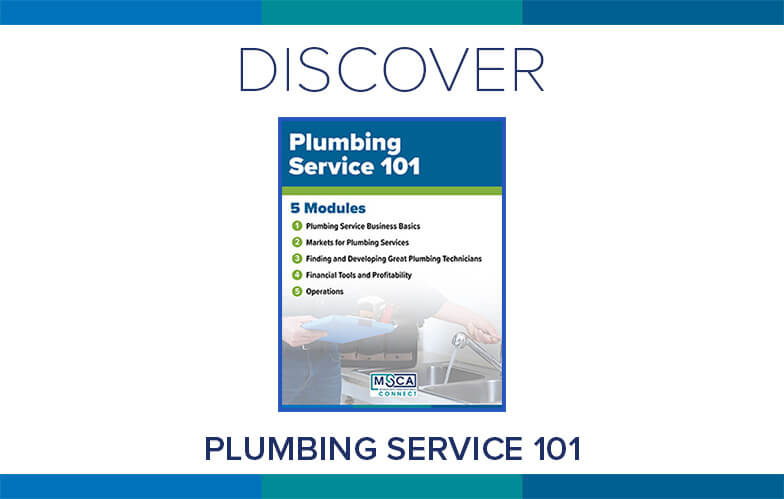
Resource Highlight: MSCA’s Plumbing Service 101 Workbook Series

HVACR service companies may be thinking about adding plumbing to their company’s service offerings, but where do they start? MSCA’s Plumbing Service 101 Workbook Series highlights the benefits of offering plumbing service and investment challenges to consider to help those companies decide whether to take the leap. It also provides tips and resources that may be of interest to those with existing plumbing service operations. It’s just one of MCAA’s educational resources that are free to MCAA members as a benefit of membership.

Access the full list of modules, including detailed descriptions of what is included in each, in the Resource Center.

Have Questions or Need Personal Assistance?

Contact MSCA’s Teresa Pezzi.

Resolving Hot Water Headaches Featuring Watts Water Technologies

Facing increasing calls from guests about low water pressure and inconsistent temperatures, the luxury Grandover Resort in North Carolina turned to the IntelliStation 2 by POWERS, a Watts brand, for precise temperature control and rapid response, finally resolving the resort’s longstanding issues. Maintenance staff immediately felt the relief of going from a system that needed constant tinkering to one that worked flawlessly. Watts Water Technologies is a benefactor of MCAA26.

Under Pressure

Hot water is a basic expectation for guests; one they only think about when the temperature is not what they expect. Keeping temperatures consistent across a large commercial property can be challenging, especially as demand changes throughout the day.

Behind the scenes, the Grandover Resort’s issues were traced back to faulty mixing valves and broader hot water instability throughout the system. The resort relied on piston-style mixing valves that required hands-on adjustments, stuck frequently, and struggled to respond to fluctuating demand. These problems consumed many hours of labor for troubleshooting and diverted attention from preventive maintenance. Grandover Resort needed an intuitive, comprehensive solution capable of delivering consistent and precise water temperatures throughout the entire facility.

A Smarter Approach

Recognizing that their existing setup could not adapt to the demand, the resort turned to the IntelliStation 2, a digital mixing valve, to control water temperature and responsiveness. It monitors system performance in real time, allowing the facility team to see temperature conditions across the potable hot water system and identify issues before they affect guests. The system also supports practical functions, such as scheduled temperature setbacks for energy savings and timed sanitation cycles to help reduce the risk of waterborne bacteria. These capabilities gave Grandover a more controlled, predictable way to manage their hot water system and reduced the amount of manual adjustment required by staff.

The unit arrived factory preassembled and pretested, allowing installation with minimal disruption. Once the new units went online at Grandover, improvements were noticeable immediately. The IntelliStation 2 outperformed traditional mechanical valves by maintaining accurate and consistent temperatures even at peak draw.

The chief engineer of Grandover Resort, John McLeod, noted, “If more draw on the building is coming down the line, this thing adjusts, it regulates, and I can tell you it’s been in here for almost three months and I haven’t had one issue.”

The system’s automatic response to changing demand removed the need for manual adjustments and protected the building from performance dips. The facility team also saw water pressure on the upper floors increase by nearly six pounds, resolving a long-standing issue that had contributed to routine service calls.

The IntelliStation 2 gave Grandover a solution that not only met the needs of guests and facility teams but also offered a safer and more intelligent approach to temperature control. By helping prevent scalding and reducing the risk of waterborne bacteria, the system supports the demands of large properties such as Grandover that rely on stable, building-wide performance.

Try Watts’ Digital Mixing Saving Calculator to see the cost differences between thermostatic and digital mixing valves: https://www.watts.com/resources/references-tools/savings-calculator-intellistation

More Efficiency, Less Babysitting

The Grandover demonstrated that a modern digital mixing system can strengthen performance, reduce labor needs, and support long-term system stability:

  • Digital precision drives reliability: The IntelliStation 2 held accurate temperatures even during peak demand, eliminating the inconsistent performance that often comes with mechanical valves. Facility staff benefit from steady, predictable operation without constant adjustment.
  • Fewer callbacks improves efficiency: After installation, Grandover reported no hot water complaints and no emergency callouts. This level of reliability freed up the facilities staff for other projects.
  • Smart automation reduces labor: The IntelliStation 2 removed the need for technicians to “babysit” equipment or intervene when demand shifted. Automated response allowed the team to move from reactive troubleshooting to efficient, planned maintenance.
  • Safety and stability go hand in hand: By protecting against scalding and reducing the risk of waterborne bacteria, the IntelliStation 2 delivered both safety and performance benefits.

Taken together, the lessons learned at Grandover Resort illustrate how digital mixing can simplify maintenance and improve system consistency in large commercial properties. “From a leadership perspective, you don’t want your engineers thinking this hotel is not fixing their problems,” explained Kelly Harrill, executive vice president of Koury Hospitality Hotels, which operates Grandover Resort. “Now they see we invest in a product not only to help our guests but to help them as well.”

For more information, visit www.watts.com. MCAA thanks Watts Water Technologies for being a benefactor of MCAA26 and sponsoring dinner on Wednesday.

New Virginia Tech Study: Type II Helmets Cut Concussion Risk by 34%, Skull Fractures by 65%

A new construction safety study funded by the John R. Gentille Foundation (JRGF) confirms a major performance gap between traditional Type I hard hats and modern Type II helmets. The findings show that Type II helmets reduce concussion risk by an average of 34% and skull fracture risk by 65%—and the top-performing models did even better, cutting skull fracture risk by up to 77%.

Falls remain one of the leading causes of fatalities and traumatic brain injuries in construction. According to the Bureau of Labor Statistics, the construction industry accounts for nearly 47% of all fatal slips, trips, and falls and 20% of all workplace deaths. In a trade where falls cause 60% of traumatic brain injury fatalities, this study confirms what many safety professionals have suspected: the industry needs to move beyond outdated hard hats.

Why Type II Helmets Perform Better

Type II helmets are designed to manage the kinds of forces that actually cause most head injuries in construction—especially rotational forces from angledimpacts during falls. Traditional Type I hard hats were never built for that. They were designed decades ago, mainly to protect against direct, top-of-head impacts, such as dropped objects.

The Virginia Tech results show the performance difference comes from three main design upgrades found in Type II helmets:

1. Energy-Absorbing Interior Liner

Type II helmets include an expanded polystyrene (EPS) or expanded polypropylene (EPP) foam liner similar to what is used in bike, ski, and climbing helmets.

  • This liner absorbs force across the full inside surface of the helmet.
  • It reduces both linear acceleration (straight impact) and rotational acceleration (twisting movement of the brain inside the skull).
  • Type I hard hats have only a suspension cradle and air gap—no foam to disperse force.

2. Side, Front, and Rear Impact Protection

ANSI Type I helmets are only tested for impact at the crown of the head.

ANSI Type II helmets must pass impact tests on all four sides.

That matters because in real falls, workers rarely land straight down—most impacts happen at an angle, striking the back, side, or front of the helmet.

3. Required Chin Strap

A chin strap is optional on Type I helmets, but required for Type II.

  • Without a chin strap, a hard hat often comes off before the head hits the ground.
  • Helmet ejection is a known factor in fall-related deaths and severe TBIs.
  • A secured helmet keeps the energy-absorbing liner in place when it’s needed most.

The Result in Data Terms

  • Type I hard hats reduce almost no rotational force.
  • Type II helmets reduce rotational force by up to 60–70%, depending on the model.
  • That reduction is what drives the concussion and skull fracture reductions in the Virginia Tech study.

Why It Matters to Contractors

The change in performance isn’t incremental—it’s structural. This is the same evolution that happened in sports, where foam-lined helmets replaced shell-only helmets decades ago. The construction industry has simply been slow to adopt it. As one safety director in the study put it: “The old hard hat protects you from gravity. The Type II helmet protects you from physics.” These models feature technologies like EPP foam liners, Impact Armor systems, and integrated emergency ID chips.

How the Testing Works

This is the first-ever rating system for construction helmets based on real-world fall impacts. The John R. Gentille Foundation, along with multiple construction trade associations, partnered with Virginia Tech to make it happen.

The ratings are derived from the Summation of Tests for the Analysis of Risk (STAR) protocol. Here’s how helmets were tested:

  • 12 oblique impact drops on a 25° angled steel surface coated in sandpaper
  • Two impact speeds: 5.5 m/s (moderate) and 6.8 m/s (high)
  • Measurements: Linear and rotational head acceleration
  • Results: Calculated concussion and skull fracture risk based on 100 similar impacts
  • Ratings: Helmets scoring 4 or 5 stars are recommended for workers exposed to fall hazards

Type II models consistently outperformed Type I hard hats under these conditions.

Why This Matters for Contractors

Upgrading from Type I hard hats to Type II helmets is not just a safety decision—it has direct financial and
operational impact for contractors. A single fall-related head injury can cost a company far more than the price
difference between helmets.

1. Cost of a Head Injury vs. Cost of a Helmet

The math is simple: one prevented injury pays for an entire company-wide upgrade.

2. Insurance and Experience Modifier (EMR) Impact

  • Head injuries are one of the highest-cost claim categories in construction.
  • A single severe claim can raise a contractor’s EMR for three years.
  • A higher EMR means higher premiums and can disqualify contractors from bidding on large projects.

Contractors who adopt Type II helmets early will have a measurable advantage in prequalification scoring and insurance negotiation.

3. Owner and GC Requirements Are Coming

Large GCs and tech-sector owners (Amazon, Meta, Intel, data-center builders) are already phasing out Type I hard hats on their sites. Early adopters won’t be forced into rushed, reactive PPE changes later.

Bottom Line

Type II helmets are no longer a “nice to have.” They reduce injury probability, reduce insurance exposure, reduce legal risk, and reduce long-term cost. Contractors who continue relying on Type I hard hats are not saving money—they’re deferring risk.

What’s Next

The Virginia Tech Helmet Lab plans to expand testing to include struck-by-object incidents and will regularly update ratings as new helmets enter the market. These updates are independent, free from manufacturer influence, and designed to adapt as technology evolves.

The message is simple: it’s time for construction to upgrade from heavy plastic buckets to real head protection. Type II helmets are no longer just an option— they’re the new standard for anyone working at height.

Full helmet ratings and technical reports are available at the Virginia Tech Helmet Ratings website.

MCAA Unveils Suite of New Resources

MCAA has launched a comprehensive set of new resources designed to help its members stay competitive, compliant, and connected in today’s rapidly evolving industry landscape. These offerings—ranging from sustainability guidance to safety training and legal analysis—reflect MCAA’s ongoing commitment to supporting contractors nationwide with actionable insights and practical solutions.

Driving Sustainable Business Transformation

A new Management Methods Bulletin, authored by Paul Sambanis, Ph.D., Vice President of Sustainability at Sloan, provides a roadmap for integrating sustainability and ESG (Environmental, Social, and Governance) principles into business operations. The bulletin outlines a five-step approach—establishing a foundation, benchmarking, strategic planning, data sharing, and training—that enables organizations to achieve growth, enhance employee loyalty, and ensure regulatory compliance. Companies are encouraged to build on existing ESG practices for long-term success.

Innovation in Mechanical Construction

Another Management Methods Bulletin explores the use of wire hangers as an alternative to traditional threaded rod hangers. Drawing on case studies from leading mechanical contracting firms, the report highlights significant advantages in installation speed, labor savings, and flexibility. Recent testing confirms the reliability of wire hangers, and the bulletin recommends broader adoption and continued innovation in mechanical and plumbing applications.

Enhanced Networking and Support

Connecting with industry peers is now easier than ever through MCAA’s new online directory, available under the Who We Are menu at mcaa.org. Members can access up-to-date contact information for MCAA staff, leadership teams, committees, and Manufacturer/Supplier Council members.

Updated Guides for Legal and Operational Excellence

MCAA has released updated editions of its Industry Improvement Fund (IIF) Operations Guide and Collective Bargaining Guide and Legal Analysis. These resources offer practical, legally grounded advice for fund administration, negotiation preparation, compliance, and labor relations—helping contractors navigate complex regulatory requirements and strengthen organizational practices.

Commitment to Safety

A new safety video, “Preparing For & Properly Handling OSHA Inspections for Supervisors,” is now available in English and Spanish. Covering inspection procedures, conferences, and post-citation planning, this resource reinforces MCAA’s dedication to worker safety and joins a library of over 700 safety and health resources.

Accessing Resources

  • The online directory is available under the Who We Are menu at mcaa.org.
  • All other resources—including bulletins, guides, and safety videos—can be downloaded from the Resource Center at mcaa.org.

Explore these new resources today to stay ahead in the industry and ensure your organization’s continued success.

Merit Brass Co. Inducted Into the 2025 PVF Ring of Honor featuring Merit Brass Co.

Merit Brass Co., an MCAA member and a family-owned manufacturer of pipe nipples and master distributor of related pipe, valves, flanges and fittings, has been named the 2025 inductee into the prestigious PVF Ring of Honor. The announcement is featured in the December issue of Supply House Times magazine.

Established to celebrate PVF manufacturers and master distributors that demonstrate recent marketplace success through progressive and cutting-edge best practices, the PVF Ring of Honor recognizes organizations that combine operational excellence with forward-thinking innovation while maintaining the highest standards of integrity and customer partnership.

For nearly nine decades, Merit Brass has exemplified these qualities. Founded in 1937 by Louis Schlessinger and now led by third-generation co-CEOs Marc Schlessinger and Alan Lipp, the company has evolved from a Cleveland-based manufacturer of brass pipe nipples into one of North America’s leading manufacturers and master distributors of stainless steel, brass, copper, and carbon steel PVF products.

“Being selected for the PVF Ring of Honor is a tremendous honor that belongs to every associate, past and present, who has lived our values every day,” said Alan Lipp, CEO of Merit Brass. “My grandfather built this company on the simple belief that people come before profit. Nearly 90 years later, that foundation—combined with relentless modernization and an unwavering commitment to our wholesale partners—continues to define who we are.”

Key achievements highlighted in the Supply House Times feature include:

  • A multi-year enterprise-wide lean transformation that has driven on-time shipping to nearly 99%, manufacturing fill rates to 98%, and dramatically improved throughput and order-processing speed.
  • Strategic expansion into press technology (carbon, copper, & stainless) known as MeritPressTM and copper tubing, positioning Merit Brass as a complete portfolio provider amid shifting contractor preferences and labor dynamics.
  • Sustained investment in global supply-chain expertise and long-term supplier partnerships that provide wholesalers with clarity and stability in an era of tariffs, freight volatility, and geopolitical complexity.
  • Preservation of an extraordinary family-oriented culture that boasts associates with 30-, 40-, and even 45-year tenures working alongside new talent.

“Merit Brass has never chased trends for the sake of change,” added Darren Hilliard, President of Merit Brass. “Every investment, every process improvement, every new product line has been guided by one question: Does this help our wholesale customers win in their markets? The results speak for themselves, but the real reward is the trust and partnership we’ve earned across generations of distributors.”

Read the full profile in Supply House Times to learn more about how family values, operational excellence, and global vision have guided the company for nearly nine decades.

For more information about Merit Brass, visit www.meritbrass.com.

Leveling Up to Save Time & Labor with PypeServer & Queen City Mechanicals

Queen City Mechanicals transformed its workflow with PypeServer Inc. products, realizing substantial savings in labor and material. In this Q&A, Randy Tillett, fabrication manager, talks about the productivity gains Queen City Mechanicals has realized thanks to PypeServer technology.

What kind of work does Queen City Mechanicals do?

Queen City started in the early 1980s as a cooperative of owners. In the early 2000s, one of the founding members took sole ownership. Today, we’re a family-operated business specializing in commercial plumbing, plumbing site utilities, sewer backup prevention, and backflow testing. We also have a dedicated plumbing service and special projects division, Blue Chip Plumbing.

Our focus is on providing our field crews with fabrication that makes sense for their specific projects. We don’t just supplement their labor—we ensure product standards are maintained while also considering constructability. Whether it’s general overhead fabrication of rack assemblies or fully assembled and supported site backflow preventer replacements, we’re always looking for ways to maximize efficiency and quality.

What is your role at Queen City Mechanicals and what is your background?

I got my start in the mid-‘90s, coordinating sheet metal and producing fabrication drawings on a drafting table at a company that handled commercial sheet metal, plumbing, HVAC piping, and fire protection services. Over time, I transitioned into plumbing and HVAC piping coordination, working with AutoCAD and CADpipe. From there, I took on the development and management of the company’s estimation, coordination, and fabrication database using what is now known as Autodesk Fabrication. As I maintained the database and oversaw software operations, I gradually shifted away from coordination and focused more on the fabrication phase of projects.

Today, I’m the fabrication manager at Queen City Mechanicals where, alongside our outstanding shop manager, Noah Griffith, we’re building a strong fabrication culture and implementing a full-fledged fabrication shop.

What is your typical workflow like, and what software tools do you use, from design through production? 

We’re building our workflow on an Autodesk foundation, incorporating Trimble’s MEP content and SmartTools, along with other productivity tools we’ve developed internally. On the project management side, we use Procore to keep everything organized. In the shop, we’re currently running one TigerStop, with plans to add a second station soon, both powered by PypeServer Lyte and Cloud+. We’re also expanding our use of PypeServer Cloud+ to enhance status tracking and improve reporting throughout the shop.

What made you consider PypeServer in the first place?

At my previous company, … PypeServer stood out, … and I was really impressed with the platform. When I joined Queen City Mechanicals, PypeServer was already in place, which made the transition even smoother. What really drew me to PypeServer was its ability to get things done right without unnecessary complexity. Over the years, I’ve seen plenty of software companies make big promises and deliver only a fraction of what they claim—PypeServer actually delivers.

How was the PypeServer installation process, what was the learning curve like, and how well does it work with your TigerStop machine?

The PypeServer installation process was incredibly straightforward. PypeServer’s Ricky Bell walked us through downloading the software, making everything clear from the start. We had to work through a few challenges during implementation, especially when it came to printer integration, dialing in the TigerStop settings versus PypeServer settings, and training the shop team. Like anything new, we figured some things out by getting them wrong the first time, but that’s part of the learning process. Griffith, our shop manager said, “Once everything was set up, PypeServer has worked seamlessly with our TigerStop. It’s made our cutting process much more efficient and is incredibly user-friendly.”

How has your workflow changed with PypeServer, and have you seen any savings in time, labor, or materials with PypeServer?

Implementing PypeServer completely transformed our workflow. Before, we had to manually enter cut lengths into the TigerStop software, which wasn’t very user-friendly. We relied on printed cut sheets, entering each length by hand, but PypeServer has streamlined that entire process.

Now, we’re seeing significant material savings thanks to linear nesting and stock optimization through PypeServer. The labor savings have also been substantial. The paperless process and user-friendly interface make a huge difference—no more struggling to read a printed cut list. Overall, PypeServer has taken Queen City Mechanicals’ fab shop prefabrication to the next level.

Try out PypeServer’s ROI calculator to get a customized saving analysis for your fab shop: https://pypeserver.com/savings-calculator/

Do you consider PypeServer a good value?

Absolutely! I’m not sure what else can be said about this—on its own, PypeServer Lyte is an unbelievable value, and Cloud+ takes that a step further.

For more information, visit pypeserver.com.

Boosting Productivity & Quality with Novarc & Waldinger Corporation

In late 2022, faced with both a shortage of certified wire welders and a pipeline of increasingly large-diameter, high-specification projects, Waldinger Corporation adopted Novarc’s Spool Welding Robot (SWR), a move that has delivered measurable gains in productivity, quality, and operational planning.

Much of Waldinger’s current work is focused on data center projects, where pipe sizes typically range from 8” to 20”, primarily in carbon steel. While Waldinger uses stainless steel less frequently today, the SWR has already been successfully tested on stainless welds and is ready to adapt when those jobs scale.

Skilled Labor Shortage, Growing Project Demands

Located in Des Moines, Iowa, Waldinger has long upheld rigorous quality standards and embraced innovation to meet the needs of demanding clients across sectors. But even a company of this caliber is not immune to the growing labor bottleneck in certified pipe welding.

“The lack of certified wire welders was really the driver for us,” shared Curt Baker, the industrial refrigeration/piping manager at Waldinger. “In our market, we just couldn’t find the people we needed to meet the scale of work we were taking on, especially when we had multiple large projects coming in.”

Before implementing the SWR, Waldinger’s best-performing welders were producing up to 100 factored diameter inches (FDI) per day, depending on pipe size and complexity. But many welders, particularly those less familiar with MIG, struggled to meet that mark consistently, resulting in a production ceiling that left the company vulnerable to bottlenecks during busy cycles.

SWR Adds Weld Power Without Expanding Headcount

The team evaluated other solutions but found them unsuitable due to their large shop footprint and lack of positioner configuration flexibility. “We didn’t want to give up that much square footage,” said Baker, adding that Novarc’s compact footprint and integration with Stratus software worked in Novarc’s favor.

The SWR was deployed alongside the existing pipe cutting system, with full compatibility through Stratus, streamlining the flow from cutting to welding. Today, the robot is operated by a team of four certified wire welders, with a fifth in training. Each operator is fully qualified and trained to understand both the weld process and machine interface, allowing for proactive monitoring and collaboration with Novarc’s support team when needed.

Productivity, Quality, and Predictability

Waldinger’s productivity gains have followed a clear progression as the system evolved:

  • With two-positioner integration, the team achieved up to 200–250 FDI a day.
  • After upgrading to a three-positioner setup and enabling the NovEye Autonomy feature (fully autonomous pipe welding), the team can achieve up to 300–345 FDI a day, equivalent to the combined output of three to four skilled welders.
  • On peak production days, the team logs up to 6.8 hours of arc-on time per shift, ensuring maximum machine utilization.

The team continues to leverage NovEye’s autonomous capability, allowing operators to step away during certain parts of the weld cycle to prep or clean upcoming joints, keeping productivity high and downtime low.

Listen to Novarc’s SparkTalk podcast to learn more about how to define and measure welding productivity: https://www.novarctech.com/resources/podcasts/

In addition to productivity, the SWR has contributed to higher process transparency and quality assurance. Though Waldinger typically X-rays only 5–10 percent of its welds, the X-ray-quality consistency of the SWR gives both the internal team and customers added confidence.

In one rare instance of a field weld issue, the NovEye system allowed the team to quickly retrieve video footage of the weld sequence, verifying the problem and resolving it without ambiguity. “Having the video record of each weld is a game-changer. We could go back, review exactly what happened, and address it immediately,” said Scott Miller, production engineer at Waldinger.

Easy Setup, Exceptional Support

Operator training was fast and effective. Novarc’s hands-on instruction gave welders the confidence they needed early on, and the support team remained available to reinforce key learning moments. “They enjoyed the class and the hands-on training,” said Miller. “Support was there when they had follow-up questions, and the operators felt confident early on.”

The integration of the SWR into Waldinger’s Stratus-driven workflow has been a core advantage, enabling full coordination from spool design to weld completion. The company now thinks more proactively about which spools are best suited for robotic welding, optimizing layouts and minimizing idle time. “It really made us rethink how we plan spool fabrication, and that’s improved our efficiency upstream,” Baker noted.

Read “Some Practical Advice for Automating Your Shop Floor: Guidelines, Caveats, and Best Practices,” from Novarc: https://www.novarctech.com/resources/blog/prefabrication/some-practical-advice-for-automating-your-shop-floor-guidelines-caveats-and-best-practices/

A Foundation for the Future

More than a productivity tool, the SWR has become a strategic asset, driving smarter planning, higher output, and more consistent quality across jobs. Waldinger continues to evaluate workload growth and is considering further system expansion in the near future. “It’s helped us think differently about shop layout, spool planning, and fabrication flow,” said Baker. “It’s a mindset shift, and a positive one.”

For more information, visit www.novarctech.com.

Keeping On Track with Victaulic & Palmer Christiansen Co.

In a building dedicated to advanced medical research, precision is critical, so Palmer Christiansen Co. counted on Victaulic products to meet the demands of a new Utah research facility. Victaulic’s grooved joining system not only ensured a quick, smooth installation but also provided Palmer Christiansen the flexibility to adapt to late design changes, keeping the project on track to meet a tight deadline. Victaulic is a major sponsor of MCAA26.

Precision, Planning, and Coordination

When the Huntsman Mental Health Institute began construction on its new Translational Research Building at the University of Utah, the facility’s design was as ambitious as its mission. The 185,000-square-foot facility will be home to the world’s only 7-Tesla magnetic resonance imaging (MRI) scanner dedicated to brain research and will house advanced laboratories focused on youth mental health, suicide prevention, and care for underserved populations.

For Palmer Christiansen Co., a third-generation mechanical contractor based in Utah, the project required precision, planning, and coordination at every step. The building’s curved façade, sensitive research environments, and extensive mechanical systems demanded the level of craftsmanship and adaptability that Palmer is known for. To help achieve that, the contractor partnered with Victaulic for product support and field collaboration.

‘No Room for Error’

The Translational Research Building was designed to push boundaries in both science and construction. Its geometry introduced unusual routing challenges, with angled floor plates and curved walls that required careful layout of heating-hot-water, chilled-water, glycol, domestic-water, and laboratory-air systems. The building also houses a vivarium and MRI suites where vibration and noise had to be minimized and hot work was restricted.

Learn more about how Victaulic’s grooved technology can minimize noise and vibration: https://www.victaulic.com/noise-and-vibration-attenuation/

“Everything about this project had to work together—safety, coordination, quality, and schedule,” said Brett Christiansen, president of Palmer Christiansen Co. “When you’re building a research facility like this, there’s no room for error.”

The company’s experience with high-performance health care and research facilities made it a natural fit for the University of Utah and the Huntsman Foundation. “People hire us because they expect more,” Christiansen said. “We’re not the low-cost provider. Our clients know we’ll deliver a quality installation and meet the schedule, even on complex jobs.”

Building With Confidence

Palmer Christiansen, which is celebrating its 80th anniversary in 2026, has used Victaulic products for more than three decades and was one of the first Utah contractors to adopt the grooved copper system. That history gave the team confidence in both product performance and support.

When a late-stage design change required an alternate butterfly-valve disc material, Victaulic helped locate and deliver the component in time to keep the project on schedule. Christiansen explained, “Victaulic worked with us to source an alternate valve disc material on short notice so we could stay on schedule. They stand behind their products, and when we need help, they deliver.”

Palmer’s crews installed Victaulic QuickVic Installation-Ready couplings and fittings across the facility’s carbon steel heating-hot-water and chilled-water systems and the copper domestic water system. The grooved joining method eliminated hot work and fire watch requirements in sensitive research zones while providing a built-in visual indicator to verify proper installation, which acts as an added quality control measure across the Victaulic grooved systems.

“Victaulic is clean and quick to install,” said Bill Rosser, project superintendent. “We don’t need welders, grinding, or a fire watch, which keeps the jobsite safer and cleaner. We can move material easily and install with one person and a socket. That kind of efficiency keeps work organized and helps us meet the schedule.”

Adaptability in the Field

Flexibility proved critical as the project evolved. When design adjustments were introduced, Palmer’s crews could disassemble and reassemble grooved sections quickly without cutting or reworking impacted pipes.

“If a layout changes, we can immediately remove a grooved tee or add a section right there,” Rosser said. “We don’t have to haul anything back to the shop. It’s fast and clean, and it keeps the job moving.”

The grooved system offered adaptability that also allowed the contractor to plan for future expansion. Certain laboratory spaces were shelled for later build-out, and the Victaulic system layout makes those future tie-ins simple and fast.

To keep work flowing efficiently, Palmer assembled some piping sections offsite and delivered them as needed. This coordinated approach reduced congestion and helped maintain a safe, steady rhythm of installation. “Prefabrication for us is about coordination, not reducing labor,” Christiansen said. “It helps keep people safe and the job running smoothly.”

Across the job, Palmer’s craftsmanship was evident. “Our crews take pride in how the finished systems look—everything straight, plumb, and clean,” Rosser said. “You can walk through and see the quality.”

A Productive Partnership

For Keith Moon, Victaulic territory sales manager, the project reinforced a longstanding relationship built on trust and performance. “Palmer is one of the most respected mechanical contractors in the state,” Moon said. “Their workmanship and reliability make them a preferred partner on complex projects. Our role is to support them so they can keep doing what they do best.”

That collaboration, Christiansen added, was key to success. “We rely on partners who can react quickly and provide reliable products,” he said. “That kind of trust helps everyone meet their goals—the owner, the engineer, and the contractor.”

Phase one of the Translational Research Building is nearing completion, with full build-out expected in spring 2026. The project remains on schedule and continues to meet stringent quality standards. The mechanical systems have performed as designed, delivering the noise and vibration control required for precision research environments.

“From safety to performance, Victaulic helped us deliver the level of quality our clients expect,” Christiansen said. “They’ve been part of our success for decades, and that partnership continues to pay off.”

For more information, visit www.victaulic.com. MCAA thanks Victaulic for being a major sponsor of MCAA26 and co-sponsoring the annual golf tournament.

Closing the Field-to-Shop Gap with Stratus & Helm Mechanical

Contractors like Helm Mechanical have strengthened digital workflows in the shop—but the field has remained the last analog holdout. Thanks to Field Orderz from Stratus, the hand-drawn sketches, PDF markups, and rushed calls that used to cause delays are no longer a problem for Helm.

“Before Field Orderz, small jobs without a model could waste a full day of drawings and VDC [virtual design and construction] rework,” said Joe Melody, fabrication technologist at Helm Mechanical. “Now, foremen in the field can model and publish directly into Stratus in minutes, using the same fabrication database as our VDC team.”

Field Orderz allows workers to create accurate pipe and duct takeoffs directly from the field using the contractor’s own fabrication database. That means no rework, no transcription errors, and less time spent cleaning up field sketches. Helm Mechanical is seeing substantial results. Melody explained, “What once took a day now takes five minutes—and it doesn’t pull senior VDC staff away from critical projects.”

Simplifying Field Modeling

Field Orderz uses an interface that mimics iso-style sketches that field teams already understand and relies on the contractor’s actual fabrication database to drive part selection, fittings, and spec compliance, so field modeling is simpler and more precise. Every tap builds an accurate bill of materials and cut list in real time, eliminating manual takeoffs and guesswork. Sketches published from the field arrive in Stratus as complete, validated packages, ready for fabrication. The software handles complex fittings, welds, O-lets, and custom connections that traditionally required Revit rework. Field Orderz is already part of every Stratus subscription, so no extra licensing is required.

Real-World Results

Contractors have reported a 75% decrease in field paperwork after switching to Field Orderz. One user has reported that they are on track to complete more than 1,000 field-generated packages this year, including complex piping and specialty work. As Helm Mechanical can attest, by eliminating redundant modeling and manual input, projects move faster, scheduling improves, and fabrication starts sooner.

For more information, visit www.stratus.build or go to https://hubs.li/Q03Wz0-H0 to request a demo.

Elevating Operations with MSUITE & Bassett Mechanical

To advance their fabrication processes, Bassett Mechanical adopted MSUITE’s FAB and BIM software, dramatically improving production output. “MSUITE has completely changed the manufacturing game for us,” said Tyler Peterson, vice president of manufacturing at Bassett Mechanical. “By digitizing our workflows and automating key processes, we’ve achieved levels of efficiency and accuracy that were previously unimaginable. It’s a transformative tool that has truly elevated our operations.” MSUITE is part of the DEWALT® Construction Technology suite; DEWALT is a benefactor of MCAA26.

Increasingly Complex Demands

As fabrication demands grew more complex, Bassett Mechanical needed a solution to increase shop efficiency, reduce errors, and provide real-time visibility into their fabrication workflows. Their goal was to streamline operations from design through production, ensuring projects stayed on schedule and within budget while maintaining their high quality standards.

MSUITE FAB enabled seamless coordination between design and fabrication, enhancing Bassett Mechanical’s ability to deliver precise, constructible models directly to the shop floor. MSUITE BIM streamlined shop management, providing a centralized platform for tracking production progress, material status, and labor productivity involved with fabrication and throughput.

“By going digital with MSUITE FAB, we’ve reduced the manual processes of administering work—less printing, copying, scanning, and moving documents around the shop,” said Peterson. “We now have real-time visibility into project status, welder IDs, and heat numbers.”

Impact on Output, Quality

Since implementing MSUITE, Bassett Mechanical has seen substantial gains in production output. By automating previously manual processes and delivering real-time data to the shop floor, the team can focus more on building and less on administrative coordination. These improvements have allowed Bassett to take on more complex projects with confidence, knowing they have the tools to deliver on time and at a high level of quality.

MSUITE’s connected BIM and FAB solutions contributed to measurable gains across Bassett Mechanical’s operation, showcasing the power of integrating technology into every stage of fabrication. Transitioning from manual workflows to MSUITE’s modern digital platform has been a game-changer for Bassett. Tasks that once required extensive paperwork, duplicate data entry, and manual tracking are now handled efficiently in real time. This shift has streamlined communication between teams, reduced bottlenecks, and allowed for a more proactive approach to managing shop operations.

The CNC angle clipper, CNC structural profiler, CNC pipe profiler, and back gauge on Marvel saw—integrated with cutting software such as ProCAM and PypeServer—allow for direct export of cutting files from design files, automating cutting, punching, and layout tasks that were once programmed manually. Peterson pointed out, “MSUITE FAB has allowed us to get all our projects into one system, giving us the ability to track performance and analyze throughput by drawing, package, and workflow.”

From drawings and schedules to timecards and quality control documentation, the entire workflow is now digital, reducing errors and increasing efficiency. By centralizing drawings, material lists, and change orders within a digital platform, the software ensures that everyone—from engineers to shop floor staff—works from the most current set of plans. As a result, Bassett Mechanical has minimized confusion, reduced costly errors from outdated documents, and improved collaboration across departments. The enhanced transparency and traceability have streamlined audits and compliance reporting, saving time and increasing customer confidence.

Read MSUITE’s blog post, “How BIM Automation Reduces Rework and Improves Shop Performance”: https://www.msuite.com/how-bim-automation-reduces-rework-and-improves-shop-performance/

MSUITE BIM, a plugin to design software Revit and SpoolFab, generates spool drawings that integrate seamlessly with MSUITE FAB and CNC cutting software. On the vessel side, SolidWorks models are exported to isometric spool drawing software SpoolFab, eliminating manual take-offs, and can be directly imported to MSUITE FAB fabrication tracking software. “For our VDC [virtual design and construction] team, the tools make the transition from design to spooling incredibly efficient. MSUITE BIM has given our shop and field associates a better product,” Peterson noted.

The Future of Fabrication

Since adopting MSUITE solutions, Bassett Mechanical has achieved measurable improvements:

  • Increased efficiency: Real-time updates and streamlined workflows have led to faster fabrication timelines.
  • Reduced errors: Enhanced coordination between design and fabrication has minimized costly mistakes and rework.
  • Enhanced visibility: Shop floor teams and project managers now have access to live data, enhancing decision-making and overall productivity.

Peterson credits MSUITE with helping Bassett Mechanical move into the future of fabrication. “MSUITE has transformed how we manage the shop. We continue to push the boundaries of what’s possible in fabrication by leveraging MSUITE’s innovative technology,” he said.

For more information, visit www.msuite.com. MCAA thanks DEWALT Industrial Tool Company for being a benefactor of MCAA26, sponsoring the hotel room key cards and beverage break.

Streamlining Restroom Installations Featuring SLOAN

Every hour spent on a complex installation or coordinating separate components is an hour that impacts your bottom line. SLOAN engineered the FLITE-DEC Integrated Sink System to enhance efficiency from installation to long-term operation. It combines the faucet, soap dispenser, hand dryer, and basin into a single, cohesive unit. For contractors, this means fewer components to source, manage, and install, reducing job site complexity and accelerating project timelines. SLOAN is a benefactor of MCAA26.

Simplify Installation, Reduce Downtime

A common challenge on complex jobs is managing the installation of multiple fixtures from different manufacturers, each with their own requirements. The FLITE-DEC system eliminates this headache, because every component is designed to work together seamlessly. The system also offers versatile access options that provide significant installation and maintenance advantages.

  • Chase access: For facilities with a maintenance chase, under-deck components can be placed behind the wall. This not only simplifies the initial installation but allows for future service without disrupting the restroom itself—a major selling point for facility managers concerned with operational uptime.
  • Front access: In projects without chase access, the front-access configuration keeps all components easily reachable. Enclosure options such as the magnetic hold-open stainless steel panel or the cabinet-style laminate enclosure provide quick and safe access for maintenance.

By providing a fully integrated system, contractors can minimize installation time and potential callbacks.

Address Key Facility Pain Points

The FLITE-DEC Integrated Sink System is built to withstand the harshest commercial environments. Its basin-mounted spouts are engineered to handle up to 150 pounds of downward force, a critical feature in public spaces where vandalism and heavy use are common. This robust construction prevents fixtures from becoming loose or damaged, reducing the likelihood of costly repairs and ensuring the longevity of your installation.

The top-fill, closed soap system features a large 2.8-gallon reservoir capable that only requires refilling as infrequently as once every four to five weeks per station, even in the busiest restrooms. Furthermore, the high-efficiency hand dryer eliminates the need for paper towels, saving costs for the facility. For contractors, being able to present these clear, long-term cost-saving benefits strengthens your bid and positions you as a partner invested in your client’s success. The FLITE-DEC system is made in the United States, so it meets Buy America Act requirements, a crucial factor for federally funded work.

For more information, visit www.sloan.com. MCAA thanks SLOAN for being a benefactor of MCAA26 and sponsoring the featured speaker at lunch on Monday, Zach Kass.

Making the Case for American-Made Steel Featuring Wheatland Tube

Choosing domestic steel is more than a material specification; it is an investment in the future of our nation. The Keep Steel Here initiative underscores a vital principle: American-made steel is fundamental to the strength and resilience of our country. Prioritizing domestic manufacturing bolsters the economy, supports local communities, and fosters a shared sense of purpose and pride.

Zekelman Industries presents the case for maintaining the domestic steel industry here. (Wheatland Tube is a division of Zekelman Industries): https://www.zekelman.com/zekelman-perspective/steel-here-why-america-cannot-afford-to-lose-its-steel-industry/

Watch this short video, Keep Steel Here: https://www.youtube.com/watch?v=rh5YhRB6KIs

Quality Counts

For mechanical contractors, the integrity of your project depends on the quality of the materials you use. Imported steel carries the risk of rework and waste if it does not meet high standards. Sourcing steel domestically means that manufacturers maintain complete control over the supply chain, guaranteeing that you receive high-quality, ready-to-install pipe that meets rigorous standards and keeps your project on schedule. Wheatland Tube’s 100-percent domestic line of standard pipe is available in a wide range of finishes and is proven to work in threaded, press fit, and grooved applications.

Selection, Service, and Support

When you choose domestic pipe, you have access to widely available products with the service and support that you need. For example, Wheatland’s SureThread continuous weld pipe now meets ASTM International’s A53 grade B standards in nominal pipe sizes ½”–4” for even more applications. Additionally, when pipe products are sourced domestically, you have the opportunity to procure custom lengths and end finishes to avoid waste and work more efficiently on the jobsite. Wheatland Tube has more than 350 combinations of finishes, end treatments, and custom lengths.

Choosing domestic products also offers other advantages:

  • Total supply chain control: Working with domestic manufacturers gives you more control over the ordering process from start to finish. Wheatland offers manufacturer-direct services, such as dedicated sales representatives, alongside technical and logistics support. Investment in advanced commerce systems like electronic data interchange (EDI), automated inventory management (AIM), and Wheatland’s Z-Commerce online portal help minimize lead times, mitigate unexpected supply chain events, and provide faster fulfillment.
  • Technological advancements: Domestic manufacturers leverage advanced technology to optimize efficiency. For example, Wheatland Tube’s products are made in a state-of-the-art facility in Warren, Ohio. Their Matter Automated Warehouse ensures that they always have what you need and can deliver it quickly. This advanced technology minimizes manual handling throughout the production, bundling, and storage process, making the facility one of the safest in the world. Additionally, by storing products in a controlled environment and streamlining operations with full automation, products are delivered free of rust and damage and ready-to-install, which significantly shortens lead times.
  • Environmental advantages: According to a 2023 report, the United States could cut approximately 11.3 million metric tons of carbon dioxide emissions per year—about 13 percent of the total annual emissions of the American steel industry—if imported steel were produced domestically.* Wheatland is committed to reducing emissions from its factories by exceeding environmental regulations and investing in technology that allows them to manufacture products more efficiently and cleanly. Buying domestically made products contributes to local economies and to the future of the planet.

For more information, visit www.wheatland.com.

*Hasanbeigi, A. (June 2023). Embodied CO2 emissions in steel imports to the U.S.: A white paper on steel trade, carbon competitiveness, and decarbonization. Global Efficiency Intelligence. https://www.globalefficiencyintel.com/embodied-co2-emissions-in-steel-imports-to-the-us

Three Reasons to Consider a DOAS Solution Presented by Copeland

Mechanical contractors are navigating a new set of expectations for commercial building performance. Topping the list is the need for higher energy efficiency, improved indoor air quality (IAQ) and tighter humidity control. These priorities are bringing renewed attention to dedicated outdoor air systems (DOAS), a targeted solution that is gaining traction.

A DOAS is designed solely to condition outdoor ventilation air and deliver it to occupied spaces or downstream HVAC equipment. Simply put, a DOAS decouples a building’s ventilation loads (including humidity) from its space cooling and heating loads. Instead of relying on a single rooftop unit to manage everything—temperature, ventilation, and humidity—a DOAS handles ventilation and the corresponding latent load independently, delivering clean, dry, and conditioned outdoor air where it is needed.

This decoupling offers three key advantages: enhanced efficiency, improved IAQ, and more reliable dehumidification. While DOAS provides a significant step forward in these areas, mechanical cooling alone may not meet modern building performance requirements. However, when paired with a dedicated dehumidification technology—such as Copeland’s HMX liquid desiccant module—a DOAS can achieve even higher efficiency levels, active moisture management, and built-in air-cleaning benefits.

As higher ventilation requirements, electrification strategies, and efficiency mandates drive DOAS adoption, contractors have an opportunity to deliver more reliable performance across a wider range of building types.

Reason 1: Energy Efficiency—Reducing Operating Costs and Meeting New Metrics

Increasing energy efficiency has become a driving factor behind HVAC, DOAS, and dehumidification system design. In the Air Conditioning, Heating, and Refrigeration Institute’s 920-2020 standard, the integrated seasonal moisture removal efficiency (ISMRE2) metric signals a shift toward real-world performance that rewards systems that can remove moisture more effectively and efficiently.

Copeland’s HMX liquid desiccant module technology enhances DOAS efficiency by cooling and dehumidifying in one step. Compared to conventional HVAC systems, HMX can enable DOAS units to reduce energy use up to 40 percent while delivering superior ISMRE2 ratings.

A DOAS equipped with Copeland’s HMX technology also offers the ability to reduce peak load energy consumption. By running its liquid desiccant regeneration cycle during non-peak hours, HMX can shed peak energy loads, which often occur when daytime heat and humidity levels are at their highest. Effectively, the desiccant acts as an energy storage medium that can be used during the day for dehumidification.

For contractors serving schools, high-ventilation office spaces, supermarkets, pharmacies, nursing and other healthcare facilities, or humid-climate installations, DOAS with HMX liquid desiccant modules help meet stringent energy requirements while lowering lifecycle costs.

Reason 2: IAQ—Delivering Cleaner, Conditioned Ventilation Air

Improving IAQ remains one of the strongest drivers of DOAS adoption. The ASHRAE 62.1 standard specifies minimum ventilation rates to maintain acceptable IAQ, emphasizing the role of humidity control in delivering fresh air and mitigating the risk of microbial growth.

Building owners are increasingly aware that high ventilation rates alone don’t necessarily guarantee better IAQ, especially when outdoor air is hot, humid, or high in contaminants. A DOAS directly addresses this challenge by preconditioning ventilation air before it enters an occupied space. The result is a stable supply of cleaner, dehumidified air, which prevents moisture spikes that lead to mold or poor comfort.

Copeland’s HMX liquid desiccant module solution adds a vital layer of IAQ protection. Liquid desiccant technology effectively dehumidifies and suppresses microbial growth. HMX modules can scale to meet specific humidity and cooling requirements, providing flexibility for a wide range of environmental conditions and applications. The HMX design also eliminates the possibility of cross-contamination between regeneration and conditioned airstreams.

For contractors working in healthcare, rental housing, or educational facilities, these IAQ benefits translate directly into fewer callbacks, improved occupant satisfaction, and stronger performance guarantees.

Reason 3: Dehumidification—Reliable, Year-Round Moisture Control

Humidity is one of the most persistent challenges in commercial HVAC, particularly in mixed-humid and hot-humid climates where moisture loads vary throughout the year. Traditional HVAC systems often struggle to provide adequate dehumidification during part-load or shoulder-season conditions. Even though a DOAS manages ventilation independently, it too can struggle with dehumidification.

With Copeland’s HMX liquid desiccant module solution, a DOAS can provide stable humidity control and more effective decoupling of ventilation dehumidification from space temperature loads. Hence, a DOAS equipped with an HMX helps maintain low dewpoints even when the building’s cooling requirements are minimal. Its modular flexibility enables contractors to configure each DOAS-HMX pairing to offer precise dehumidification control, potentially downsizing systems to address sensible loads.

HMX liquid desiccant modules are easy to install and require no additional maintenance for contractors beyond an occasional filter change. From a building resource perspective, no added water is needed to support system operation.

At the end of the day, this pairing gives contractors the assurance of consistent, reliable performance, reduced service calls, and better adherence to ASHRAE humidity guidelines.

A Smarter, Cleaner Path Forward

As expectations for IAQ, humidity control, and energy efficiency continue to rise, DOAS offers a clear, future-forward strategy for managing outdoor ventilation air in commercial buildings. For mechanical contractors, learning how to apply these systems is an opportunity to expand capabilities, differentiate themselves in the industry, and deliver better outcomes for clients.

DOAS is no longer a niche solution. With the added performance of technologies like Copeland’s HMX system, it is becoming one of the most practical and efficient paths to healthier, more resilient buildings.

For more information, visit www.copeland.com.

Avoiding a One Million Dollar Overhaul with Belimo & Arden Engineering Constructors

Arden Engineering Constructors used the Belimo Energy Valve to reduce chilled water demand in existing buildings so that Providence College would have sufficient capacity to accommodate new developments on its lower campus. As a result, the college avoided buying a new chiller and the extensive excavation to replace existing chiller lines—all while increasing energy efficiency.

Growing Pains

Founded in 1917, Providence College sits on an illustrious 105-acre campus in the heart of Providence, R.I. Since its inception, the campus has evolved and expanded to meet the needs of its enrolled base, which has grown to more than 4,000 students. For example, the college’s Campus Transformation initiative seeks to create a more unified, sustainable, functional campus. As part of that transformation, in 2013, the college purchased Huxley Avenue from the city so that the campus would no longer be bisected by a busy street, offering enhanced freedom of movement for both pedestrians and drivers.

Running beneath one of the recently renovated sections of the school, 12” chilled water lines provide cooling to several buildings on the lower campus. With additional buildings set to come online in the next two years, these lines and the central chiller plant are inching closer to full capacity.

One solution discussed by Providence College and Arden, its main mechanical and controls contractor, involved adding more capacity with the installation of a new chiller. However, this approach would require increasing the size of the chilled water line to handle the higher flows. An alternative was to reduce chilled water demand in existing buildings.

A Simpler Solution

Reducing demand for chilled water on the lower campus would effectively create spare capacity in the chiller plant and reduce water flow through the main line. In doing so, Providence College could forgo the installation of a fourth chiller (the plant already had three 1,000-ton chillers running in parallel). Moreover, the main line would not have to be excavated and replaced, which would have been a significant undertaking.

With around 20 Energy Valves already installed on campus, Arden and Providence College had an established relationship with Belimo and were familiar with the company’s range of products.

“Our plan was to essentially pick off the sections of the lower campus where the demand for chilled water was highest,” said Paul Carter, general manager at Arden’s sister company, Earthwise Energy Technologies, the controls contractor on the job. “Some of the technology in these buildings was very outdated and due for an upgrade. Having seen the advanced capabilities of the Energy Valve first-hand, we were confident it would be able to generate the flow savings we were looking for.”

The Energy Valve is a web-enabled, pressure-independent valve that measures and manages coil energy by using an embedded ultrasonic flow meter, along with supply and return water temperature sensors. With built-in power control and Belimo Delta T Manager logic, the Energy Valve monitors coil performance and optimizes available energy by maintaining delta T.

A key advantage of the Energy Valve is that the delta T setpoint can be matched to the design delta T of the coil. As the temperature sensors start to realize a lower differential temperature across the coil, the valve begins to close and the flow decreases, allowing for more efficient heat exchange and elimination of overflow. When delta T begins to stabilize, the valve increases flow back through the coil, thus maintaining optimal heat transfer.

The Energy Valve comes equipped with a suite of cloud-based services that can be used to benchmark coil performance, analyze glycol concentration, store energy data, send alerts, and commission for optimal performance. In addition to the standard analog signal and feedback wiring, the Energy Valve communicates its data to the building management system via building automation and control network (BACnet) master-slave/token passing (MS/TP) protocol or internet protocol (IP) as well as Modbus remote terminal unit (RTU) and Modbus transmission control protocol/internet protocol (TCP/IP). The built-in web server collects up to 13 months of data that can be downloaded to external tools for further optimization.

After careful evaluation, the decision was made to install 22 additional Energy Valves across the lower campus—with sizes ranging from ¾” to 2½”. 

Significant Savings Anticipated

The retrofit project was completed in spring 2023, and now Arden and Providence College plan to begin collecting data to quantify the actual flow reductions. The reduction in pumping will lead to decreased electricity usage, which is in line with the college’s commitment to increase energy efficiency and improve environmental, social, and governance performance.

By allowing their cooling needs to be met with the existing chiller plant configuration, the school saved the cost of buying and installing a new chiller, amounting to an estimated $500,000-$1,000,000 in savings. This figure excludes the millions of additional funds and months of work that would have been needed to resize and replace the existing main chilled water line.

“While the construction of new buildings in the coming years may ultimately necessitate the installation of a new chiller, the Energy Valve will allow us to push that project further into the future and significantly increase the efficiency of the existing system,” said Matt Basile, lead design engineer for Arden.

Download Belimo’s Energy Savings Estimator to illustrate the annual dollar and energy savings you can expect by installing an Energy Valve: https://www.belimo.com/us/en_US/products/valves/product-documentation/energy-valve.

Basile continued, “Every Energy Valve we install gets a data connection to the cloud and to the campus central building management system. This provides us with visibility down to the individual air handlers, which is crucial for troubleshooting and identifying further opportunities for efficiency gains as we move forward with future capital improvement projects. It is now standard practice to flat spec the Energy Valve for any chilled water device over 10 gallons.”

Successful Track Record

The Energy Valve retrofit is one of several instances over the past three years in which Belimo, Arden, and Providence College have worked collaboratively to conserve water usage and drive energy efficiency.

“Belimo has a long-standing relationship with both Arden and Providence College and is proud to once again be part of a project that will help the college achieve its goal of creating a more efficient and sustainable campus,” said P.J. Qvarnstrom, RetroFIT+ business manager at Belimo. “We are eager to see the results of this Energy Valve retrofit and look forward to supplying cutting-edge technologies for future projects.”

In addition to the lower campus chilled water line, two other main lines come from the central chiller plant and provide cooling to separate sections of the Providence College campus. With additional buildings planned for these sections, the lower campus retrofit will serve as a demonstration project and may potentially pave the way for additional Energy Valve installations in the coming years.

“Belimo’s track record of providing superior products and service has fortified our professional relationship and made them a preferred supplier to the college,” added Steve Basile, supervisor of engineering at Providence College. “We look forward to leveraging innovative products like the Energy Valve in the future as we drive to continuously improve the efficiency of our facilities across campus.”

For more information, visit www.belimo.com.

Gaining Clarity & Streamlining Inspections with MILWAUKEE TOOL and J.F. Ahern Co.

With MILWAUKEE TOOL’s Modular Pipeline Inspection system, J. F. Ahern Co. has not only overcomes the challenges of managing multiple devices for viewing and recording plumbing inspections, they are also getting clearer images, so they can better identify issues and communicate them to clients. Ahern plumbing service superintendent Kyle Strankowski said the Milwaukee system saves time and “it’s just all-around great.” MILWAUKEE TOOL is a benefactor of MCAA26.

Contractors are well aware of the challenges associated with sewer and drain inspections, particularly when working with older infrastructure and tight deadlines. Traditional inspection systems frequently fall short, requiring cumbersome setups and limiting the ability to provide clear, immediate answers to customers.

Strankowski has spent 17 years in the field and is familiar with these frustrations. He recalled a key challenge being “the cart that the reel was on, since it was awkward the way it was set up.” With the new Milwaukee system, Strankowski explained, “you only need one hand for operation, then you have your other hand free to carry other things, your toolbox, etc. It’s one trip, rather than getting the old one going and then going back out to get your other stuff.”

Milwaukee’s Modular Pipeline Inspection System delivers a clear image and simplifies inspections through high dynamic range, self-leveling camera heads; 4X digital zoom; and pitch sensing for accurate reporting. These features allow you to see more detail in harsh conditions, reduce washed-out areas, and provide better visibility in dark environments.

Strankowski confirmed, “It is definitely a clear image, you know there’s no issues that way.” He added that “moving the camera lens around, the ability to zoom up or down, is definitely a huge benefit.” Being able to capture, create, and share high-definition recordings directly from a wireless monitor or mobile device has streamlined reporting and improved communication with clients.

Beyond image clarity, the system’s modular design offers flexibility. The M18 500-gigabyte Control Hub powers multiple reel sizes—100’ Flexible, 120’ and 200’ Mid-Stiff, and 200’ and 325’ Stiff—enabling inspections of 1.5”–10” lines without changing platforms. Reels can be swapped easily, and the internal battery maintains live video during battery changes, ultimately reducing downtime on the job.

One of the biggest benefits for Strankowski is the wireless monitor. “That’s huge,” he explained, “the way you can now have one-man operation.” The other important factor he appreciates is that “the locator is always on with the Milwaukee, unlike others, where you have to push a button. I can’t tell you how many times I’ve walked 100 yards and realized I didn’t turn on the locator on the monitor.”

Recently, Milwaukee has expanded versatility with the M12 Compact Pipeline Inspection System, designed for small-diameter applications. The M12 65’ Ultra Flex and 85’ High Flex Compact Inspection Cameras, paired with the M12 Wireless Monitor, provide unparalleled diagnostic capabilities for 1”–4” drain lines. Equipped with multifrequency sonde and integrated Wi-Fi, these solutions bring clearer images and easier inspections to more confined spaces. Strankowski and other users point to faster inspections, improved reporting, and a more professional experience for clients thanks to Milwaukee’s Pipeline Inspection System.

For more information, visit www.milwaukeetool.com. MCAA thanks MILWAUKEE TOOL for being a benefactor of MCAA26, sponsoring the Wednesday Awards of Excellence Breakfast and the Wednesday night reception.

Automating Fabrication, Increasing Productivity with HGG Group & Bassett Mechanical

As it sought to meet the increasing demand for pipe fabrication and pressure vessels, Bassett Mechanical turned to the HGG Group for advanced cutting technology, improving productivity and efficiency. Kim Bassett, CEO and chairwoman of the board, noted, “The only way to grow is to look for a different way to do things, and equipment such as the HGG machine is a really big part of that journey in helping us achieve operational excellence.”

Investing in Efficiency

Bassett Mechanical invested in its second generation of HGG machines, reinforcing its belief in the technology’s ability to streamline production. They chose the ProCutter 900 RB specifically for its rollerbed system, which provides enhanced flexibility and minimizes shop floor disruption. By moving cutting processes outside, Bassett Mechanical improved workflow efficiency and increased daily job throughput.

The transition to CNC-based fabrication significantly reduced manual work. “Structural fabrication was the last process that didn’t follow our traditional workflow,” Bassett explained. “Now, with the RPC 1200 Mk3, we can seamlessly transition from design to fabrication without manual intervention.” The RPC machine enables direct integration with 3D design software, allowing for precise and efficient profiling.

Watch “From Manual to Automated: How Bassett Mechanical Achieved Operational Excellence With HGG,” a case study: https://www.hgg-group.com/case/from-manual-to-automated-how-bassett-mechanical-achieved-operational-excellence-with-hgg/

Enhanced Productivity

The HGG machines have transformed Bassett Mechanical’s fabrication process, reducing labor-intensive tasks and improving overall productivity. “Between the structural profiler and the pipe profiler, we’ve cut out a lot of steps, especially for repeat work,” Bassett noted. The company now processes material more quickly, more efficiently, and with greater accuracy.

HGG’s commitment to customer support has also been instrumental. “Their service technicians are top-notch, and having a team set up in Texas has greatly improved our communication and response time,” Bassett added. With remote machine access, troubleshooting is faster, minimizing downtime and keeping production on track.

With an average of 120 fabricators on the shop floor per day, Bassett Mechanical’s investment in HGG technology has led to increased throughput, efficiency, and accuracy. “It’s a decision we’ve never regretted,” Bassett concluded. “Innovation is essential to growth, and HGG has been a vital partner in our journey toward continuous improvement.”

For more information, visit www.hgg-group.com.

HVAC Overhaul Saves Labor, Money & Energy featuring SIEMENS

An Illinois school district faced the daunting task of overhauling aging HVAC systems and controls in three high schools built decades apart (from 1929 to 1964) without interrupting the school day or after-school activities. By specifying SIEMENS controllers to automate the HVAC system and pressure independent control valves (PICVs), the school district reduced overall labor costs and increased energy efficiency. SIEMENS is a supporter of MCAA26.

Installing a Uniform System

Dave Ulm, director of facilities at Maine Township School District 207, recognized the need to improve indoor air quality (IAQ) in all three institutions, which had different infrastructure, systems, and controls in place, while also trying to balance energy efficiency. Good IAQ includes introducing adequate outdoor air, which provides a favorable environment for education, according to the U.S. Environmental Protection Agency.

To better monitor IAQ and easily maintain uptime, Ulm wanted the same building automation system and controls across all three facilities. Most importantly, it was vital to implement system-wide communication across the entire school district.

To coordinate such a massive project and bring in optimal systems and controls, Ulm turned to teams he knew he could rely on: SIEMENS Smart Infrastructure, Everest Energy & Control Technologies, and Elara Engineering. His long-term relationships with these companies’ highly experienced teams gave him confidence that they would complete the school’s four-year project on time and within budget. Ulm emphasized, “The high schools must open each year in mid-August, and we can’t miss the opening date.”

Upgrading an Aging System

Kicking off the project, Ulm said, “We initially engaged Bob St. Mary, senior engineer at Elara, and his firm to give us a better overall sense of where our building systems were as far as end of life and reliability. It became apparent that we weren’t going to be able to resolve these issues by fixing one component this summer and another component next summer. We needed to invest a significant amount of money.”

The dual duct system and the air handler equipment were 50–60 years old, and the likelihood that outside air was getting into the classrooms was slim to none. “We had carte blanche to really look at the HVAC system as a whole,” said St. Mary. “However, there was just one absolute mandate: to eliminate unit ventilators.” He emphasized, “The challenge with unit ventilators is that they are notorious for being plugged after about five or six years.”

The master plan included standardizing system types, control equipment, rooftop units, and fan coils to simplify and reduce maintenance time. “We came up with a solution that fit all three schools,” St. Mary said. At the same time, sustainability and energy savings drove decision-making. “When replacing the old pneumatic system, which wastes energy, we needed to ensure that the school district had a system that operates well and was energy-efficient with good indoor air quality,” he explained.

Controlling Costs

The most important decision was to standardize all equipment and systems, which led to the selection of SIEMENS controllers and PICVs. According to the design and installation team, these SIEMENS products reduced labor costs during installation and eliminated the need for annual maintenance later.

SIEMENS DXR2 controllers communicate via building automation and control network (BACnet) internet protocol and are easy to preload and program, while the PICVs are self-balancing. Therefore, installers and maintenance staff do not need to touch the controllers or PICVs one by one when doing their work. Furthermore, the PICVs have an integrated design that eliminates the need for a separate balancing valve for rebalancing if the system is expanded, effectively eliminating labor.

Everest President Dan Reynolds said, “We have installed almost 2,500 PICVs. Using the self-balancing PICVs meant we didn’t need someone to touch every valve—which provides significant labor savings up front. There’s also reduced water flow required, and the pump motors don’t have to work as hard. It all adds up to a good decision.”

PICVs also have an automatic differential pressure regulator that automatically adjusts to pressure fluctuations in the system, maintaining consistent flow at any given control setting. The result is maximized delta T, which significantly optimizes energy usage and cost savings by preventing an oversupply or undersupply of heating or cooling.

SIEMENS equipment simplified many other aspects of the project, too. Mark Koscielniak, vice president at Everest, appreciated that he could do much of his own work readying the controllers offsite instead of in the middle of construction.

SIEMENS DXR2 controllers and the QMX series room unit sensors also help increase staff efficiency, Koscielniak explained. “We’re able to gather all of the data generated, sort it, digitize it, and react programming-wise to create the optimal classroom environments,” he said. “We store all this information and make it easy for Maine Township staff to access it when needed to trend and report that the system is operating correctly as designed. If not, alarms are automatically triggered to alert staff of an issue so that they can immediately address any system errors.”

Read a detailed case study about the Maine Township School District 207 here: https://sid.siemens.com/v/u/A6V14285049

Upfront Cost Savings

Although it is too early to have metrics on energy savings, Ulm pointed out some benefits that are already apparent with the building management system, providing transparency and intelligence from a single pane of glass. To date, he said calculations demonstrated a 15–20-percent upfront cost savings over installation of conventional control valves. Overall, the project’s first-cost savings were estimated at $75,000.

“I’m really happy that I can see every high school campus, as well as their systems and control equipment,” Ulm said. “That excites me and it’s a great comfort. Previously, if there was an emergency, I had to go onsite to troubleshoot. Now I can view all the district’s school systems and data on my desktop, troubleshoot and adjust, and then marshal the resources from that point—much more efficient.”

For more information, visit www.siemens.com. MCAA thanks SIEMENS for being a supporter of MCAA26 and providing the digital final program.

Simplifying Liquid Cooling for Data Centers featuring NIBCO INC.

In today’s data-driven world, data centers have become the new industrial backbone, powering everything from artificial intelligence (AI) and autonomous vehicles to streaming and cloud services. Behind the humming racks of servers, though, is an equally complex mechanical infrastructure working nonstop to manage heat. As rack power densities rise from 15 kilowatts to 100 kilowatts and beyond, contractors are confronting a challenge once reserved for power plants and refineries: removing vast amounts of heat efficiently and safely.

For mechanical contractors, this transformation means opportunity—but also pressure. Projects are larger, timelines are tighter, and the margin for error is smaller. Long trusted in hydronic systems, NIBCO is now emerging as a pivotal partner in the liquid cooling revolution that is reshaping modern data centers. NIBCO INC. is a benefactor of MCAA26.

The Shift From Air to Liquid

Traditional air-cooling systems can no longer keep up with the thermal loads of advanced AI processors and graphics processing unit clusters. To maintain performance and energy efficiency, data centers are increasingly turning to hydronic and direct liquid cooling (DLC) systems.

In these configurations, chilled water or specially formulated fluids circulate through a network of pipes, valves, and control devices, removing heat directly from racks and transferring it to chillers or heat exchangers. Whether this heat removal is achieved through cooling coils, coolant distribution units, or direct-to-chip systems, the integrity of every connection in the fluid loop determines reliability.

NIBCO provides valves, fittings, strainers, and actuators that are critical system components within the circulatory system of these liquid-cooled facilities. They are engineered for precision, longevity, and compatibility with specialized fluids such as propylene glycol and deionized water.

The Next Generation of Cooling

The transition to DLC is not a short-term trend; it is the new foundation of data center thermal management. As processors grow more powerful and energy efficiency becomes a central sustainability metric, DLC and hybrid cooling architectures will dominate new construction.

NIBCO is already prepared for this future. Its valves and fittings are engineered to handle the specific demands of direct-to-chip and two-phase cooling systems. Material compatibility, pressure stability, and sealing performance are critical. NIBCO is well positioned to support these types of installations thanks to their experience in hydronic systems.

Everything Under One Roof

NIBCO offers contractors a complete, integrated hydronic solution. From butterfly and ball valves to balancing and check valves, strainers, air separators, and actuators, every component is designed to work together seamlessly across the cooling loop.

For contractors, this one-stop approach minimizes coordination complexity. All key valves, fittings, and accessories are available from a single manufacturer, simplifying submittals, ensuring compatibility, and consolidating warranties. With domestic manufacturing centers across the United States—including their Butterfly Valve Center of Excellence in Blytheville, Ark., copper foundry in Stuarts Draft, Va., and bronze foundry in Nacogdoches, Texas—NIBCO also guarantees supply security for critical timelines.

With hyperscale data centers under tight delivery windows, delays in material availability can derail entire project phases. NIBCO’s domestic footprint and consistent product availability give contractors confidence that schedules will stay on track.

Reliable, Compatible Products

In hydronic and DLC applications, where fluids run continuously under high pressure, the margin for tolerance is razor thin. NIBCO’s ball and butterfly valves feature corrosion-resistant alloys, high-pressure ratings, and tightsealing designs for long service life. NIBCO’s 585HP ball valve, for example, is rated up to 1,000 psi and backed by a 10-year warranty.

NIBCO’s valves and fittings are built from leadfree copper alloys and low-carbon stainless steel, selected for corrosion resistance and compatibility with glycol-based or deionized cooling fluids. The company excludes the use of materials prone to dezincification or stress corrosion cracking, such as brass with over 15 percent zinc or untreated steel, ensuring durability even under demanding chemical conditions.

A Partner in Performance

NIBCO’s installation-friendly designs help contractors work quickly and efficiently to meet the demands of large-scale data center projects. Consistency across product lines makes prefabrication easier, as contractors can assemble valve stations and pump modules offsite, knowing that connection points will align precisely. Options for press, brazed, or welded joints allow crews to select the best method for their workflow and safety requirements.

Onsite, NIBCO’s regional technical representatives and commercial sales and specification teams provide training, field support, and troubleshooting. That means fewer callbacks, less rework, and more predictable installation timelines. When system adjustments are needed in the field, NIBCO’s representatives are available for onsite consultation, ensuring the installation meets the design intent and operates as expected. NIBCO’s dedicated commercial sales manager team bridges the gap between specification and execution, providing CAD and BIM resources that integrate directly into contractors’ systems.

Mechanical contractors today are at the center of one of the most vital shifts in modern construction, helping build the infrastructure that powers the digital world. Success depends not only on skill and speed but also on the reliability of every component behind the walls and under the floors.

For more information, visit www.nibco.com. MCAA thanks NIBCO INC. for increasing their annual support by becoming a benefactor of MCAA26 and sponsoring the Sunday Pickleball Tournament and convention app.

Supporting the Modern MEP Approach featuring FARO INSIGHT

Current data center development demand is off the charts, and the MEP needs of these projects are equally great. Major players in the contracting industry are betting big on the expansion of artificial intelligence (AI), anticipating that the robust demand for MEP-related installations will continue.

While structure heights and square footage vary, a typical data center can be expected to contain miles of MEP subsystems. With more than 5,000 data centers in the United States and 12,000 globally, the scale of MEP data center demand begins to become clear.

Data centers, like all buildings, require a complex interplay between electrical conduits and cabling, plumbing and drainage piping, HVAC ductwork and piping, and fire protection piping. Naturally, all these lines run near one another. Ensuring that this utility clutter fits seamlessly into walls, ceilings, and floors is where precision measurement and accurate CAD-to-BIM information becomes essential.

Digital Tools Provide Clarity

3D laser scanning, both handheld and tripod based, allows MEP professionals to carefully—and quickly—capture the as-built condition of structures. The data can be shared through increasingly sophisticated cloud-based digital reality platforms, enabling project stakeholders to view and manage critical onsite data from anywhere. Having this kind of hardware and software is not a luxury; it is critical even for smaller operations.

FARO INSIGHT®, a business of AMETEK®, Inc., offers the Focus range of laser scanner solutions (Focus Premium Max, Premium, and Focus Core), which provides exceptional capturing efficiency, data quality, and accuracy for professional applications. Focus products offer faster scanning speeds than others, reducing onsite scanning time by up to 50 percent.

The FARO INSIGHT Orbis Solution can be used to document mechanical rooms, ceilings, and utility corridors, especially in hard-to-scan locations. Engineers use the findings to model existing systems accurately for renovation or retrofit projects. The captured data can be imported into existing BIM platforms for clash detection and coordination between new and existing systems, reducing costly rework. After installation, Orbis scans can also verify that components were installed according to design, supporting quality control and as-built documentation.

The FARO INSIGHT Blink, the most cost-effective and easiest to use of the three solutions, proves that anyone can capture, process, and share high-quality 3D data. It offers one-touch scanning, automated point cloud registration, and instant visual feedback, making it a vital tool for digital reality capture toolset.

MEP: Modernize Every Project

Contractors can modernize every project by mapping the as-built environment with precision, with help from FARO INSIGHT’s reality capture solutions. While the AI infrastructure revolution is still in the early stages, it is likely that MEP demands on the burgeoning energy economy that accompanies AI will be ongoing and intense. Seeing the inner workings of these environments with reality capture solutions is more important than ever.

For more information, visit www.faro.com.