Archives: News Items

Resource Highlight: MCAA’s 2025 Collective Bargaining Guide and Legal Analysis

Collective bargaining is inherently challenging because it requires navigating complex negotiations with unions, managing legal risks such as antitrust exposure and unfair labor practice claims, and balancing competitive business needs with long term labor management stability. MCAA’s 2025 Collective Bargaining Guide and Legal Analysis provides practical information to help mechanical contractors prepare properly for bargaining, understand what to expect, avoid common pitfalls, and achieve better results. It’s just one of MCAA’s educational resources that are free to MCAA members as a benefit of membership.

The guide provides both practical bargaining techniques (preparation, negotiation dynamics, issue-management) and an accessible legal analysis of relevant statutes, National Labor Relations Board decisions, and court cases in plain English.

Content covers:

  • Preparing and organizing for negotiations
  • Setting management objectives and preparing proposals
  • The National Labor Relations Act
  • Construction site strikes, picketing and boycotts
  • Requirements for affirmative action programs for protected Veterans and individuals with disabilities
  • Preventing harassment

Connect With the Latest Training from Reliance Worldwide Corporation and The Harris Products Group at MCAA.org

The Manufacturer/Supplier Training area of MCAA’s website connects our contractor members with training opportunities available from the members of MCAA’s Manufacturer/Supplier Council.

Participating companies highlight and link to new webinars and training opportunities across their product lines, services, solutions or web pages. Here are just a few of the recent additions:

Reliance Worldwide Corporation
The HoldRite training portal enables you to learn about our complete range of solutions, including secondary pipe supports, acoustic noise & vibration, firestopping systems, DWV testing, equipment supports & water heater accessories.

The Harris Products Group
Harris Products Group, maker of brazing and soldering equipment and consumables, provides NATE training on the basics of brazing, base and filler metals and fluxes, and torch safety. Includes brazing demonstrations and hands-on practice.

Interested in More Training from Our Supplier Partners?

Be sure to visit the Manufacturer/Supplier Training area for all the latest offerings.

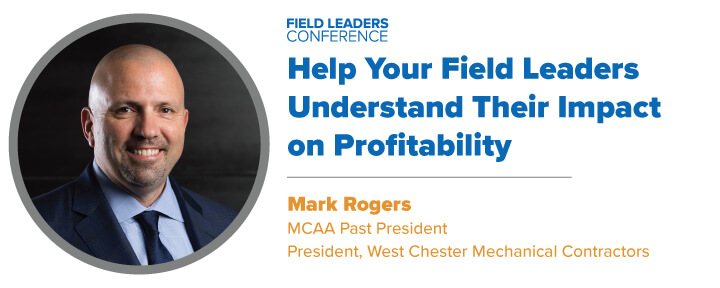
Help Your Field Leaders Understand Their Impact on Profitability at the 2026 Field Leaders Conference

April 7-9, 2026 | Houston, TX

MCAA’s Field Leaders Conference is where field leaders realize their importance and value as professionals and members of the management team. When your field leaders join us in April, they will learn the skills they need to be business, and results, oriented managers focused on growing company profits and brand. Register them today!

SESSION HIGHLIGHT

The Foreman’s Impact on Profitability
with Mark Rogers, MCAA Past President & President and Owner, West Chester Mechanical Contractors

Many in the field may not realize how their daily job impacts the people they work with and the bottom line. At the MCAA Field Leaders Conference, your field team can benefit from the know-how of someone who has experienced it all in The Foreman’s Impact on Profitability session led by MCAA member Mark Rogers. Rogers began his career as a Steamfitter Apprentice in 1986 with Local 420 in Philadelphia, went on to start his own mechanical contracting company in 1996 and served as MCAA President in 2011.

He has also served his association as Chair of the Education Committee, President of the JRGF Foundation and Co-Chaired the UA/MCAA Strategic Planning Committee with UA General President Mark McManus. Mark’s passion is educating people in our industry, and he continues to develop and present sessions for many groups and has delivered over 150 presentations to over 20,000 people.

Your Lead Field Personnel Cannot Afford to Miss this Conference! Registration is now open for the April 7 – 9, 2026 conference in Houston, TX. Register your field personnel today!

Find the Latest from GF Uponor and NuFlow Technologies in MCAA’s Virtual Trade Show

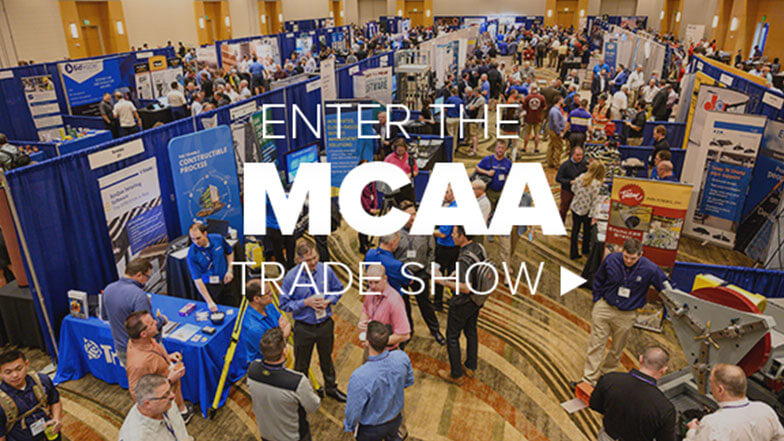
MCAA’s Virtual Trade Show connects our contractor members with the members of MCAA’s Manufacturer/Supplier Council.

Participating companies highlight and link to new products, product lines, services, solutions or web pages of particular interest. Here are just a few of the recent additions:

GF Uponor
Uponor AquaPEX® and ChlorFIT® Schedule 80 Corzan® CPVC deliver a complete potable water solution from one trusted source. Combined with prefabrication and kitting services, Uponor hybrid systems can help simplify planning, reduce waste, and deliver greater efficiencies for your commercial domestic water projects. Corzan® is a registered trademark of Lubrizol Advanced Materials, Inc.

NuFlow Technologies
Becoming a NuFlow Certified Contractor is more than buying our equipment. We prepare our contractors with everything they need to develop new expertise, product offerings, and revenue streams. Grow your business with NuFlow!

Need Something Else?

Find many more smart solutions in MCAA’s Virtual Trade Show!

Speaking of Smart Solutions

Visit the Smart Solutions Case Studies area of our website to learn how other mechanical contractors found their win-win with cost-saving and productivity-enhancing applications from members of MCAA’s Manufacturer/Supplier Council.

This section of our website also includes tips and ideas to help your company save money and enhance your productivity. Don’t miss it!

Connect With Additional Manufacturer/Supplier Training

Save yourself time and let MCAA connect you to the latest Manufacturer/Supplier member’s training opportunities. Visit the Manufacturer/Supplier Training area of the Resource Center to get started. 

New Federal Tax Deduction for Qualified Overtime Compensation

MCAA members should be aware of a significant tax change introduced by the “One Big Beautiful Bill Act” (OBBBA). The law creates an above-the-line federal income tax deduction for “qualified overtime compensation,” available for tax years 2025 through 2028. Here’s what it means for your business and employees:

What Is the Deduction?

The OBBBA “No Tax on Overtime” provision allows eligible employees to deduct up to:

  • $12,500 annually
  • $25,000 for married couples filing jointly

This deduction applies only to the overtime premium required under the federal Fair Labor Standards Act (FLSA)—the “half” in “time-and-a-half”—for hours worked beyond 40 in a week.

Example:
An employee earning $20/hour straight time and $30/hour overtime can deduct only the $10/hour premium portion for hours worked over 40 in a week.

What Does NOT Qualify?

The deduction does not apply to:

  • Overtime under collective bargaining agreements that exceed FLSA requirements (e.g., daily overtime rules).
  • Voluntary employer premiums not required by FLSA.
  • Shift differentials, weekend premiums, or other non-FLSA overtime.
  • Overtime required by state laws that go beyond FLSA (e.g., California daily overtime).

Income Limits

The deduction phases out for individuals with modified adjusted gross income (MAGI) over $150,000 ($300,000 for married filing jointly), reducing $100 for every $1,000 above the threshold.
Married taxpayers must file jointly and include both spouses’ SSNs.

Federal Tax Only

This deduction applies only to federal income tax. It does not affect payroll taxes (Social Security, Medicare) or state/local taxes.

Employer Reporting Requirements

Employers must track and separately report qualified overtime compensation on Form W-2:

  • 2025: Treasury offers penalty relief and allows reasonable reporting methods (e.g., Box 14 on Form W-2).
  • 2026 onward: Employers must maintain records distinguishing FLSA-required overtime from other premium pay for accurate W-2 reporting.

Ensure payroll systems are updated to track qualified overtime starting January 1, 2026.

Next Steps:
Refer to IRS resources and consult your tax advisor for guidance on applying this new law.

This material is for informational purposes only. The material is general and is not intended to be legal advice. It should not be relied upon or used without consulting a lawyer to consider your specific circumstances, possible changes to applicable laws, applicable CBAs, prime contracts, subcontracts, rules and regulations, and other legal issues. Receipt of this material does not establish an attorney-client relationship.

NCPWB Technical Conference Returns April 26–28, 2026, in San Antonio

The NCPWB Technical Conference returns April 26–28, 2026, at the Hyatt Regency Hill Country Resort in San Antonio, Texas, with a renewed focus on the real-world welding challenges mechanical contractors face—particularly those related to compliance with ASME Section IX. What began years ago as a primarily technical gathering has evolved into a broader, more dynamic conference that reflects the changing needs of today’s industry.

The 2026 conference is designed with a clear goal: deliver meaningful insights and actionable takeaways that attendees can immediately apply in the office, fab shop and the field. While technical excellence remains at the core, the expanded program acknowledges the increasing complexity contractors face and provides practical guidance to address it.

This year’s agenda places a strong emphasis on interaction and real-world application. Attendees can expect more engaging sessions, expanded peer-to-peer conversations, and opportunities to learn directly from fellow contractors facing similar welding and compliance challenges. Rather than focusing solely on theory, the conference targets the day-to-day welding issues contractors are actively managing on projects.

The conference opens with a keynote from Andrew Brown of Trades Media, a nationally recognized voice on skilled trades recruitment and workforce development. Brown works closely with skilled trades organizations across the country to build effective Gen Z workforce pipelines, helping companies rethink how they attract, engage, and retain the next generation of craft professionals. His perspective brings timely insight to one of the most pressing issues impacting the welding and mechanical contracting workforce today.

In addition to technical sessions, the Manufacturer/Supplier Exhibit returns with 20 companies showcasing the latest welding tools, equipment, and technologies tailored for mechanical contractors. The exhibit offers direct access to industry partners and innovations that support quality, compliance, and productivity.

Set in San Antonio, the Hyatt Regency Hill Country Resort provides an ideal environment for learning, networking, and collaboration. The relaxed resort setting encourages meaningful conversations and relationship-building beyond the classroom, reinforcing the conference’s value as both an educational and professional development experience.

More than just an event, the 2026 NCPWB Technical Conference is a working forum—bringing mechanical contractors together to discuss welding technologies as related to ASME Section IX. As the industry continues to evolve, the conference evolves with it, delivering relevant, practical value for today’s welding professionals.

MCAA Sponsorship Opportunities Available

The MCAA Sponsorship Prospectus is here! 

Explore exclusive ways to connect with contractors, leaders, and decision-makers throughout the year. 

This prospectus gives you everything you need for planning the year ahead for MCAA exhibits, brand visibility, and supporting the future of our industry.

MCAA Government Affairs Update for the Week of January 12, 2026: The Latest Developments Impacting Our Industry

As part of its ongoing commitment to protecting your livelihood and setting the stage for a bright future, MCAA has secured the services of Longbow Public Policy Group to advise our MCAA Government Affairs Committee (GAC). GAC Chair, Jim Gaffney will be passing along information relative to our industry on a regular basis.

On Monday, January 12, 2026 MCAA Lobbying Firm, Longbow Public Policy Group provided the following information:

Trump Administration

  • As the MCAA continues to engage the Trump Administration on its plans for implementation of President Trump’s Executive Order on “Preparing Americans for High-Paying Skilled Trade Jobs of the Future,” to create one million new active apprentices nationally, we wanted to make members aware that last week the Labor Department (DOL) made its largest financial commitment to date towards this goal. Last Tuesday, DOL announced the upcoming availability of $145 million in new funding to expand Registered Apprenticeships through a pay-for-performance incentive program. DOL’s Employment and Training Administration plans to use this money to award no more than five cooperative agreements of between $10 million and $40 million for a four-year period of performance, focusing on the nationwide expansion of newly developed Registered Apprenticeships, as well as the nationwide growth of existing programs, with an “emphasis on apprenticeships tied to: (1) nuclear energy and artificial intelligence infrastructure; (2) shipbuilding and the defense industrial base; and (3) transportation. Applicants eligible for these awards include: (1) registered apprenticeship and workforce intermediary organizations; (2) national industry groups and associations; (3) national labor management organizations; (4) national economic development entities; (5) state agencies and Territories; (6) professional consulting organizations; and (7) consortia led by one or more eligible entities. All applicants must include as required partners of at least one national industry association or regional industry associations and/or multi-regional or national employers. DOL feels that including an industry association not only demonstrates broad industry buy-in but also shows that the applicant will be able to leverage broader business partnerships once funded. Applications are due at 11:59 PM on March 20, 2026, and awardees will be expected to begin performance on July 1, 2026.
  • While the MCAA continues its engagement with the Trump Administration and the Department of Labor’s Wage and Hour Division (WHD) to preserve the Biden-era, MCAA-supported 2023 final rule updating the Davis-Bacon Act regulations, we learned that last Tuesday, the WHD issued six new opinion letters clarifying the application of the Fair Labor Standards Act (FLSA) and the Family and Medical Leave Act (FMLA). Four of the letters address the FLSA, including one concluding that a union and an employer may not use a collective bargaining agreement (CBA) to exclude a mandatory 15-minute pre-shift “roll call” for emergency dispatch workers from compensable time for overtime purposes. WHD determined that such roll calls must be counted as hours worked when calculating FLSA overtime eligibility. Notably, the letter provides detailed guidance on the partial overtime exemptions available to employees working under qualifying CBAs and explains how the employer and the union subject to the opinion letter could revise their CBA language to satisfy those requirements. A second FLSA opinion letter held that performance-based incentive bonuses paid to non-exempt employees under pre-established criteria—such as punctuality, attendance, safety compliance, and performance efficiency—are non-discretionary and therefore must be included in the regular rate of pay when calculating FLSA overtime. Two additional opinion letters address application of the FMLA, including guidance clarifying that employees may use FMLA leave for travel time to and from medical appointments related to their own or a family member’s serious health condition, and that medical certifications need not include travel-time estimates to be valid.
  • As the MCAA continues to monitor developments tied to the Trump Administration’s efforts to revive U.S. shipbuilding, the past week underscored both the scale of the Administration’s ambitions and the tensions emerging around how that expansion will be financed and executed. On the positive side, last Thursday the Labor Department awarded nearly $14 million through its Bureau of International Labor Affairs to Delaware County Community College ($8 million) and the Massachusetts Maritime Academy ($5.8 million) to build hands-on training pipelines for the next generation of U.S. shipbuilders. The grants will support development of a specialized, internationally recognized shipbuilding curriculum, expand Registered Apprenticeship opportunities with U.S. shipyards, and promote innovation in areas such as modular construction and icebreaker technology. These workforce investments came alongside broader signals of increased defense spending with President Trump last Wednesday calling on Congress to raise the Pentagon’s budget to a record high $1.5 trillion to support a military buildup, including construction of a new “Trump class” of battleships.
  • While the Administration is proposing a record defense budget, it is also signaling a tougher stance towards defense contractors. In an executive order President Trump signed last Thursday, the President directed the Defense Department to curb stock buybacks and excessive corporate distributions by publicly-traded defense companies during periods the Pentagon deems to reflect underperformance or non-compliance with contractual obligations, or insufficient investment in production capacity. The executive order also instructs the U.S. Securities and Exchange Commission to reconsider the ability of publicly-traded defense contractors that fail to satisfy the Pentagon to avail themselves of safe-harbor protections under federal securities laws allowing share buybacks and repurchases.
  • As the MCAA continues advocating policies that support nuclear energy deployment and the build-out of the nuclear supply chain we were pleased to learn that the U.S. Department of Energy awarded American Centrifuge Operating, General Matter, and Orano Federal Services $900 million each to expand domestic uranium enrichment capacity over the next decade. The award is part of the broader effort to reduce U.S. reliance on Russian nuclear fuel to strengthen U.S. energy security and the reliability of the U.S. nuclear industry. The awards support enrichment services for both low-enriched uranium used in the nation’s 94 existing reactors and high-assay low-enriched uranium (HALEU) needed for advanced and small modular reactors. This investment is a cornerstone of a domestic nuclear supply chain necessary to encourage future deployment of next generation reactors.
  • Following the Trump Administration’s move to cap National Institutes of Health (NIH) “indirect cost” reimbursements at 15% regardless of institutions’ actual expenses, the U.S. First Circuit Court of Appeals last Tuesday upheld a lower court ruling blocking the policy, agreeing that the change would have unlawfully cut billions in research support for universities, medical centers, and other recipients. The court concluded that the Trump Administration’s approach conflicted with congressional intent by bypassing the long-standing requirement that indirect cost rates be negotiated case-by-case with the NIH. The 15% cap had threatened to significantly curtail facility renovation and maintenance activities at universities and other research facilities that provide work for MCAA members.
  • As the MCAA continues working to prevent the rescission of President Biden’s MCAA-supported PLA executive order and the regulations implementing the order, we won a small battle just before the Christmas holiday when the Department of Transportation released its $1.5 billion Notice of Funding Opportunity (NOFO) for the fiscal year 2026 Better Utilizing Investments to Leverage Development (BUILD) grant program established by President Biden’s Infrastructure Investment and Jobs Act. The NOFO outlines several key evaluation criteria for grant awards. Our ongoing advocacy of PLAs appears to have had an effect, as DOT on page 38 of the NOFO states it will consider in selecting grant recipients whether projects include union participation or project labor agreements. The agency will also assess the extent to which projects advance the nation’s domestic energy sector, consistent with Executive Order 14154, Unleashing American Energy, and help revitalize and restore domestic maritime industries pursuant to Executive Order 14269, Restoring America’s Maritime Dominance. The inclusion of PLA language in this end of year NOFO is significant because as discussed during the government affairs presentation at Longboat Key last month, MCAA has been battling a campaign by the U.S. Small Business Administration’s (SBA) Office of Advocacy and Associated Builders and Contractors urging the joint Justice Department/Federal Trade Commission Task Force on anticompetitive regulations to designate both the PLA executive order and the regulations implementing it as anticompetitive to justify eliminating them (see page 6 and 7 of SBA Office of Advocacy Comment Letter from June). This fight is far from over and this small victory seems likely to only renew the determination of our opponents in the New Year.

Congress

  • As Congress returned last week following the two-week holiday recess, the MCAA continued full-court press on permitting reform. In the New Year we are focused on sustaining the momentum garnered from the House passage last month of the MCAA-advocated Standardizing Permitting and Expediting Economic Development (SPEED) Act (H.R. 4776). We are now lobbying to move this bill and other permitting reform efforts in the Senate. Ahead of meetings with congressional offices this week, MCAA sent a letter last Wednesday to Republican and Democratic leadership of the Senate Environment and Public Works (EPW) and Senate Energy and Natural Resources Committees urging lawmakers to support permitting reform and advance the SPEED Act to the floor. The letter explains how ongoing permitting delays are stalling energy, infrastructure, manufacturing, and data-center projects while undermining energy independence, AI deployment, and efforts to develop the infrastructure to reshore manufacturing. There are some significant obstacles to overcome in the Senate. Most notably, Senate EPW Ranking Member Sheldon Whitehouse (D-RI) publicly threatened on January 2 to stall all permitting reform legislation, the surface transportation reauthorization, and the Water Resources Development Act unless the Trump Administration lifts its recent pause on offshore wind leasing. These political headwinds have been compounded by the growing grassroots opposition to data centers that recently prompted Energy Secretary Chris Wright to warn data center developers that they are “losing control of the narrative.” Grid operators such as PJM Interconnection are also adding to concerns about data center development, warning that the grid is not yet equipped to absorb surging data center demand and suggesting that data centers have on-site backup generators or accept temporary shutdowns during peak demand to avoid blackouts for existing power customers.
  • The chances of avoiding a government shutdown improved last week after the House voted 397–28 to pass a three-bill minibus appropriations package containing the fiscal year 2026 Energy-Water, Interior-Environment, and Commerce-Justice-Science spending bills—an important de-escalation that, if followed by the Senate, would result in lawmakers having enacted six of the twelve annual appropriations bills for the fiscal year. The House-passed Energy-Water spending bill includes: (1) $1.785 billion for nuclear energy at the Department of Energy; (2) $3.473 billion for the Harbor Maintenance Trust Fund; (3) $1.95 billion for Energy Efficiency and Renewable Energy at the Department of Energy (a $1.5 billion decrease from FY2025); (4) $1.47 billion for the Bureau of Water Reclamation’s Water and Related Resources Account; and (5) $396.8 million to the U.S. Army Corps of Engineers for construction projects on the inland waterways system. Additionally, the Interior-Environment spending bill includes: (1) a $7.4 million increase at the Bureau of Land Management for onshore oil and gas development; (2) an $11.2 million increase at the Bureau of Ocean Energy Management for offshore energy development; and (3) a $21.2 million reduction for renewable energy development. Despite this progress, several pitfalls remain that could complicate efforts to keep the government funded past the January 30th deadline, including moves by House appropriators to tighten restrictions on the Department of Homeland Security’s ability to reprogram funds between accounts amid concerns about the Trump Administration’s aggressive use of that authority, an issue that has taken on added political significance following last week’s shooting of a woman by an ICE agent in Minneapolis. Another friction point is the unresolved negotiations over expired enhanced Affordable Care Act (ACA) premium tax credits—which were a central factor in triggering the most recent government shutdown. Last week the House voted 230-196 to extend the expired subsidies for three years while bipartisan Senate talks continue over a potential two-year extension package that could include new income caps, minimum monthly premiums, expanded access to health savings accounts, additional cost-sharing reduction provisions, and a longer open-enrollment period, even as some Republicans question whether such a deal can clear the Senate outside of a partisan budget reconciliation process. Separately, the Senate voted 52-47 along bipartisan lines to advance legislation requiring President Trump to seek congressional approval before initiating any new military action in Venezuela following the January 3 operation to apprehend Venezuelan President Nicolas Maduro, prompting veto threats from the White House and injecting another point of contention into broader negotiations over the spending bills as Democrats look to limit the Administration’s ability to use appropriated funds for such actions in the future without first obtaining congressional approval.
  • Next week we expect to be busy on issues related to independent contractors and ERISA following the House Rules Committee’s announcement of a meeting scheduled for today, January 12, 2026, to develop a rule governing floor consideration of multiple bills reported by the House Education and Workforce Committee. Among the measures expected to be considered is the Save Local Business Act (H.R. 4366), which would amend both the National Labor Relations Act and the Fair Labor Standards Act to significantly narrow the circumstances under which a company may be deemed a joint employer with respect to another entity’s employees, such as those of a subcontractor, effectively limiting liability for worker misclassification and other labor law violations. Lawmakers are also expected to consider the Protecting Prudent Investment of Retirement Savings Act (H.R. 2988), which would amend ERISA to rescind the MCAA-supported Biden-era Prudence and Loyalty rule that restored ERISA fiduciaries to a long-standing framework for evaluating investments with comparable risk and return characteristics and explicitly allowed plan trustees to consider, as a relevant financial factor, whether an investment would generate union work hours that result in contributions to the plan.
  • These congressional developments on the independent contractor issue come as the Labor Department’s Wage and Hour Division last Wednesday sent its long-anticipated proposed rule rescinding the Biden-era, MCAA-supported independent contractor rule that made it harder to misclassify construction workers as independent contractors to the White House Office of Information and Regulatory Affairs for review (a step that typically precedes publication in the Federal Register). The impending rulemaking is of limited impact, however because DOL ceased enforcing the Biden-era rule in May, limiting the immediate practical impact of the rescission. At the same time, WHD emphasized that it is maintaining robust wage-and-hour enforcement, announcing last Thursday that it recovered more than $259 million in back wages for nearly 177,000 workers in fiscal year 2025—the highest total since 2019—an average of $1,465 per worker, which the agency attributed to stepped-up enforcement alongside expanded compliance assistance efforts, including updated Fair Labor Standards Act guidance, revived opinion letters, and the Payroll Audit Independent Determination program allowing employers to self-report violations and pay reduced penalties.

Around the Country

  • Following the MCAA’s successful advocacy to turn back efforts to cut geothermal energy tax credits in the One Big, Beautiful Bill Act, we wanted to be sure members were aware that last Wednesday, the Energy Department’s Geothermal Technologies Office (GTO) launched the Geothermal Power Accelerator, a collaboration between 13 states, GTO, and the private sector and led by the National Association of State Energy Officials (NASEO) to expand the use of geothermal power on the U.S. power grid. Participating State Energy Offices include Arizona, California, Colorado, Hawaii, Idaho, Louisiana, Montana, Nevada, New Mexico, Oregon, Pennsylvania, Utah, and West Virginia. Through the Accelerator, states will collaborate with federal agencies and geothermal developers to set statewide geothermal goals, strengthen resource mapping, and advance policies and programs that reduce project costs and address regulatory barriers. The initiative will begin with a series of strategy sessions and “state of the industry and policy” discussions with federal leaders and private-sector experts to inform specific state actions in 2026. More information and relevant resources regarding the Accelerator are available on the NASEO website.
  • As Congress continues to debate the path forward on permitting reform, state and local resistance to large-scale energy and data center projects is intensifying—highlighting the practical challenges developers face on the ground. Last Tuesday, it was revealed that the recent approval of Eagle Rock Partners’ massive data center project in Twiggs County, Georgia, has sparked a legal challenge over the County Commission’s effort to fast-track the project without first completing a state-required regional impact review. County residents, citing concerns that the rezoning was rushed without sufficient information about the project’s energy and water demands, filed suit seeking to overturn the approval. Meanwhile, in Maryland, a growing pipeline of proposed data center projects that prompted warnings from the regional grid operator about system strain has lawmakers  giving renewed attention to regulating data centers in the upcoming General Assembly session. While last year’s legislature folded some data center provisions into a broader energy reform package, including new utility rate structures for large-load customers, additional legislation could impose new approval requirements, energy-use conditions, or cost-allocation rules that developers will need to factor into project planning and timelines.
  • Reflecting the mounting pressure on regional grids to secure reliable, dispatchable power amid rapid load growth, last Tuesday, Vistra Corp. agreed to acquire Cogentrix Energy for approximately $4 billion, adding 10 modern natural gas–fired power plants totaling 5.5 gigawatts of capacity across three major U.S. power markets. The portfolio includes five facilities on PJM’s grid, which spans much of the Mid-Atlantic and Midwest from New Jersey to Illinois, four combined-cycle plants in ISO New England’s grid, and one cogeneration facility in ERCOT, which serves most of Texas. The deal—priced at roughly $730 per kilowatt after tax benefits—underscores the growing premium on flexible gas generation as load growth from data centers and electrification accelerates and grid operators seek reliable capacity to maintain system stability.
  • Last Wednesday, the Justice Department sued the California cities of Morgan Hill and Petaluma in federal court, arguing that their local bans on natural gas infrastructure in new buildings are preempted by the Energy Policy and Conservation Act, which gives the federal government exclusive authority over energy-use standards for covered appliances. The complaint, filed in the Northern District of California, contends that the ordinances effectively prohibit natural gas piping and the use of federally regulated appliances and therefore conflict with federal law. The Justice Department is seeking a court declaration invalidating the bans and a permanent injunction against their enforcement, following similar federal action opposing New York City’s natural gas ban.
  • In a ruling over the scope of the withdrawal liability exemption for multiemployer plans in the construction industry, last Monday, the Ninth Circuit issued a decision in Walker Specialty Construction, Inc. v. Board of Trustees of the Construction Industry and Laborers Pension Fund for Southern Nevada. The case focused on interpreting the definition of the term “building and construction industry” for purposes of the Multiemployer Pension Plan Amendments Act (MPPAA) exemption from withdrawal liability. The Ninth Circuit agreed with a U.S. District Court that Walker Specialty was exempt from withdrawal liability because its asbestos abatement work fell within the MPPAA’s building and construction industry exemption. In reaching this decision, the Court concluded that for purposes of the MPPAA, the term “building and construction industry” has the same meaning the National Labor Relations Board assigned to this term under the Labor Management Relations Act.
  • Last Monday, the Pharmaceutical Care Management Association (PCMA), which represents pharmacy benefit managers (PBMs), sued California over a state law requiring PBMs to act in their clients’ interests and disclose all commissions and conflicts of interest. The law was enacted in October 2025 and applies to self-insured employer plans regulated under ERISA. PCMA argues that California’s law is preempted by ERISA because it affects who is considered a plan fiduciary.

MCAA Announces Nominees for 2026 MEP Innovator of the Year Award

MCAA is pleased to announce the nominees for the 2026 MEP Innovator of the Year Award, recognizing individuals who are advancing the mechanical contracting industry through innovation, leadership, and the practical application of technology.

This award honors professionals who are not just adopting new tools, but rethinking how work gets done—improving productivity, driving better outcomes, and helping their organizations and teams adapt to a rapidly changing construction environment.

This year’s nominees reflect the breadth of innovation happening across the industry. Their work spans technology adoption, process improvement, and forward-looking leadership that is shaping how mechanical contractors operate today and prepare for what comes next.

The 2026 MEP Innovator of the Year nominees are:

  • Stu McGee, Southland Industries
  • Andrew Nguyen, W.E. Bowers
  • Rob Cross, The Baker Group
  • Ken Eastman, J.W. McClenahan
  • Justin Clinton, Murray Company

Each nominee has demonstrated a commitment to pushing boundaries—whether through data-driven decision-making, digital workflows, fabrication strategies, or new approaches to project delivery and team development.

MCAA congratulates all of this year’s nominees and looks forward to recognizing their achievements as part of the MEP Innovation Conference, taking place in Austin, Texas January 26-28. Their work represents the kind of leadership and innovation that will continue to move the mechanical contracting industry forward.

Resource Highlight: Making a Sustainable Business Transformation

In today’s competitive landscape, sustainable business transformation—and business growth—begins by demonstrating environmental, social, and governance (ESG) awareness. MCAA’s Management Methods Bulletin, Making a Sustainable Business Transformation, explores why ESG matters and provides five steps to assist in your business’s sustainable journey. This new educational resource is free to MCAA members as a benefit of membership. It’s just one of MCAA’s educational resources that are free to MCAA members as a benefit of membership.

MCAA thanks Paul Sambanis, Ph.D., Vice President of Sustainability at SLOAN, for developing this bulletin.

You may also be interested in:

For a full list of available Management Methods Bulletins, visit the Management Methods Bulletins page.

Find all of MCAA’s educational resources in the Resource Center.

Have Questions or Need Personal Assistance?

Contact MCAA’s Frank Wall.

Last Call: MCAA Board of Directors Nominations are Due January 15, 2026

The future of MCAA is fundamentally linked to the quality of the individuals who serve on its Board of Directors. MCAA members who would like to be considered for one of three vacancies are encouraged to learn more and complete the application. Applications should be returned no later than January 15, 2026. Candidates and their spokespersons will be scheduled for interviews at the 2026 MCAA Annual Convention. Those who are selected will begin their terms in March 2026.

MCAA Board of Directors Roles and Responsibilities

Purpose:
MCAA’s National Board of Directors serves as a governing board for all Association
matters.

Board Members Responsibilities:

  • Serve in an advisory role to govern Association practices.
  • Represent the national, as opposed to a local or regional interest
  • Serve on national committees and task forces when called upon
  • Support MCAA’s advocacy efforts, including the PAC
  • Attend key association programs and conferences
  • Actively participate in all Board meetings contributing to the discussion, brainstorming, and sharing of innovative ideas.

Time Commitment for Board Members:
MCAA’s Board of Directors traditionally holds three meetings each year; one at the
beginning of each annual Convention, one at the closing of each annual Convention, and one Summer Meeting. All of these meetings are held in person.

Board Commitment:
Two (3) year terms

Board of Directors Meetings Reimbursement Policy:
MCAA’s expense reimbursement policy for the Summer Board Meeting is as follows:

  • Executive Committee – four nights of room rate and tax paid directly to the hotel by MCAA.
  • Board Members and Past Presidents – three nights of room rate and tax paid directly to the hotel by MCAA.
  • If you choose to stay beyond the allotted number of days, you will need to provide a credit card to cover the additional time.
  • All attendees will need to provide a credit card at check-in to cover incidental expenses. These expenses are the responsibility of the member and will not be reimbursed by MCAA.

Reimbursable Expenses

  • Airfare – Round-trip, non-refundable, 21-day advance purchase, coach airfare is
    reimbursed for the Executive Committee, Board Members, Past Presidents, and their partners – including baggage fees. (Please note that partner travel reimbursed by MCAA is considered taxable income by the IRS; therefore, you will receive a 1099-NEC if the value equals or exceeds $600.00. If you do not wish to receive a 1099-NEC, please submit your partner’s airfare in the amount of $599.00)
  • MCAA does not reimburse for upgraded airfare (first class, business class, upgraded economy, etc.). If you choose to purchase non-reimbursable airfare, please book a dummy coach ticket at the time of booking to turn in with your expenses for reimbursement.
  • Local ground transportation – MCAA will reimburse the roundtrip cost of a taxi or Uber between the airport and the hotel.
  • Rental Car & Parking – MCAA will reimburse the cost of a standard rental car for anyone driving to the destination. MCAA will also cover on-site parking at the hotel.
  • Airport Parking – MCAA will reimburse the cost of parking at your home airport or the taxi/Uber charge to/from your home if you do not drive to the airport.

MCAA’s Convention Board Meeting reimbursement policy is as follows:

  • There are two Board meetings at the Convention. Board members and Past Presidents
    receive a per diem for each Board meeting they attend for a maximum check of $1,000. Executive Committee members will also receive a per diem for the Executive Committee meeting for a maximum check of $1,500, except for the President whose lodging and travel expenses are covered by MCAA.
  • Airfare, travel, and incidental expenses are not reimbursed.

Antitrust:
All MCAA Committees are committed to fostering an open, competitive market, adhering to all anti-trust laws and regulations. As members, we pledge to avoid any actions or discussions that may infringe upon these principles, including but not limited to discussions about price fixing, bid rigging, market allocation, or any other conduct that could potentially restrict competition. Our interactions, both within the committee and externally, will be transparent, fair, and promote healthy competition. We recognize that any breach of these anti-trust policies could result in severe legal and reputational consequences for both the individual, the committee and MCAA as a whole.

2026 Internship Grants – Now Available for Student Chapters, Employers and Affiliated Associations

The 2026 JRGF Internship Grant program provides valuable support directly to MCAA student chapters, employers and affiliated associations. Applications are currently available for all three categories. Click the corresponding link, fill out the form and apply for a grant to help support internship programming.

Student Chapters – Due January 15th

What are the 2026 Internship Grant Details for Student Chapters?

Student Chapter Internship Grants are intended to offer additional support to MCAA student chapters that are successfully connecting students with internship and full-time employment in the mechanical contracting industry.  Chapters are encouraged to utilize this funding to bring additional students to future mechanical educational conferences such as the MCAA Convention, MCAA GreatFutures Forum, or one of the five Attendance Scholarship Conferences (WiMI, Fabrication Conference, MEP Innovation Conference, Safety & Health Conference, or MSCA). 

  • Up to $500 per mechanical intern from the 2025 calendar year.
  • Up to $1,000 per full-time new hire in mechanical from the 2025 calendar year.
  • Submitted by the Faculty Advisor or Industry Advisor.
  • One application will be accepted per school, per grant type.
  • Must be submitted with a photo of the intern/new hire on the jobsite, at the office, by a company logo, or in company swag.
    • Interns and full-time new hires must be active participants in a student chapter at a four-year college or university, or previous participants who recently graduated.
    • The minimum eligible internship duration is eight weeks and may have occurred at any time during the 2025 calendar year.

What’s the timeline for the Student Chapter Form?

  • Both the intern form and new hire forms are due by January 15, 2026.
  • Chapters will be notified of grant awards in March 2026.

Employers – Due April 1st 

What are the 2026 Internship Grant Details for Employers?

These grants are Intended to offer support to mechanical contracting companies that are new to offering internships, are small companies, or are looking to grow their internship programs in the mechanical industry.

  • $1,000 grant (25 total selected, based on application).
  • Submitted by the company.
  • One application per company location.
    • Intern may be from any 4-year accredited college or university. The internship must be in the mechanical contracting industry.
    • The minimum eligible internship duration is eight weeks and may be planned to occur at any time during 2026.  

What’s the timeline for the Employer Form?

  • Forms are due by April 1, 2026, for planned 2026 internships.
  • Employers will be notified of grant awards in May 2026.

Affiliated Associations – Due April 1st 

What are the 2026 Internship Grant Details for Affiliated Associations?

These grants are intended to offer support for the development and growth of local student chapter programming that creates new employment opportunities or student inclusivity at events with potential employers and/or mentoring programs or new resources for student chapters.

  • $5,000 grant (5 total selected, based on application).
  • Submitted by the Affiliated Association Executive or Staff Member.
  • One application per Affiliated Association, covering all related 4-year schools with student chapters. 

What’s the timeline for the Affiliated Association Form?

  • Forms are due by April 1, 2026, for 2026 calendar year plans.
  • Affiliated Associations will be notified of grant awards in May 2026.

Looking for more info on the MCAA Career Development Initiative?

Contact Michele Hoffman (mhoffman@mcaa.org) or visit MCAA’s Career Development Initiative page to learn more about student chapter programming. 

Also, be sure to check out the JRGF website to explore the work the John R. Gentille Foundation is doing to further education and research in the mechanical industry.

Arden Building Companies Announces Key Executive Leadership Advancements

Arden Building Companies, an MCAA member, has announced a series of strategic leadership transitions designed to enhance operational consistency, support continued expansion, and drive the company’s long term growth strategy.

To support a unified and scalable operating structure across all subsidiaries, John Puniello has been appointed chief operating officer (COO) of Arden Building Companies. John has been integral to the evolution of Arden Engineering Constructors, bringing decades of institutional knowledge and a proven commitment to operational excellence, innovation, and organizational development. His leadership has shaped company culture, strengthened internal processes, and helped define the standards that distinguish Arden as an industry leader.

As COO, John will oversee a streamlined, one‑company operating framework that enhances accuracy, efficiency, profitability, and overall performance across the organization.

Rob Cote will assume the role of president of Arden Engineering Constructors, overseeing daily operations, leading business development, and ensuring the company meets its strategic, financial, and operational objectives. Since joining Arden in 2007, Rob has consistently demonstrated strong leadership, deep industry insight, and a commitment to excellence. He has been instrumental in leading high performing teams, refining operational practices, and driving continuous improvement throughout the organization.

Douglas Bolton has been named vice president of mechanical construction, supporting mechanical HVAC, plumbing, and fire protection divisions. In this role, he will lead business development, advance strategic growth initiatives, oversee contract management, and provide guidance to project teams. Doug brings a strong foundation in risk management and client relations, having begun his career as a lead underwriter for Travelers Insurance before transitioning into project leadership at Arden. He has successfully managed major projects with an emphasis on innovation, operational discipline, and talent development, experience that will be key to supporting Arden’s continued growth.

“Arden’s success has always been driven by the strength, talent, and dedication of our people,” said Robert M. Bolton, CEO of Arden Building Companies. “These leadership advancements reflect our confidence in the deep experience and proven capabilities of John, Rob, and Douglas. Their commitment to excellence and passion for our mission positions us for a new era of growth, innovation, and alignment across the entire organization.”

These leadership changes took effect January 1, 2026.

MCAA congratulates John, Rob, and Douglas on their new roles.

Find the Latest from Winsupply and T&S Brass and Bronze Works, Inc. in MCAA’s Virtual Trade Show

MCAA’s Virtual Trade Show connects our contractor members with the members of MCAA’s Manufacturer/Supplier Council.

Participating companies highlight and link to new products, product lines, services, solutions or web pages of particular interest. Here are just a few of the recent additions:

Winsupply
Because we bring national buying strength to local support directly to you.

T&S Brass and Bronze Works, Inc.
The WaveCrest line by T&S Brass blends contemporary style with durability. Known for 75 years of unmatched reliability, T&S Brass offers WaveCrest models in various styles with brushed nickel or chrome finishes. These models feature below-deck electronics for a sleek look, intuitive sensor activation, and auto-flush capabilities, embodying modern design and robust performance.

Need Something Else?

Find many more smart solutions in MCAA’s Virtual Trade Show!

Speaking of Smart Solutions

Visit the Smart Solutions Case Studies area of our website to learn how other mechanical contractors found their win-win with cost-saving and productivity-enhancing applications from members of MCAA’s Manufacturer/Supplier Council.

This section of our website also includes tips and ideas to help your company save money and enhance your productivity. Don’t miss it!

Connect With Additional Manufacturer/Supplier Training

Save yourself time and let MCAA connect you to the latest Manufacturer/Supplier member’s training opportunities. Visit the Manufacturer/Supplier Training area of the Resource Center to get started. 

Registration Now Open for MCAA’s April Field Leaders Conference

April 7-9, 2026 | Houston, TX

Registration is now open for MCAA’s April Field Leaders Conference, being held Tuesday, April 7 – Thursday, April 9 at the InterContinental Houston, an IHG Hotel in Houston, TX.

In two and a half days, your field leaders will hear from inspiring industry speakers and participate in powerful collaboration, leaving them inspired and re-energized.

Watch the video to see for yourself why other company owners and managers continue to send field personnel to this conference.

Don’t miss this opportunity to register your field leaders today.

MCAA Hub: Events and Education at MCAA26

The MCAA Hub is your one-stop destination for everything MCAA has to offer. From upcoming conferences and association initiatives to industry best practices, the Hub connects you to the full spectrum of MCAA events and educational opportunities. Whether you’re looking to expand your skills, grow your network or simply discover all the resources available to you, the Hub makes it easy to explore, engage and stay informed. 

Visit the MCAA staff in the MCAA Hub during the following times: 

  • Sunday, March 15, 11:00 a.m. – 3:00 p.m.
  • Monday, March 16, 11:00 a.m. – 3:00 p.m. 
  • Tuesday, March 17, 11:00 a.m. – 3:00 p.m. 
  • Wednesday, March 18, 11:00 a.m. – 3:00 p.m. 

Register today to attend MCAA26! 

Saving Time & Increasing Safety with MILWAUKEE TOOL & 1901 Inc.

After using MILWAUKEE TOOL’s cordless M18 FUEL™RINGER™ Roll Groover from start to finish on a recent project, 1901 Inc. of Madison, WI, estimated saving 40–50 hours of labor, thanks to faster setup time and easier mobility compared with traditional electric grooving machines. Jeremy Baillies, a steamfitter foreman at 1901 Inc., said, “It’s way more efficient, much faster, much safer; it saves all kinds of time.”

Looking for More Smart Solutions?

Visit the Smart Solutions Case Studies area of our website! You’ll see how other mechanical contractors found their win-win with productivity-enhancing and cost-saving applications from members of MCAA’s Manufacturer/Supplier Council.

Plus, you’ll find tips and ideas on other ways you and your company can save money and enhance your productivity.

Apply Now: MCAA/CNA Safety Excellence Awards Celebrate Innovation and Safety in Mechanical Contracting

MCAA and long-time safety partner CNA bring you the MCAA/CNA Safety Excellence Awards Program—one of the most prestigious recognitions in our industry. These annual awards honor MCAA member companies for outstanding safety programs and innovative safety initiatives, because nothing is more important than protecting the health and safety of our workforce. Take a moment to showcase your company’s success—apply today!

How to Qualify

To be eligible, submit your application by January 30, 2026, including:

  • A description of your 2025 safety and health program and why it deserves recognition.
  • Details of an innovation that helped you achieve exceptional safety performance during the year.

New Award Categories Reflect Industry Growth

New this year, we have updated the category sizes to keep up with the changing landscape of our industry. Companies will be grouped into five categories based on total hours worked, with one winner selected in each category:

  • Category 1: 0-200,000 hours
  • Category 2: 200,001-500,000 hours
  • Category 3: 500,001-1,000,000 hours
  • Category 4: 1,000,001-1,500,000 hours
  • Category 5: 1,500,001 + hours

 Winners will receive:

  • National recognition
  • A beautiful glass award to display proudly

Questions?

Contact Raffi Elchemmas (raffi@mcaa.org) for more information.

MCAA Board of Directors Nominations are Due January 15, 2026

The future of MCAA is fundamentally linked to the quality of the individuals who serve on its Board of Directors. MCAA members who would like to be considered for one of three vacancies are encouraged to learn more and complete the application. Applications should be returned no later than January 15, 2026. Candidates and their spokespersons will be scheduled for interviews at the 2026 MCAA Annual Convention. Those who are selected will begin their terms in March 2026.

MCAA Board of Directors Roles and Responsibilities

Purpose:
MCAA’s National Board of Directors serves as a governing board for all Association
matters.

Board Members Responsibilities:

  • Serve in an advisory role to govern Association practices.
  • Represent the national, as opposed to a local or regional interest
  • Serve on national committees and task forces when called upon
  • Support MCAA’s advocacy efforts, including the PAC
  • Attend key association programs and conferences
  • Actively participate in all Board meetings contributing to the discussion, brainstorming, and sharing of innovative ideas.

Time Commitment for Board Members:
MCAA’s Board of Directors traditionally holds three meetings each year; one at the
beginning of each annual Convention, one at the closing of each annual Convention, and one Summer Meeting. All of these meetings are held in person.

Board Commitment:
Two (3) year terms

Board of Directors Meetings Reimbursement Policy:
MCAA’s expense reimbursement policy for the Summer Board Meeting is as follows:

  • Executive Committee – four nights of room rate and tax paid directly to the hotel by MCAA.
  • Board Members and Past Presidents – three nights of room rate and tax paid directly to the hotel by MCAA.
  • If you choose to stay beyond the allotted number of days, you will need to provide a credit card to cover the additional time.
  • All attendees will need to provide a credit card at check-in to cover incidental expenses. These expenses are the responsibility of the member and will not be reimbursed by MCAA.

Reimbursable Expenses

  • Airfare – Round-trip, non-refundable, 21-day advance purchase, coach airfare is
    reimbursed for the Executive Committee, Board Members, Past Presidents, and their partners – including baggage fees. (Please note that partner travel reimbursed by MCAA is considered taxable income by the IRS; therefore, you will receive a 1099-NEC if the value equals or exceeds $600.00. If you do not wish to receive a 1099-NEC, please submit your partner’s airfare in the amount of $599.00)
  • MCAA does not reimburse for upgraded airfare (first class, business class, upgraded economy, etc.). If you choose to purchase non-reimbursable airfare, please book a dummy coach ticket at the time of booking to turn in with your expenses for reimbursement.
  • Local ground transportation – MCAA will reimburse the roundtrip cost of a taxi or Uber between the airport and the hotel.
  • Rental Car & Parking – MCAA will reimburse the cost of a standard rental car for anyone driving to the destination. MCAA will also cover on-site parking at the hotel.
  • Airport Parking – MCAA will reimburse the cost of parking at your home airport or the taxi/Uber charge to/from your home if you do not drive to the airport.

MCAA’s Convention Board Meeting reimbursement policy is as follows:

  • There are two Board meetings at the Convention. Board members and Past Presidents
    receive a per diem for each Board meeting they attend for a maximum check of $1,000. Executive Committee members will also receive a per diem for the Executive Committee meeting for a maximum check of $1,500, except for the President whose lodging and travel expenses are covered by MCAA.
  • Airfare, travel, and incidental expenses are not reimbursed.

Antitrust:
All MCAA Committees are committed to fostering an open, competitive market, adhering to all anti-trust laws and regulations. As members, we pledge to avoid any actions or discussions that may infringe upon these principles, including but not limited to discussions about price fixing, bid rigging, market allocation, or any other conduct that could potentially restrict competition. Our interactions, both within the committee and externally, will be transparent, fair, and promote healthy competition. We recognize that any breach of these anti-trust policies could result in severe legal and reputational consequences for both the individual, the committee and MCAA as a whole.

Resource Highlight: MCAA’s Cash Flow

Effective cash management can mean the difference between success and failure for the mechanical contractor. MCAA’s Cash Flow explains how contractors can manage their cash flow to maximize profits and growth. It’s just one of MCAA’s educational resources that are free to MCAA members as a benefit of membership.

The bulletin covers:

  • Cash management functions
  • Key components of an effective cash management program
  • How to maintain as much cash as possible by speeding the billing process, slowing the disbursement process and managing bank float
  • How contracts can impact cash flow
  • Cash management organization

For a full list of available Management Methods Bulletins, visit the Management Methods Bulletins page.

Have Questions or Need Personal Assistance?

Contact MCAA’s Frank Wall.