Archives: News Items

NEW “Preventing Struck-By Accidents” Miniseries Available Now

Providing a safe work environment is all our duties and preventing struck by object injuries could be one of the most impactful ways to keep our workers safe. Struck by objects is a leading cause of construction injuries and deaths, and about 75% of struck by deaths involve heavy equipment. That could include struck against an object, struck by an object, caught in an object or equipment, or caught in collapsing material. 

This 4-part miniseries covers the different ways stuck-by accidents occur focusing on:

  • Dropped & Falling Objects
  • Flying & Swinging Objects
  • Cars & Trucks
  • Heavy Equipment

Specific safety awareness and best practices information are presented in a short video designed to be watched on your smartphone.

View or download all four in both English and Spanish using the following links:

Dropped & Falling Objects: English | Spanish
Flying & Swinging Objects: English | Spanish
Cars & Trucks: English | Spanish
Heavy Equipment: English | Spanish

Contact MCAA’s Michael Nahas with any questions.

Find the Latest from Lochinvar, LLC and SLOAN in MCAA’s Virtual Trade Show

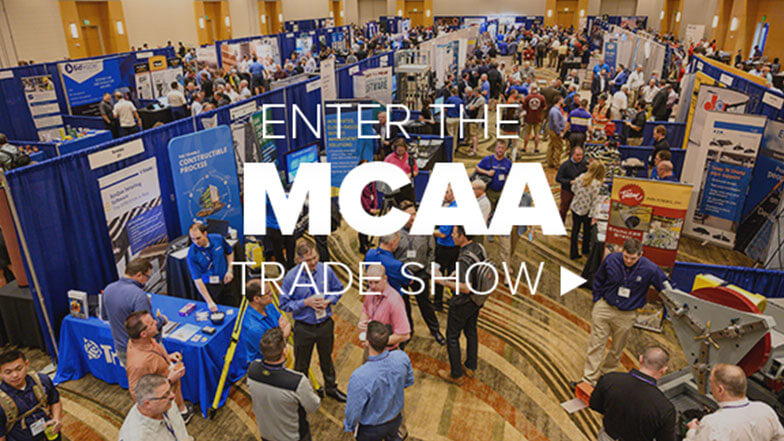
MCAA’s Virtual Trade Show connects our contractor members with the members of MCAA’s Manufacturer/Supplier Council.

Participating companies highlight and link to new products, product lines, services, solutions or web pages of particular interest. Here are just a few of the recent additions:

Lochinvar, LLC
Lochinvar, a leading manufacturer of high efficiency boilers, water heaters, pool heaters and sustainable options offers space and water heating solutions for virtually any application.

SLOAN
Transportation restrooms come with challenges, but also opportunities to make them shine. In this blog, we discuss the resources and solutions Sloan offers to make these restrooms traveler-friendly.

Need Something Else?

Find many more smart solutions in MCAA’s Virtual Trade Show!

Speaking of Smart Solutions

Visit the Smart Solutions Case Studies area of our website to learn how other mechanical contractors found their win-win with cost-saving and productivity-enhancing applications from members of MCAA’s Manufacturer/Supplier Council.

This section of our website also includes tips and ideas to help your company save money and enhance your productivity. Don’t miss it!

Connect With Additional Manufacturer/Supplier Training

Save yourself time and let MCAA connect you to the latest Manufacturer/Supplier member’s training opportunities. Visit the Manufacturer/Supplier Training area of the Resource Center to get started. 

MCAA Members Will Vote on Proposed Bylaws Changes at MCAA26

At its July 18–19, 2025 meeting, the MCAA Board of Directors reviewed and advanced a series of proposed bylaws changes designed to modernize membership classifications and ensure the long‑term sustainability of Association funding. MCAA members will be voting on these changes at MCAA26.

The proposed amendments address two key areas of the Bylaws—Article V (Membership) and Article VI (Dues)—and reflect the Board’s ongoing commitment to aligning MCAA governance with the evolving structure and needs of the mechanical contracting industry.

If approved by the membership, the changes mean that:

  • All contractor members will now have to be signatory to a labor agreement with the UA. This has always been the practice, now made official by inclusion in the bylaws.
  • The MCAA BoD may now elect to have a second and final deferment of the dues increase of $0.01 every three years. The next dues increase is now scheduled for January 1, 2028. 
  • January 1, 2027 the maximum hours on which dues are payable will go from 300,000 per branch office to 350,000.
  • January 1, 2029 the maximum hours on which dues are payable will go from 350,000 per branch office to 400,000.
  • The new M/S membership structure.

The voting will take place during the Annual Business Meeting on Thursday, March 19, 2026.

Celebrate Womens’ Invaluable Contributions to the Construction Industry: Courtney Borja’s Story

Women in Construction Week is an important opportunity to celebrate and recognize the invaluable contributions of women in the construction industry. This week highlights their achievements, honors their dedication, and inspires future generations to pursue careers in the field. Today, we celebrate Courtney Borja, a star apprentice who is now leading the way as a Foreman at Therma.

Courtney began her journey at Pipe Trades UA Local 393, where she won the local apprentice contest before advancing to and winning the state apprentice contest. She didn’t stop there—Courtney then made history as the first woman ever to compete across all trades at the regional level, where she once again took first place, securing her spot at the prestigious UA International Apprentice Contest.

Since her remarkable contest wins, Courtney has completed her apprenticeship and is now leading the way as a Foreman at Therma. Her drive, skill, and leadership continue to pave the way for future generations of tradeswomen.

Congratulations, Courtney! Thank you for raising the bar, breaking barriers, and inspiring so many in the trades.

By highlighting and honoring women like Courtney who are inspiring future generations to pursue careers in the field, we can help break down barriers and create new opportunities for growth and innovation. Let’s continue to support and empower women in construction, driving progress for the industry as a whole.

2026 JRGF Student Chapter Internship Grants Awarded to 18 MCAA Student Chapters

2026 JRGF Student Chapter Internship Grants—totaling $69,000—are being awarded to 18 MCAA Student Chapters this spring for their work encouraging students to seek internships and full-time employment within the mechanical contracting industry.

Student chapters directly receive the grant checks and are encouraged to utilize the funding to bring additional students to future mechanical educational conferences such as the GreatFutures Forum, Convention, or any of the five upcoming Attendance Scholarship Conferences: WiMI, Fabrication, MSCA, Health & Safety, or MEP Innovation.

2026 JRGF Student Chapter Internship Grant Recipients

Attending MCAA26 in Phoenix? Be sure to check out the Virtual Wall of Interns highlighting the student chapter grant recipients, student employees and their corresponding employers prior to the Student Chapter Competition on Tuesday afternoon and while exiting the Awards of Excellence Breakfast on Wednesday morning.

This year’s recipients are:

Alfred State College
Employed By:

  • Exential U.S., Inc.
  • John W. Danforth Company

Arizona State University
Employed By:

  • ACCO Engineered Systems, Inc.
  • Southland Industries

Ball State University
Employed By:

  • Bowen Engineering
  • Harrell-Fish, Inc.
  • North Mechanical Contracting, Inc.

Binghamton University
Employed By:

  • Welkin Enterprises, LLC

Bradley University
Employed By:

  • AMS Industries, Inc.
  • Dynamic Systems, Inc.
  • F.E. Moran, Inc.
  • Helm Group, Inc.

California State Polytechnic University, Pomona
Employed By:

  • ACCO Engineered Systems, Inc.
  • Murray Company
  • Southland Industries

Fairleigh Dickinson University
Employed By:

  • A&A Industrial Piping

Indiana State University
Employed By:

  • BMWC Constructors, Inc.
  • Deig Bros. Lumber & Construction Company, Inc.
  • Freitag-Weinhardt, Inc. 
  • Fused LLC

Iowa State University
Employed By:

  • AZCO, Inc.
  • Baker Group
  • Harris
  • The Waldinger Corporation

Kansas State University
Employed By:

  • Kruse Corporation
  • P1 Construction, LLC
  • U.S. Engineering Construction, LLC

Kent State University
Employed By:

  • Cerris Systems, Inc.
  • Nelson Stark Company
  • Prout Boiler, Heating & Welding, Inc.
  • The John F. Gallagher Company

Missouri State University
Employed By:

  • Springfield Engineering Company

Oregon State University
Employed By:

  • BMWC Constructors, Inc.
  • Charter Mechanical Contractors, Inc.
  • Harder Mechanical Contractors, Inc.
  • JH Kelly, LLC
  • Southland Industries

Pittsburg State University
Employed By:

  • Cerris Systems, Inc.
  • Lippert Mechanical Service Corporation
  • P1 Construction, LLC
  • The Waldinger Corporation
  • U.S. Engineering Construction, LLC

Southern Illinois University Edwardsville

Employed By:

  • Admiral Heating & Ventilating, Inc.
  • icon Mechanical
  • Mechanical Solutions, Inc.
  • Murphy Company

University of Nebraska
Employed By:

  • Cerris Systems, Inc.
  • Christopherson Plumbing 
  • Dual Temp Clauger
  • Hayes Mechanical
  • Helm Group, Inc.
  • Mainelli Mechanical Contractors 
  • Mechanical Systems, Inc.
  • Prairie Mechanical Corporation
  • The Waldinger Corporation

Virginia Tech
Employed By:

  • Harris
  • Southland Industries

Washington State University
Employed By:

  • McKinstry Company

What’s the Internship Grant Eligibility for Student Chapters?

The application process is closed for 2026. Forms for 2027 (based on 2026 employment) will be available starting on September 14, 2026.

  • Interns and full-time new hires must be active participants in a student chapter at a 4-year university.
  • Interns and full-time new hires are only eligible from the 2026 calendar year (January – December 2026).
  • Minimum eligible internship duration is 8 weeks and may occur at any time during the calendar year.

What’s the Internship Grant Process for Student Chapters?

  • Applications will be due January 15, 2027 for 2026 employment.
  • Submitted by the Faculty or Industry Advisor.
  • Must be submitted with an intern photo on the jobsite, at the office, by a company logo, or in company swag.
  • One application will be accepted per school, per grant type. Please ensure all eligible interns and new hires are included on the applicable form. 

Are Internship Grants Still Available for Employers and Affiliated Associations?

Yes! Applications for both employers and affiliated associations are currently available and are due by April 1, 2026 (for 2026 plans).

2026 Employer Internship Grant – Form

  • Submitted by the company.
  • Interns may be from any 4-year accredited college or university.
  • Minimum eligible internship duration is 8 weeks and may occur anytime during the 2026 calendar year.
  • Internship must be in the mechanical contracting industry.
  • One application will be accepted per company location, and one grant may be awarded per company (25 total available, $1,000 per grant).

2026 Affiliated Association Internship Grant – Form

Grants are intended to offer support for the development and growth of local student chapter programming that creates new employment opportunities or student inclusivity at events with potential employers and/or mentoring programs/new resources for student chapters.

  • Submitted by the Affiliated Association or Staff.
  • One application will be accepted per Affiliated Association, covering all related 4-year schools with student chapters.
  • One grant may be awarded per affiliate (5 total available, $5,000 per grant).

Questions on Internship Grants? Contact MCAA’s Michele Hoffman (mhoffman@mcaa.org).

Visit MCAA’s Career Development Initiative page to learn more about student chapter programming or the JRGF website to explore the work JRGF is doing to further education in the mechanical industry.

MCAA Government Affairs Update for the Week of March 2, 2026: The Latest Developments Impacting Our Industry

As part of its ongoing commitment to protecting your livelihood and setting the stage for a bright future, MCAA has secured the services of Longbow Public Policy Group to advise our MCAA Government Affairs Committee (GAC). GAC Chair, Jim Gaffney will be passing along information relative to our industry on a regular basis.

On Monday, March 2, 2026 MCAA Lobbying Firm, Longbow Public Policy Group provided the following information:

Trump Administration

  • The MCAA policy team was busy last week distilling the first State of the Union address of President Trump’s second term. Of particular interest to the MCAA, the President responded to the growing state and local resistance to new data centers by promising new “ratepayer protection pledges,” that several technology firms are expected to sign at a White House meeting this week. These pledges are expected to commit AI companies to bearing the cost of the incremental electricity demands of new data centers without shifting costs onto residential customers by building dedicated power generation for their AI facilities. On housing, Trump called on Congress to enact legislation to restrict private equity firms from buying homes. On healthcare, he pressed Congress to codify his “most favored nation” prescription drug pricing policy, tying U.S. drug prices to the lowest prices paid by other developed nations. Finally, the President announced plans to expand access to retirement savings through a program modeled on the Thrift Savings Plan for federal employees, which Treasury Secretary Bessent later said could be enacted through a second budget reconciliation bill, like the one used to enact the One Big Beautiful Bill Act last July. This has renewed moribund congressional discussions about a second reconciliation bill that MCAA is closely monitoring.
  • Following the U.S. Supreme Court’s decision on February 20th in Learning Resources, Inc. et al. v. Trump invalidating tariffs imposed under the International Emergency Economic Powers Act (IEEPA), last week President Trump issued two executive orders and a proclamation related to tariffs. Executive Order 14389 directs agencies to terminate the invalidated IEEPA-based tariffs and modify the Harmonized Tariff Schedule accordingly, while Proclamation 11012 invokes Section 122 of the Trade Act of 1974 to impose a temporary 10% global import surcharge for up to 150 days, effective February 24, 2026, with exemptions for certain energy products, pharmaceuticals, USMCA-compliant goods, and items subject to Section 232 tariff actions unaffected by the Supreme Court’s tariff decision. Executive Order 14388 continues the suspension of duty-free de minimis treatment for low-value imports so that tariffs on these goods continue to be collected. U.S. Customs and Border Protection confirmed it will halt collection of the invalidated IEEPA tariffs and deactivate the associated tariff codes. Meanwhile, Senate Finance Committee Ranking Member Ron Wyden (D-OR) and 26 Senate Democrats introduced legislation to require the approximately $175 billion in collected tariff revenues be refunded with interest over 180 days, prioritizing relief for small businesses. These developments come as Speaker Mike Johnson (R-LA) indicated the Republican Congress is unlikely to codify the Administration’s tariff agenda, raising uncertainty about whether the new temporary 10% tariff ordered under Section 122 will last beyond the 150 days the President can unilaterally impose it without action by Congress.
  • Last Thursday, the Department of Labor’s Wage and Hour Division (WHD) published a proposed rule to rescind the 2024 MCAA-supported, Biden-era independent contractor rule. As the MCAA expected, the proposal replaces the Biden-era rule with the 2021 framework imposed during President Trump’s first term that relies on a streamlined “economic reality” test that makes it easier to classify a worker as an independent contractor instead of as an employee under the Fair Labor Standards Act (FLSA). The proposal goes beyond the 2021 standard insofar as it makes some slight clarifications to the 2021 final rule, modifies and adds some examples, and applies the streamlined test for worker classification determinations beyond the FLSA to the Family and Medical Leave Act and the Migrant Seasonal Worker Protection Act. Comments on the proposed rule are due by April 28, 2026. This outcome was something that the MCAA’s policy team anticipated from our conversations with the Trump Administration. As we previously reported, in April 2025, the Administration stopped defending and paused several pending lawsuits over the Biden-era independent contractor rule, pledging to revisit it. The WHD promptly issued guidance in the spring of 2025 announcing it had ceased enforcement of the 2024 rule. The same day DOL issued the revised standard for worker classification, the National Labor Relations Board (NLRB) formally reinstated its 2020 joint employer rule that the Biden-era NLRB had rescinded and replaced. The reinstated 2020 rule will make it harder for companies to be joint employers under the National Labor Relations Act by requiring a company to exercise “substantial direct and immediate” control over another employer’s workers to be deemed a joint employer. The Board characterized the action as ministerial because it was effectuating a court ruling that invalided the Biden-era NLRB rule. As a result, the NLRB is not accepting comments on this action.
  • As the MCAA continues lobbying to defend the MCAA-supported, Biden-era project labor agreement (PLA) Executive Order and the Federal Acquisition Regulatory Council regulations implementing it, last Thursday we were pleased to see the General Services Administration (GSA) reissue its “Pre-Solicitation Notice for design-build services for the new United States courthouse in Hartford, CT” that was being challenged for including a PLA clause based on recent U.S. Federal Court of Claims rulings holding that requiring PLAs on large-scale federal construction projects violates the full and open competition requirements of the Competition in Contracting Act. GSA is re-soliciting the proposal to move the Hartford Courthouse project forward with a PLA requirement by invoking the public interest exception to full and open competition requirements of the Competition in Contracting Act at 41 U.S.C. § 3304(a)(7) “to respond to the Court of Federal Claims’ decisions on PLAs.” GSA says that invoking the exception “simply allows GSA to comply with FAR subpart 22.5 and Executive Branch policy by including mandatory PLA requirements.” GSA goes on to clarify that “[n]o firms are excluded from the competition” due to the PLA requirement. The GSA Administrator’s accompanying Determination invoking the public interest exception explains that President Biden’s PLA Executive Order “has not been revoked and remains the policy of the Trump Administration” pursuant to OMB Memorandum M25-29, which the MCAA and others in the union construction industry lobbied to secure from OMB last summer. The GSA Determination details the public interest in using a PLA in the same terms the MCAA uses in its advocacy for these contracting vehicles. It says:

    “PLAs have multiple benefits, including predictable labor costs, a steady supply of labor, coordination among multiple employers, and certainty about the terms and conditions of employment. PLAs provide structure and stability, avoid labor-related disruptions by using dispute-resolution processes to resolve worksite disputes, and prohibit work stoppages. PLAs secure the commitment of all stakeholders on a construction site to efficient completion without unnecessary interruptions. These benefits help ensure the efficient and timely completion of construction contracts, particularly where, as here, projects are large, complex, and of extended duration. The public has an interest in achieving these benefits on large-scale construction projects.”
  • As the MCAA continues engagement with the Trump Administration on accelerating the deployment of nuclear technology, we wanted to highlight a proposed rule from the Nuclear Regulatory Commission (NRC) concerning the regulation of fusion machines. The NRC is proposing to regulate fusion machines under its existing byproduct material framework at 10 CFR Part 30, rather than under nuclear power plant licensing regulations, concluding that the radioactive materials and hazards associated with fusion are more aligned with particle accelerator technologies. The proposed rule implements provisions of the Nuclear Energy Innovation and Modernization Act and the MCAA-advocated Accelerating Deployment of Versatile, Advanced Nuclear for Clean Energy (ADVANCE) Act, which formally classified fusion machine-generated radioactive material as byproduct material. While the NRC determined that existing emergency preparedness, physical security, radiation protection, and waste disposal standards are generally adequate, the proposal includes targeted fusion-specific requirements to streamline future licensing. The rule is intended to prepare the agency for anticipated commercial fusion applications and further advance the regulatory framework supporting next-generation nuclear technologies. Comments on the proposed rule are due by May 27, 2026 and should be submitted through the federal eRulemaking portal using Docket ID NRC-2023-0071. The NRC will conduct at least one public meeting on this proposed rule, with dates, times, locations, agendas, and access information to be announced in a future Federal Register notice.
  • As the MCAA continues engaging on registered apprenticeship and workforce development issues with the Trump Administration, we were informed last Wednesday that the Labor Department released an $81 million grant funding opportunity announcement for the Reentry Employment in Skilled Trades, Advanced Manufacturing, Registered Apprenticeships, and Training (RESTART) Initiative. This discretionary grant program administered by the Employment and Training Administration (ETA) will support workforce readiness and employment for ex-offenders through training that prepares them to work or enter apprenticeships in the skilled trades, advanced manufacturing, and other high-demand sectors. ETA anticipates up to 20 awards ranging from $1 million to $5.1 million, with no cost-sharing requirement. The announcement does not expressly reference joint labor-management trusts, but states that eligible applicants include “nonprofits with or without 501(c)(3) status, including national or regional intermediaries that must identify sub-grantees across at least three non-contiguous metropolitan areas or rural regions.” Other eligible applicants include state governments, federally recognized tribal governments, and tribal organizations. Applications must be submitted electronically through Grants.gov no later than 11:59 p.m. ET on April 15, 2026.
  • Following the MCAA’s successful lobbying efforts to turn back cuts to geothermal energy tax credits in the One Big Beautiful Bill Act last year, we have engaged the Administration to support the deployment of geothermal power. So we were pleased last Wednesday when the Energy Department announced $171.5 million in funding for field-scale geothermal projects to advance next-generation technologies and reduce subsurface risk for commercial deployment. The Notice of Funding Opportunity (NOFO) supports enhanced geothermal systems (EGS), closed-loop approaches, and drilling activities to accelerate both next-generation and conventional hydrothermal resource development. DOE analysis indicates geothermal could provide 300 gigawatts or more of power by 2050 if technical barriers are addressed. In this funding round, DOE is accepting applications under Topic Area 1 for enhanced geothermal field tests at sites with potential for commercial-scale electricity generation, including reservoir stimulation to enhance permeability and circulate fluids through hot rock formations. It is also accepting applications for Topic Area 6 for drilling reservoir-depth exploration, characterization, and confirmation wells to gather site-specific data and de-risk future projects, with preference for previously unexamined geologic formations. Additional topic areas—including closed-loop field tests, superhot systems above 375°C, and direct-use thermal applications—are included in the NOFO but are not open in this round. Letters of intent are due March 27, 2026, and full applications are due April 30, 2026.
  • As we continue to engage on issues around retirement plans, we wanted to flag that there is growing interest in Employee Stock Ownership Plans (ESOPs) on Capitol Hill and in the Trump Administration. That interest was illustrated last Tuesday when the Employee Benefits Security Administration (EBSA) released a report to Congress highlighting continued growth in employee ownership and outlining efforts to expand ESOPs, signaling potential legislative or regulatory activity in the coming year. The report found that over the past decade, the number of ESOP participants has increased by 8%, the number of worker cooperatives has more than doubled, and employee ownership trusts have grown in popularity since first being established in the U.S. in 2014. The report details progress under the Employee Ownership Initiative, created by the SECURE 2.0 Act, including outreach and education efforts, support for state-level programs, technical assistance for businesses, and expansion of a public resource website. EBSA said it plans to continue expanding the initiative, subject to available resources, as part of its broader role overseeing retirement, health, and other job-based benefit plans.

Congress

  • As House Republicans continue navigating their razor-thin majority, late last week, Speaker Mike Johnson (R-LA) told GOP donors that Rep. Neal Dunn (R-FL), who announced his retirement last month, may have a “terminal diagnosis.” Johnson’s comments came after Dunn said he wants to serve out the remainder of his term, pushing back on reports that he might narrow House Republicans’ slim majority by resigning ahead of the midterm elections. The developments around Rep. Dunn come as GOP Rep. Tony Gonzales (TX) said he will not resign following the release of inappropriate texts that he exchanged with a former staffer who later committed suicide. Several GOP lawmakers, including Reps. Lauren Boebert (CO), Anna Paulina Luna (FL), Nancy Mace (SC), Thomas Massie (KY), and Tim Burchett (TN), have called for Gonzales’ resignation or for him to end his reelection bid. Gonzales claims that he is being blackmailed in connection with a lawsuit from the deceased staffer’s husband and characterized the matter as politically motivated. Speaker Johnson described the allegations as “very serious” but stopped short of calling for Gonzales’ resignation, saying the issue should be addressed with his constituents in this Tuesday’s primary election.
  • MCAA’s lobbying team is already engaged on appropriations deliberations for fiscal year 2027. Last Wednesday, House Appropriations Committee Chair Tom Cole (R-OK) lifted the ban on Labor-HHS-Education earmarks and increased—from 15 to 20—the number of earmarks lawmakers may seek in the fiscal year 2027 appropriations bills. Cole also set deadlines for members to submit earmark requests for certain appropriations bills. The deadline for earmark proposals for the Agriculture-FDA and MilCon-VA appropriations bills is March 13th. The deadline for earmark proposals on the Energy-Water, Interior-Environment, Transportation-HUD, and Labor-HHS-Education appropriations bills is March 20th.
  • As part of our advocacy on permitting reform, last week the MCAA engaged around a House Science Subcommittee on Investigations and Oversight hearing last Tuesday entitled, “Powering America’s AI Future: Assessing Policy Options to Increase Data Center Infrastructure.” During the hearing, Republicans uniformly emphasized these points and argued that lengthy permitting timelines under NEPA, the Clean Water Act, and other statutes, along with litigation and ineffective federal backstop authority, are delaying transmission lines, power plants, and related infrastructure critical to national security and economic growth. Lawmakers also highlighted the MCAA-supported SPEED Act as a permitting reform measure that will accelerate grid expansion. Democrats acknowledged the economic importance of AI, and some noted the need for permitting reform, but they all expressed concerns about rapid data center expansion straining electric grids, raising residential electricity costs, increasing water consumption and polluting host communities. Hearing witness Paige Lambermont of the Competitive Enterprise Institute attributed rising power scarcity to policy-driven retirements of coal and other types of fossil fuel fired power plants and urged broad-based permitting reform, including changes to environmental statutes and expanded options for off-grid “consumer regulated electricity” models. Marsden Hanna of Google stressed that transmission congestion and fragmented permitting threaten U.S. competitiveness, endorsed expanded federal transmission authority and streamlined reviews, and highlighted Google’s multi-billion-dollar data center investments across several states. Dr. Eric Masanet of the University of California, Santa Barbara focused on the lack of standardized, timely public information on the energy and water data centers use, arguing that federal data collection, and greater transparency are essential for accurately assessing infrastructure needs and community impacts. The hearing comes as a new poll last Monday found data centers are emerging as a political flashpoint ahead of the midterm elections. Pluralities in both parties support new construction, with Republican voters—particularly self-identified MAGA Republicans—more supportive than Democrats. Voters are concerned about higher electricity costs, blackout risks, and taxpayer impacts, and Democrats are more likely to say they would oppose candidates backing local data center development.
  • Last week, the House passed the Don’t Mess with My Home Appliances Act (H.R. 4626), a bill to prohibit the Department of Energy from issuing any new or amended energy efficiency standards for appliances and equipment that are not technologically feasible and economically justified. The bill passed the House last Tuesday by a vote of 217-209 and now heads to the Senate for consideration.

Around the Country

  • Despite the growing resistance to data centers, last week the Trump Administration signaled its continuing support for efforts to build out large-scale power generation and grid infrastructure improvements that data centers require when the Energy Department’s (DOE) Office of Energy Dominance Financing (EDF) closed a $26.5 billion loan package to subsidiaries of Southern Company in Georgia and Alabama. It is the largest loan in the Department’s history. The money will support the development of more than 16 gigawatts of power capacity, including 5 GW of new natural gas generation, 6 GW of nuclear uprates and license renewals, hydropower upgrades, battery storage systems, and more than 1,300 miles of transmission line and grid enhancement projects. The financing is expected to deliver more than $7 billion in electricity cost savings and reduce Southern Company’s interest expenses by over $300 million annually once fully disbursed.
  • Amid mounting grid reliability concerns in the Mid-Atlantic, last Tuesday, Energy Secretary Chris Wright issued an emergency order directing PJM Interconnection (PJM) to coordinate with Constellation Energy Corporation to ensure Units 3 and 4 of the Eddystone Generating Station outside Philadelphia remain available for operation and to employ economic dispatch to minimize costs for consumers. The order is effective through May 24, 2026.
  • MCAA members operating in Colorado should be aware that last Monday, the U.S. Supreme Court agreed to hear an appeal by Exxon Mobil and Suncor Energy seeking to dismiss a Colorado lawsuit brought by the City of Boulder and Boulder County that aims to hold energy companies financially liable for climate change impacts. The companies argue that such claims are preempted by federal law, including the Clean Air Act, and therefore cannot proceed under state consumer protection statutes. The Court’s eventual ruling is expected to have nationwide implications, potentially determining whether similar climate liability lawsuits filed by cities and municipalities across the country may move forward.
  • MCAA members operating in Minnesota should be aware that last Monday, the U.S. Supreme Court denied a petition from business groups in Minnesota that challenged the state’s ban on mandatory anti-union “captive audience” meetings at work. The U.S. Court of Appeals for the Eight Circuit dismissed the lawsuit brought by the business groups, which included the Minnesota Chapter of the Associated Builders and Contractors, in September 2025 without deciding the merits because the plaintiffs failed to show a sufficient threat of imminent enforcement.
  • MCAA members operating in Kansas should be aware that last Monday, the Environmental Protection Agency (EPA) issued a unilateral administrative order under the Clean Water Act to Atlas Operating, LLC, following the discharge of an estimated 33,600 gallons of a mixture of brine production water and crude oil into an unnamed tributary of the Chikaskia River and the Chikaskia River in Kansas. EPA ordered the company to stop the flow, recover and remove oil, contaminated soils, and debris at the discharge site, recover oil and oil-impacted debris along affected shorelines, and properly dispose of all wastes. The agency stated that cleanup actions must be completed by March 13, 2026.

Tackle the Future of Welding with 2026 NCPWB Technical Conference Speaker Andrew Brown

April 26–28, 2026 | San Antonio, TX
Session sponsored by Tecnar

ASME Section IX compliance requires more than technical knowledge — it requires a skilled, well-trained workforce that understands quality, documentation and precision. Andrew Brown of Trades Media will open the 2026 NCPWB Technical Conference with a keynote focused on one of the industry’s biggest challenges: building and sustaining the next generation of welding professionals.

Brown works with skilled trades organizations nationwide to develop effective Gen Z recruitment and retention strategies. His insight goes beyond hiring — addressing how companies can build career pathways, strengthen training programs and create cultures that support long-term workforce stability.

For mechanical contractors managing increasingly complex welding requirements, workforce development and compliance go hand in hand. A strong talent pipeline directly impacts quality, productivity and the ability to meet ASME Section IX standards with confidence.

Join us April 26–28, 2026, in San Antonio as we explore both the technical and human factors shaping the future of welding.

To register for the conference, visit the event website.

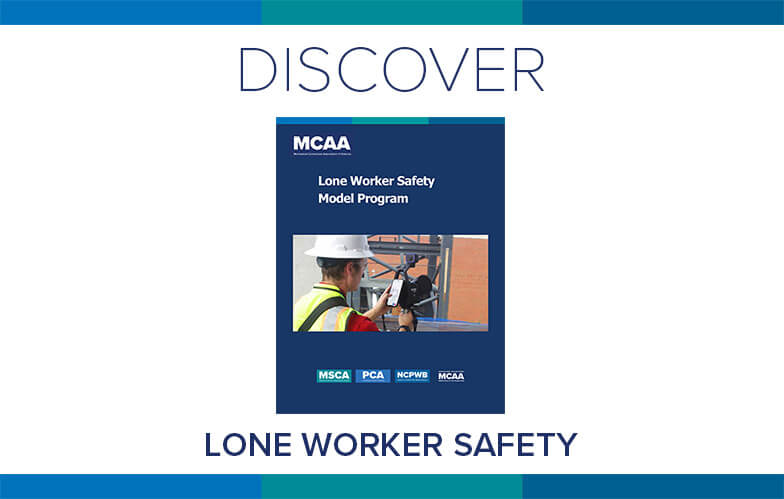
Resource Highlight: MCAA’s Lone Worker Safety Model Program

Service technicians may work on their own without ready access to assistance. MCAA’s Lone Worker Safety Model Program helps contractors identify risks and hazards and ensure adequate systems are in place to protect those workers. It’s just one of MCAA’s educational resources that are free to MCAA members as a benefit of membership.

The model program can be easily tailored to meet each company’s specific needs, and highlights these areas and more:

  • Risk assessment
  • Risk mitigation
  • Responsibilities
  • Monitoring systems
  • Lone worker safety assessment

Explore the full range of resources using the blue Find A Resource bar on our website or browse our collection of 700+ safety and health resources.

Have Questions or Need Personal Assistance?

Contact MCAA’s Executive Director for Safety, Health, and Risk Management.

New JRGF Video Shows How Type II Helmets Reduce Skull Fracture Risk by 75%

A new video from the John R. Gentille Foundation (JRGF) takes a direct look at one of the most important safety questions facing construction today: What is the real difference between Type I and Type II helmets — and does it matter?

According to testing conducted by Virginia Tech Helmet Ratings, it does. In Episode 3 of the Construction Helmet Research Program series, Dr. Barry Miller walks through the independent testing protocol that evaluates how helmets perform under realistic impact conditions. The data show that 5-star rated Type II helmets can reduce the risk of skull fractures by up to 75 percent compared to traditional Type I hard hats.

The Construction Helmet Research Program is sponsored by JRGFELECTRI InternationalThe Association of Union Constructors, and American Society of Concrete Contractors. The goal is straightforward: provide independent, third-party research so contractors can evaluate helmet performance based on measurable outcomes rather than assumptions.

For more information and to follow ongoing helmet ratings for the construction industry, visit the Virginia Tech Helmet Ratings Lab website.

Download Episode 3 Here

The Six-Part Video Series

To ensure the industry understands the data — and the science behind it — JRGF has produced a six-part short video series that walks contractors step-by-step through the research, testing protocols, findings, and practical implications for construction safety programs. Catch up on what you missed and see what’s coming soon below.

  1. Explaining the Issue: A clear look at how head injuries occur on construction sites and why lateral impacts deserve more attention. Watch the Video
  2. Partnering with Virginia Tech Helmet Labs: Why the industry engaged an independent, nationally recognized testing lab to conduct objective evaluations. Watch the Video
  3. Inside the Testing Process: A detailed explanation of impact testing methods, instrumented headforms, and how linear and rotational forces are measured. Watch the Video | Download the Video
  4. The Star Rating System: How helmets are evaluated beyond minimum standards and how performance differences are quantified. Coming Soon!
  5. Explaining the Results: What the data shows about Type I versus Type II performance and how the 75 percent reduction figure was calculated. Coming Soon!
  6. Why This Matters to Construction: Practical guidance for contractors evaluating head protection policies in real-world jobsite conditions. Coming Soon!

PCA26: Where Industry Leaders Gather to Enhance Operations & Profitability

If plumbing service is a core part of your business—or needs to be—this is where you need to be. The PCA Plumbing Service Conference brings together forward-thinking contractors and service leaders for two and a half focused days of practical learning, real conversations, and strategies you can put to work immediately. Join us May 4 – 6, 2026, in Indianapolis, IN. Register now!

This year’s program is built around what matters most: improving service operations, growing revenue, and implementing technology the right way. You’ll leave with ideas you can bring to your business now. 

Conference Highlights

Exclusive Access and Site Visits

Get behind-the-scenes access to the plumbing service labs at UA Local 440 and see plumbing service operations in action with North Mechanical Contracting & Service Company. Learn how training, layout, and operational structure directly support growth and performance.

Contractor Panel: Plumbing Service Best Practices

Hear directly from plumbing service leaders on:

  • Sales strategies that drive service growth
  • Field supervisor development and leadership
  • Automation in the office and the field
  • Proven operational best practices

Industry Expert–Led Education Sessions

Focused sessions on:

  • AI in plumbing service operations
  • Smart software implementation
  • Plumbing service safety practices
  • Operational efficiency and scalability

Peer-to-Peer Roundtable Breakouts

Small-group discussions where contractors tackle real challenges in plumbing service — sales, KPIs, operations, staffing, and more. These sessions are practical, candid, and highly actionable.

Foundations of Field Leadership Online: Registration NOW OPEN!

Courses begin April 16, 2026

If you want to fast-track your new and aspiring field leaders, MCAA has just the program! Once a week for 8 weeks, FFL students spend 90 minutes online with an experienced field leader, who will walk them through best practices and practical strategies of running work and running a crew. From Planning to Leadership, from Documentation to Safety: our instructors break down the ‘why’ and the ‘how’ of things that every foreman must understand to be successful.

Foundations of Field Leadership (FFL) is taught by senior field leaders with extensive experience running mechanical jobs. The program is based on the input of 42 mechanical field leaders from MCAA member companies across the country. The topics covered in this course were identified by these 42 experts as being the most important things for new field leaders to learn.

Each lecture is a combination of best practices, lessons learned, and tips and tricks provided by the field leaders themselves – based on their experience and leveraging their extensive knowledge of the role of a field leader. The course is made up of weekly online lectures with real-time student interaction, quizzes, and short video assignments.

We have currently had over 500 students graduate from past FFL courses, and we look forward to welcoming more during the next round of classes. Here are a few comments from our past FFL grads on their weekly classes:

  • “Very easy to listen to the instructor, very knowledgeable and personable.”
  • “I like learning from someone with a lot of experience and learning how to do the job more efficiently.”
  • “I appreciated [the instructor’s] content. I’ve been in the trade for 25 years and have only been running work for the last 3 years. I’ve either been in or around all the situations [the instructor] spoke about today and appreciated his insight. Great ways to handle things.”
  • “The information was delivered clearly and was easy to understand. It gave everyone the chance to apply their thoughts and comments.”
  • “[I appreciated the instructor] acknowledging the fact that being in this class is a step forward in my career, and it feels good to know my hard work and dedication hasn’t gone unnoticed by my company.”

Registration is now open for our next round of classes, which begin April 16th. There is no limit on how many new or potential field leaders an MCAA member can enroll, but registration will be done on a first-come, first-served basis. Visit the FFL course webpage to learn more about this exciting opportunity for new and future field leaders, and to sign your people up today!

Connect With the Latest Training from SLOAN and IMI Climate Control at MCAA.org

The Manufacturer/Supplier Training area of MCAA’s website connects our contractor members with training opportunities available from the members of MCAA’s Manufacturer/Supplier Council.

Participating companies highlight and link to new webinars and training opportunities across their product lines, services, solutions or web pages. Here are just a few of the recent additions:

SLOAN
The Sloan EBV-550 Dual Flush Side-mount Flushometer comes factory-configured or as a kit to upgrade manual flushometers to automatic touch-free sensor operation. Learn product details and installation in this video.

IMI Climate Control
Learn from experts and achieve the best results in hydronic systems. Our practical and theoretical training will include applications for projects, installations, commissioning, and operation.

Interested in More Training from Our Supplier Partners?

Be sure to visit the Manufacturer/Supplier Training area for all the latest offerings.

Find the Latest from Penta Software and Marking Services, Inc. in MCAA’s Virtual Trade Show

MCAA’s Virtual Trade Show connects our contractor members with the members of MCAA’s Manufacturer/Supplier Council.

Participating companies highlight and link to new products, product lines, services, solutions or web pages of particular interest. Here are just a few of the recent additions:

Penta Software
Tired of disconnected systems and limited job cost visibility? See how Penta’s ERP helps mechanical contractors manage payroll, projects, and service in one platform.

Marking Services, Inc.
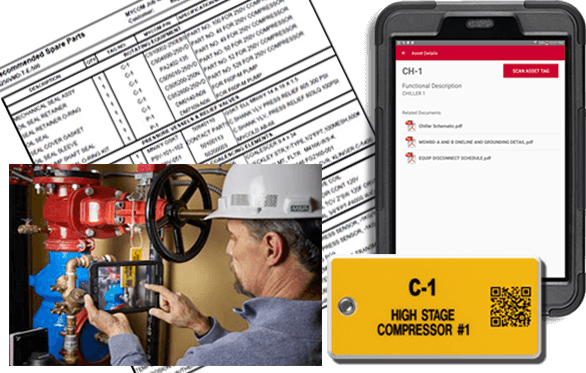
MSI’s AIM Mobile Technology delivers on-demand 24/7 access to critical asset information. Our QR coded tags provide instant access to critical documents in the field. AIM will greatly increase productivity and efficiency in the field providing Asset and Document Management (O&M, Commissioning, Startup, Warranty, Submittals, etc.) to meet your turnover package needs.

Need Something Else?

Find many more smart solutions in MCAA’s Virtual Trade Show!

Speaking of Smart Solutions

Visit the Smart Solutions Case Studies area of our website to learn how other mechanical contractors found their win-win with cost-saving and productivity-enhancing applications from members of MCAA’s Manufacturer/Supplier Council.

This section of our website also includes tips and ideas to help your company save money and enhance your productivity. Don’t miss it!

Connect With Additional Manufacturer/Supplier Training

Save yourself time and let MCAA connect you to the latest Manufacturer/Supplier member’s training opportunities. Visit the Manufacturer/Supplier Training area of the Resource Center to get started. 

Secure Your Employment Picks at MCAA26!

Nearly 200 students from 33 MCAA student chapters will be attending MCAA26. Those still on the hunt for a summer internship or their first post-graduation full-time position are actively scoping out MCAA’s GreatFutures Job Board. Post your job today and be sure to stop by the ‘Hire Me’ Job Fair outside the Manufacturer/Supplier Exhibit to meet with potential candidates in person!

What Are the Job Fair Details at MCAA26?

Sponsored by Viega
Grand Saguaro Ballroom Foyer
Tuesday, March 17th (7:00 – 10:00 AM)

Students seeing employment opportunities will be stationed at tables based on where they would like to find work, not necessarily where they’re located now. Tables will be separated geographically with flags signifying West, Central and East.  Stop by the ‘Hire Me’ Job Fair to find a table that best fits your company’s location and find your next GREAT hire.

When Else Can I Connect with Students at MCAA26?

An additional opportunity to connect with students is located at the Connection Corner. This space is perfect for both contractor/student casual employment conversations, as well as student peer-to-peer meetups for chapters looking to discuss best practices and share ideas. Blank business cards and various swag promoting student chapter resources will also be available.

Head to the Grand Saguaro Ballroom Foyer during these hours:

  • Sunday, March 15th: 9:00 AM – 3:00 PM
  • Monday, March 16th: 7:00 AM – 3:00 PM
  • Tuesday, March 17th: 10:00 AM – 3:00 PM
  • Wednesday, March 18th: 9:00 AM – 3:00 PM
  • Thursday, March 19th: 7:00 AM – 9:00 AM

Where Else Can I Meet Up with Students at MCAA26?

Here are a few ideas for connecting at MCAA26:

  • Annual 5K Fun Run & 1-Mile Walk (sponsored by ASC Engineered Solutions)
  • 5th Annual Pickleball Tournament (sponsored by NIBCO Inc.)
  • WiMI Reception
  • Student Chapter Competition (prizes sponsored by DEWALT Industrial Tool Company)
  • Awards of Excellence Breakfast (sponsored by MILWAUKEE TOOL)
  • Education Seminar: Game On – The Future Winner’s Circle for Your Company

Which Student Chapters will be at MCAA26?

The following schools will be represented at MCAA26. Check out the “We’re Here Banner” in the Connection Corner for the most up to date listing of schools as they arrive on-site in Phoenix.

  • Alfred State College
  • Arizona State University
  • Auburn University
  • Ball State University
  • Binghamton University
  • Bradley University
  • California Polytechnic State University, San Luis Obispo
  • California State Polytechnic University, Pomona
  • California State University, Chico
  • California State University, East Bay
  • California State University, Sacramento
  • Fairleigh Dickinson University
  • Ferris State University
  • Illinois State University
  • Indiana State University
  • Iowa State University
  • Kansas State University
  • Kent State University
  • McMaster University
  • Milwaukee School of Engineering
  • Missouri State University
  • Oregon State University
  • Pittsburg State University
  • Purdue University
  • Southern Illinois University Edwardsville
  • University of Manitoba
  • University of Maryland, College Park
  • University of Missouri–St. Louis
  • University of Nebraska
  • University of Wisconsin–Stout
  • Utica University
  • Virginia Tech
  • Washington State University

How Do I Post an Entry-Level Job or Internship?

  • Login with an MCAA username and password.
  • Click on the job board within the Career Development page.
  • Click Manage My Jobs and Add a Job to create your posting.
  • Jobs remain active for 1 month to ensure postings stay fresh.
  • When the job is set to expire, a reminder will be sent for you to either “mark as filled” or “duplicate” and repost for another month.
  • Interested students can view postings and submit their contact information and resume.
  • Your office will be notified via email when interested students submit their resume.
  • From there, your office is encouraged to continue with your company’s application and interview process.

New jobs are highlighted every two weeks on themcaagreatfutures Instagrampage. 

If you have questions or need assistance, please reach out to MCAA’s Michele Hoffman

Are Any Internship Grants Available for Employers?

Yes! JRGF is currently offering Internship Grants for employers. The 2026 grants are intended to offer support to companies that are new to offering internships, small companies, or those that are looking to grow their internship program.

  • Applications are due April 1, 2026, for 2026 planned internships. Notifications will be sent in May.
  • Grant submissions are to be submitted by the company. One application per company location.
  • 25 total grants will be available for $1,000 each, funded by JRGF.
    • 8-week internship minimum may occur anytime during 2026.
    • Intern may be from any 4-year accredited college or university.
    • Following the internship, a photo must be submitted with the intern on the jobsite, at the office, by a company sign, or in branded swag.

Visit MCAA’s Career Development Initiative page to learn more about student chapter programming or the JRGF website to explore the work JRGF is doing to further education in the mechanical industry.
MCAA Members Will Vote on Proposed Bylaws Changes at MCAA26

At its July 18–19, 2025 meeting, the MCAA Board of Directors reviewed and advanced a series of proposed bylaws changes designed to modernize membership classifications and ensure the long‑term sustainability of Association funding. MCAA members will be voting on these changes at MCAA26.

The proposed amendments address two key areas of the Bylaws—Article V (Membership) and Article VI (Dues)—and reflect the Board’s ongoing commitment to aligning MCAA governance with the evolving structure and needs of the mechanical contracting industry.

If approved by the membership, the changes mean that:

  • All contractor members will now have to be signatory to a labor agreement with the UA. This has always been the practice, now made official by inclusion in the bylaws.
  • The MCAA BoD may now elect to have a second and final deferment of the dues increase of $0.01 every three years. The next dues increase is now scheduled for January 1, 2028. 
  • January 1, 2027 the maximum hours on which dues are payable will go from 300,000 per branch office to 350,000.
  • January 1, 2029 the maximum hours on which dues are payable will go from 350,000 per branch office to 400,000.
  • The new M/S membership structure.

The voting will take place during the Annual Business Meeting on Thursday, March 19, 2026.

Inside the Partnership: How JRGF and Virginia Tech Are Changing Construction Helmet Safety

In Part 2 of the Construction Helmet Research Program video series, we take a closer look at the partnership behind the data.

The John R. Gentille Foundation (JRGF), in partnership with ELECTRI International, The Association of Union Constructors, and American Society of Concrete Contractors, partnered with the Virginia Tech Helmet Ratings lab to bring independent, science-based helmet testing to the construction industry.

Virginia Tech’s Helmet Ratings program has built its reputation on rigorous impact testing and transparent scoring systems. The lab uses repeatable drop tests and rotational impact measurements to simulate real-world head injuries. That methodology was originally developed and refined through years of football helmet research, and it has informed safety discussions at the highest levels of the sport, including the National Football League.

When adapting this science to construction, the team did not guess at impact scenarios. They analyzed years of OSHA injury data to understand how head injuries actually occur on jobsites. That data helped shape the testing protocol, ensuring that impact angles, energy levels and rotational forces reflected real-world construction incidents rather than laboratory assumptions.

The lab then developed an independent 5-star rating system has been used to evaluate helmet performance across youth, high school, college, and professional football. Their work has helped shape product development and purchasing decisions in a sport where head impact data is heavily scrutinized. That experience carries weight. Measuring linear and rotational forces, modeling injury risk, and comparing helmet performance is not new territory for this team.

Dr. Barry Miller and Dr. Steve Rowson explain in the video how the construction research program was structured. Industry partners funded the work, but the lab maintained full control over testing protocols and results. That independence is critical. It ensures that ratings are based on physics and biomechanics, not product positioning.

For contractors, this partnership changes the conversation. Instead of debating Type I versus Type II helmets based on habit or preference, companies now have measurable performance data from a lab that has been evaluating helmet performance at the highest levels of impact research for years.

The Construction Helmet Research Program represents a shift toward evidence-based safety decisions. Not just compliance. Performance.

For more information on the research and the 5-star ratings for the construction industry, visit Virginia Tech’s Helmet Lab rating site.

Find the first video, and a list of upcoming videos, here.

U.S. Union Membership Held at 10% in 2025, BLS Reports

U.S. union membership remained essentially unchanged in 2025, with 10.0 percent of wage and salary workers belonging to a union, according to data released by the Bureau of Labor Statistics (BLS). The total number of union members stood at 14.7 million, well below the 17.7 million recorded in 1983, the first year of comparable data.

Public-sector workers continued to account for the highest unionization levels, posting a membership rate of 32.9 percent, compared with 5.9 percent in the private sector. Union members earned higher median weekly pay than nonunion workers, at $1,404 versus $1,174, though the agency noted the figures do not control for differences in occupation, industry, or location.

The report includes:

  • Highlights from the 2025 data
  • Industry and Occupation of Union Members
  • Selected Characteristics of Union Members
  • Union Representation
  • Earnings
  • Union Membership by State
  • Tables comparing the 2024 and 2025 numbers
  • A map of 2025 union membership by state

Resource Highlight: MSCA 2025 Benchmark Survey

Service leaders may lack clear, data‑backed insight into whether their operations, pricing, staffing, and technology choices are competitive—causing missed revenue, weaker margins, and inefficient growth decisions. The MSCA 2025 Benchmark Survey provides valuable insight into key performance indicators (KPIs), business practices, sales, and trends across the mechanical service industry. This is one of the most powerful tools available to see how your company compares, identify growth opportunities, and guide future planning. It’s just one of MCAA’s educational resources that are free to MCAA members as a benefit of membership.

Based on input from over 300 member companies, the survey report includes:

  • Industry-wide data on sales, field, and office performance metrics
  • Comparative results by company size
  • Emerging trends shaping mechanical service operations

Foundations of Field Leadership Online: Registration NOW OPEN!

Courses begin April 16, 2026

If you want to fast-track your new and aspiring field leaders, MCAA has just the program! Once a week for 8 weeks, FFL students spend 90 minutes online with an experienced field leader, who will walk them through best practices and practical strategies of running work and running a crew. From Planning to Leadership, from Documentation to Safety: our instructors break down the ‘why’ and the ‘how’ of things that every foreman must understand to be successful.

Foundations of Field Leadership (FFL) is taught by senior field leaders with extensive experience running mechanical jobs. The program is based on the input of 42 mechanical field leaders from MCAA member companies across the country. The topics covered in this course were identified by these 42 experts as being the most important things for new field leaders to learn.

Each lecture is a combination of best practices, lessons learned, and tips and tricks provided by the field leaders themselves – based on their experience and leveraging their extensive knowledge of the role of a field leader. The course is made up of weekly online lectures with real-time student interaction, quizzes, and short video assignments.

We have currently had over 500 students graduate from past FFL courses, and we look forward to welcoming more during the next round of classes. Here are a few comments from our past FFL grads on their weekly classes:

  • “Very easy to listen to the instructor, very knowledgeable and personable.”
  • “I like learning from someone with a lot of experience and learning how to do the job more efficiently.”
  • “I appreciated [the instructor’s] content. I’ve been in the trade for 25 years and have only been running work for the last 3 years. I’ve either been in or around all the situations [the instructor] spoke about today and appreciated his insight. Great ways to handle things.”
  • “The information was delivered clearly and was easy to understand. It gave everyone the chance to apply their thoughts and comments.”
  • “[I appreciated the instructor] acknowledging the fact that being in this class is a step forward in my career, and it feels good to know my hard work and dedication hasn’t gone unnoticed by my company.”

Registration is now open for our next round of classes, which begin April 16th. There is no limit on how many new or potential field leaders an MCAA member can enroll, but registration will be done on a first-come, first-served basis. Visit the FFL course webpage to learn more about this exciting opportunity for new and future field leaders, and to sign your people up today!

Find the Latest from Tecnar and Josam Company in MCAA’s Virtual Trade Show

MCAA’s Virtual Trade Show connects our contractor members with the members of MCAA’s Manufacturer/Supplier Council.

Participating companies highlight and link to new products, product lines, services, solutions or web pages of particular interest. Here are just a few of the recent additions:

Tecnar
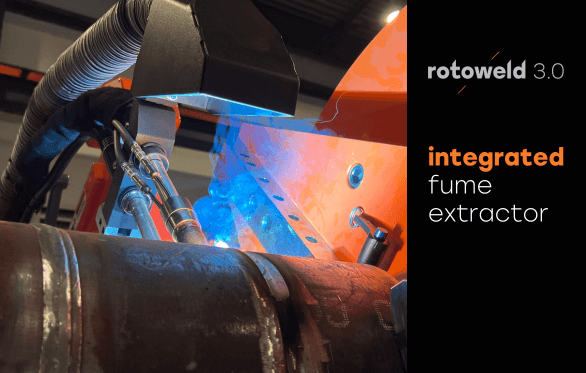
Welding fumes threaten welders’ health and make shops uncomfortable. The newly designed integrated fume extractor on the Rotoweld 3.0 ensures safety. Invest in a safer work environment today!

Josam Company
Josam Company is well known in the commercial plumbing industry for offering innovative engineered products to the marketplace. Our full line of drainage products offers labor-saving features and benefits with the installer in mind. With superior quality products that are easy to install and customizable to meet the demands of any drainage application.

Need Something Else?

Find many more smart solutions in MCAA’s Virtual Trade Show!

Speaking of Smart Solutions

Visit the Smart Solutions Case Studies area of our website to learn how other mechanical contractors found their win-win with cost-saving and productivity-enhancing applications from members of MCAA’s Manufacturer/Supplier Council.

This section of our website also includes tips and ideas to help your company save money and enhance your productivity. Don’t miss it!

Connect With Additional Manufacturer/Supplier Training

Save yourself time and let MCAA connect you to the latest Manufacturer/Supplier member’s training opportunities. Visit the Manufacturer/Supplier Training area of the Resource Center to get started.