PPE is the last line of defense, and sometimes all you need to prevent and injury or save a life. Preventable injuries impact our safety culture, company morale, and our bottom lines. MCAA’s Personal Protective Equipment Safety & Health Resources include our newest videos on hearing protection, head protection, eye protection, respiratory protection, and hand protection. These videos are a candid look at what happens when you don’t wear PPE, and how easily you can help yourself and others by wearing these lifesaving pieces of personal protection. These are just a few of MCAA’s educational resources that are free to MCAA members as a benefit of membership.
Worker Safety Training Videos & Accompanying Resources
Explore the the full range of resources for mechanical service contractors, including resources that are also of interest to mechanical construction and plumbing contractors, using the blue Find A Resource bar on our website or browse our collection of 700+ safety and health resources.
Have Questions or Need Personal Assistance?
Contact MCAA’s Executive Director for Safety, Health, and Risk Management.
MCAA and CNA have recognized companies for their achievements in safety through the MCAA/CNA Safety Excellence Awards. This program, which began in the 1990s, honors member companies that have demonstrated strong safety practices and innovative approaches to achieving high safety and health standards.
The Safety Excellence Awards focus on evaluating safety programs, health initiatives, and the impact of safety innovations within the industry. Companies are divided into five categories based on the number of work hours they report, with winners selected by a committee of industry peers. The awards program provides a platform for companies to showcase their safety efforts and share best practices.
To participate, companies submit detailed descriptions of their safety programs, including the strategies they’ve employed to achieve safety excellence and why they believe they should be recognized. The Safety Awards Selection Taskforce, led by CNA, reviews submissions with an emphasis on safety leadership, a strong safety culture, effective performance indicators, and innovative initiatives that have contributed to the company’s safety achievements.
MCAA congratulates the winners of this year’s MCAA/CNA Safety Excellence Awards:
ICOM Mechanical Inc. | Category 1: 0-200,000 hours
Heffron Company Inc. | Category 2: 200,001-500,000 hours
ICOM Mechanical Inc.Heffron Company Inc.Hurckman MechanicalHFIJF AhernNext Year: Your Company?
These companies have demonstrated a commitment to safety, showcasing their efforts to foster a strong safety culture and create safe working environments for their teams.
MCAA thanks CNA for its continued partnership in the Safety Excellence Awards program. Their collaboration is instrumental in advancing safety standards within the mechanical contracting industry.
The MCAA/CNA Safety Excellence Awards highlight the importance of safety leadership and the ongoing efforts to improve safety and health practices across the industry.
New helmet safety research sponsored by the John R. Gentille Foundation (JRGF) and conducted at the Virginia Tech Helmet Lab has produced results that should prompt every jobsite to take a hard look at its head protection standards.
Episode 5 of the Construction Helmet Research Program series explains what the data shows about Type I versus Type II performance.
Helmets were tested under fall-specific conditions, the most common cause of serious head injuries on jobsites. Type II helmets dramatically outperformed traditional Type I hard hats. Workers wearing Type I hard hats experienced significantly more force transferred to the head on impact, translating directly into higher injury risk.
The numbers tell the story. Of every 100 serious head injuries involving workers in Type I hard hats, approximately 65 could have been prevented had those workers been wearing Type II helmets instead. Testing also showed that top-performing Type II helmets reduce the risk of skull fracture by up to 75% compared to lower-performing Type I models. These are not incremental improvements. They represent a fundamental difference in protection.
The reason for the performance gap comes down to construction. Type II helmets contain energy-absorbing materials, typically foam liners, inside the shell. When an impact occurs, those materials compress and absorb force before it reaches the head, reducing skull deformation and lowering the likelihood of fracture. Type I hard hats lack this internal protection layer, leaving workers more exposed in a fall.
Based on this research, the official recommendation is clear: transition to Type II helmets. They are easy to identify by their label, chin strap, and internal liner. The evidence is straightforward. A significant portion of the head injuries happening on jobsites today do not need to happen. Type II helmets are a proven, available solution.
For more information and to follow ongoing helmet ratings for the construction industry, visit the Virginia Tech Helmet Ratings Lab website.
The Six-Part Video Series
To ensure the industry understands the data — and the science behind it — JRGF has produced a six-part short video series that walks contractors step-by-step through the research, testing protocols, findings, and practical implications for construction safety programs. Catch up on what you missed and see what’s coming soon below.
Explaining the Issue: A clear look at how head injuries occur on construction sites and why lateral impacts deserve more attention. Watch the Video
Partnering with Virginia Tech Helmet Labs: Why the industry engaged an independent, nationally recognized testing lab to conduct objective evaluations. Watch the Video
Inside the Testing Process: A detailed explanation of impact testing methods, instrumented headforms, and how linear and rotational forces are measured. Watch the Video
The Star Rating System: How helmets are evaluated beyond minimum standards and how performance differences are quantified. Watch the Video
Explaining the Results: What the data shows about Type I versus Type II performance and how the 75 percent reduction figure was calculated. Watch the Video
Why This Matters to Construction: Practical guidance for contractors evaluating head protection policies in real-world jobsite conditions. Coming Soon!
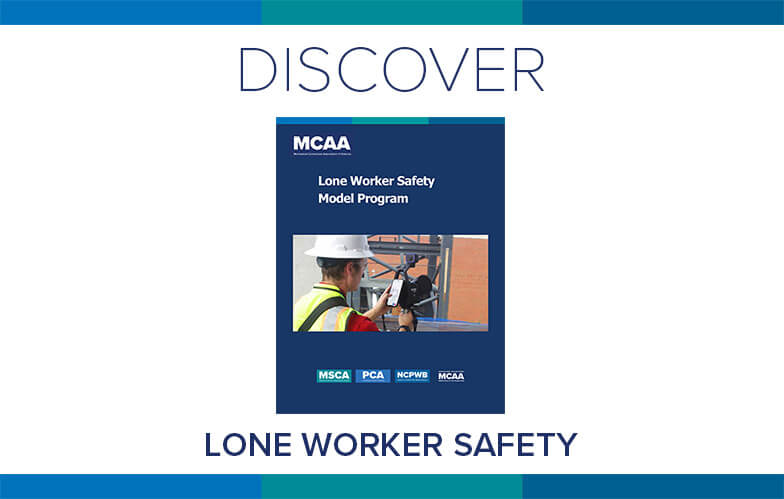
Service technicians may work on their own without ready access to assistance. MCAA’s Lone Worker Safety Model Program helps contractors identify risks and hazards and ensure adequate systems are in place to protect those workers. It’s just one of MCAA’s educational resources that are free to MCAA members as a benefit of membership.
The model program can be easily tailored to meet each company’s specific needs, and highlights these areas and more:
Why do some helmets reduce the risk of skull fractures by as much as 75 percent? The answer comes down to how they are tested.
A new video in the John R. Gentille Foundation’s Construction Helmet Research Program series takes viewers inside the science behind the Virginia Tech Helmet Ratings system. In the episode, Dr. Barry Miller and Dr. Steve Rowson explain how researchers developed a testing methodology that reflects how serious head injuries actually occur on construction sites.
To build the testing protocol, researchers analyzed years of accident data and incident reports involving falls and head impacts. These incidents often involve a worker striking the ground or another surface during a fall. Using that data, the Virginia Tech team designed laboratory tests that replicate those real-world scenarios.
Each helmet is tested across multiple impact locations and speeds. The results are then used to calculate the predicted risk of concussion and skull fracture. Those results are combined into a STAR score,short for Summation of Tests for the Analysis of Risk, which estimates how well a helmet reduces injury risk in realistic impact conditions.
Helmets are then assigned a one-to-five star rating, making it easier for contractors and workers to compare different models.
The research has also highlighted a key difference between traditional hard hats and modern construction helmets. Type II helmets, which provide protection from both top and side impacts, generally perform significantly better in fall scenarios than traditional Type I hard hats, which are designed primarily for top impacts. In testing, Type II helmets were shown to reduce the risk of skull fractures by as much as 75 percent and significantly reduce the risk of concussioncompared to many traditional Type I hard hats.
The Construction Helmet Research Program is supported by the John R. Gentille Foundation, ELECTRI International, The Association of Union Constructors, and the American Society of Concrete Contractors. The goal is simple: provide independent data that helps contractors make informed decisions about head protection.
Providing a safe work environment is all our duties and preventing struck by object injuries could be one of the most impactful ways to keep our workers safe. Struck by objects is a leading cause of construction injuries and deaths, and about 75% of struck by deaths involve heavy equipment. That could include struck against an object, struck by an object, caught in an object or equipment, or caught in collapsing material.
This 4-part miniseries covers the different ways stuck-by accidents occur focusing on:
Dropped & Falling Objects
Flying & Swinging Objects
Cars & Trucks
Heavy Equipment
Specific safety awareness and best practices information are presented in a short video designed to be watched on your smartphone.
View or download all four in both English and Spanish using the following links:
Service technicians may work on their own without ready access to assistance. MCAA’s Lone Worker Safety Model Program helps contractors identify risks and hazards and ensure adequate systems are in place to protect those workers. It’s just one of MCAA’s educational resources that are free to MCAA members as a benefit of membership.
The model program can be easily tailored to meet each company’s specific needs, and highlights these areas and more:
A new video from the John R. Gentille Foundation (JRGF) takes a direct look at one of the most important safety questions facing construction today: What is the real difference between Type I and Type II helmets — and does it matter?
According to testing conducted by Virginia Tech Helmet Ratings, it does. In Episode 3 of the Construction Helmet Research Program series, Dr. Barry Miller walks through the independent testing protocol that evaluates how helmets perform under realistic impact conditions. The data show that 5-star rated Type II helmets can reduce the risk of skull fractures by up to 75 percent compared to traditional Type I hard hats.
To ensure the industry understands the data — and the science behind it — JRGF has produced a six-part short video series that walks contractors step-by-step through the research, testing protocols, findings, and practical implications for construction safety programs. Catch up on what you missed and see what’s coming soon below.
Explaining the Issue: A clear look at how head injuries occur on construction sites and why lateral impacts deserve more attention. Watch the Video
Partnering with Virginia Tech Helmet Labs: Why the industry engaged an independent, nationally recognized testing lab to conduct objective evaluations. Watch the Video
Inside the Testing Process: A detailed explanation of impact testing methods, instrumented headforms, and how linear and rotational forces are measured. Watch the Video | Download the Video
The Star Rating System: How helmets are evaluated beyond minimum standards and how performance differences are quantified. Coming Soon!
Explaining the Results: What the data shows about Type I versus Type II performance and how the 75 percent reduction figure was calculated. Coming Soon!
Why This Matters to Construction: Practical guidance for contractors evaluating head protection policies in real-world jobsite conditions. Coming Soon!
Virginia Tech’s Helmet Ratings program has built its reputation on rigorous impact testing and transparent scoring systems. The lab uses repeatable drop tests and rotational impact measurements to simulate real-world head injuries. That methodology was originally developed and refined through years of football helmet research, and it has informed safety discussions at the highest levels of the sport, including the National Football League.
When adapting this science to construction, the team did not guess at impact scenarios. They analyzed years of OSHA injury data to understand how head injuries actually occur on jobsites. That data helped shape the testing protocol, ensuring that impact angles, energy levels and rotational forces reflected real-world construction incidents rather than laboratory assumptions.
The lab then developed an independent 5-star rating system has been used to evaluate helmet performance across youth, high school, college, and professional football. Their work has helped shape product development and purchasing decisions in a sport where head impact data is heavily scrutinized. That experience carries weight. Measuring linear and rotational forces, modeling injury risk, and comparing helmet performance is not new territory for this team.
Dr. Barry Miller and Dr. Steve Rowson explain in the video how the construction research program was structured. Industry partners funded the work, but the lab maintained full control over testing protocols and results. That independence is critical. It ensures that ratings are based on physics and biomechanics, not product positioning.
For contractors, this partnership changes the conversation. Instead of debating Type I versus Type II helmets based on habit or preference, companies now have measurable performance data from a lab that has been evaluating helmet performance at the highest levels of impact research for years.
The Construction Helmet Research Program represents a shift toward evidence-based safety decisions. Not just compliance. Performance.
The findings are significant. Independent laboratory testing indicates that 5-Star rated Type II construction helmets can reduce the risk of certain skull fractures by up to 75 percent compared to traditional Type I hard hats.
To ensure the industry understands the data — and the science behind it — JRGF has produced a six-part short video series that walks contractors step-by-step through the research, testing protocols, findings, and practical implications for construction safety programs.
The Six-Part Video Series
The series breaks the research into six focused discussions:
Explaining the Issue: A clear look at how head injuries occur on construction sites and why lateral impacts deserve more attention.
Partnering with Virginia Tech Helmet Labs: Why the industry engaged an independent, nationally recognized testing lab to conduct objective evaluations.
Inside the Testing Process: A detailed explanation of impact testing methods, instrumented headforms, and how linear and rotational forces are measured.
The Star Rating System: How helmets are evaluated beyond minimum standards and how performance differences are quantified.
Explaining the Results: What the data shows about Type I versus Type II performance and how the 75 percent reduction figure was calculated.
Why This Matters to Construction: Practical guidance for contractors evaluating head protection policies in real-world jobsite conditions.
What the Research Found
Traditional Type I hard hats are designed primarily for top impacts — objects falling directly onto the crown of the head. That hazard model has shaped decades of safety standards.
But many serious construction head injuries are caused by slips, trips, and falls where the worker strikes steel, concrete, or equipment at an angle. Those are lateral impacts.
Type II helmets are tested for both top and side impacts. More importantly, the Virginia Tech testing measured not only linear force, but rotational acceleration — the twisting motion of the brain inside the skull that contributes significantly to skull fractures and traumatic brain injury.
The controlled laboratory data showed that higher-performing Type II helmets dramatically reduced predicted skull fracture risk under repeatable impact conditions.
Why Contractors Should Pay Attention
Mechanical and plumbing contractors operate in congested, high-risk environments — elevated work, structural steel, tight mechanical rooms, and dynamic jobsite movement. When a fall happens, it is rarely perfectly vertical.
The research does not mandate a specific helmet model or brand. It provides performance data. Contractors can review the ratings, compare options, and determine whether their current policies reflect how injuries actually occur in the field.
Safety equipment evolves when evidence supports it. This study provides measurable evidence.
Reducing skull fracture risk is not theoretical. It is quantifiable. And now the industry has the data to evaluate it.
Read more about this JRGF-funded research in this news article.
This report provides a comprehensive overview of MCAA’s 2025 programs, initiatives, and achievements across all subsidiaries and focus areas. The year was marked by record participation, expanded educational offerings, strengthened industry partnerships, and impactful volunteer leadership.
From capacity‑filled conferences and innovative training programs to significant scholarship investments, legislative progress, and collaboration across the mechanical, service, plumbing, safety, and career development sectors, these efforts reflect MCAA’s ongoing commitment to advancing member success and supporting the industry. Together, these highlights illustrate the momentum carrying the organization into 2026 and beyond.
Before reviewing the 2025 highlights, the following section offers an overview of MCAA and its structure.
About MCAA
MCAA’s mission is to guide and support member success to build a stronger, more sustainable future for the mechanical contracting industry. Through member-driven resources, comprehensive education, and strategic partnerships, we empower members to shape a future of unparalleled innovation and growth.
MCAA Includes:
Mechanical Service Contractors of America (MSCA)
Plumbing Contractors of America (PCA)
National Certified Pipe Welding Bureau (NCPWB)
MCAA Manufacturer/ Supplier Council (M/SC)
John R. Gentille Foundation (JRGF)
We pledge to deliver the highest quality educational resources, best-in-class networking, labor relations, and legislative advocacy with unmatched member benefits. We’ll be your trusted guide and voice in the ever-evolving mechanical contracting industry, helping you navigate change and embrace new opportunities with confidence.
With a comprehensive blend of educational resources, proactive advocacy, labor relations, and trusted partnerships, MCAA is the leading authority for mechanical contractors. We are unwavering in our commitment to support our members and advance the industry.
MCAA Strategic Plan
We will increase synergies with other associations in the building trades industry by sharing technology, advocacy, and training best practices.
Our manufacturer and supplier partners can expect expanded membership and event opportunities. Going forward there will be two tiers:
We will enhance the support and resources for local Association Executives.
We expect to roll out an overhauled, much more user-friendly website to make it easier to access our training and other resources, hopefully reaching a broader range of member contractors in Q1 of 2026.
And now for our 2025 highlights:
Please note: The information in the links that follows reflects what was provided at the time of publication. This report includes final numbers that may vary from these initial reports.
MCAA Convention
The MCAA25 Annual Convention brought more than 2,500 attendees together for the association’s premiere yearly gathering, offering a full week of education, networking, entertainment, and industry updates. The program featured a trade show with MCAA’s Manufacturer/Supplier Council, a wide range of educational seminars, and scheduled social events designed to help members connect with peers. UA General President Mark McManus highlighted the strength of the UA/MCAA partnership, while main stage speakers Jeremy Gutsche, Kendall Toole, James Lawrence, Tim Tebow, and Kevin Griffin delivered insight and inspiration throughout the week.
Tim Moormeier of U.S. Engineering was honored with the Distinguished Service Award, and MCAA’s Political Action Committee awarded a signed Bryan Adams guitar to Ana Cordoba after successfully raising $20,000 through a raffle. Looking ahead, MCAA26 will take place in Phoenix, Arizona, from March 15–19, 2026—mark your calendars for another impactful convention.
MCAA25 Sponsors:
Manufacturer/Supplier Council (M/SC) members are full members of MCAA, operating within a model built on long-term relationships, education and collaboration rather than vendor-style marketing. M/SC members have access to all MCAA programs, educational offerings, publications, and engagement opportunities. This group of 114 member companies is also eligible to attend, exhibit at, and sponsor the MCAA Annual Convention.
In addition to MCAA’s educational events, M/SC members benefit from participation in the unique summer Converge meeting, which features curated, one-on-one meetings with contractor companies focused on past innovations and future developments.
For a full overview of engagement, event, exhibit, and sponsorship opportunities, visit the MCAA Sponsorship Prospectus.
MSCA delivered a strong lineup of educational programs, conferences, and professional development opportunities throughout 2025, drawing high participation from service contractors across the country. All Service Managers programs and most Sales Basecamp, Dispatchers, and Field Supervisors programs reached full capacity, underscoring sustained demand for high‑quality training. Notable attendance included 49 participants in the Spring Service Managers Program and 44 in the Autumn session, along with additional sold‑out courses in Pump & Motor and Chiller Fundamentals.
MSCA’s success was driven by dedicated volunteer leadership. Board Members Lindsey Grilec (PremiStar), Ryan Leahy (ACCO), and Mike Hupp (HFI) led education sessions at the MCAA Convention. The MSCA Education Committee—Brooke VenHuizen (Helm Group), Lee Schmidt (Bassett Mechanical), and Dan Spurgeon (Geiger Brothers)—spearheaded the 2025 Benchmark Survey. Significant contributions also came from the newly formed MSCA Training Committee, with special recognition to Jamie Szutowicz for guiding Dispatcher Training and providing exceptional support throughout the year.
The 2025 PCA Plumbing Service Conference, held May 19–21 in St. Louis, MO, reached full capacity with 140 attendees, marking another sold‑out event for the association. The conference was supported by a strong lineup of sponsors, including Zurn Elkay Water Solutions, Bradford White, Victaulic, Milwaukee Tool, BuildOps, Autobahn Consultants, Murphy Company, and the MCA of Eastern Missouri.
PCA’s initiatives throughout 2025 were strengthened by dedicated volunteer leadership. Murphy hosted the PCA Plumbing Service Conference, supported by outstanding contributions from Chris Carter (Past Chair, MSCA Training Committee), Alex Ivanov (MSCA Education Committee), and Ryan Kramer (MSCA Training Committee).
Additional recognition goes to PCA Board Members Brian Rich (GA Rich & Sons) and Alex Ivanov (Murphy), who presented an impactful session on developing leadership skills among field technicians at the MSCA Annual Conference. PCA Board Members Kevin Walsh (E.M. Duggan) and James Lowder (All Temperature Service Air Conditioning Inc.) also delivered a well‑received PCA session at the MCAA Annual Convention, helping expand the visibility and impact of PCA programming.
Outgoing PCA Board Chair, John Geiling (JPG Plumbing) provided exceptional leadership throughout 2025. His dedication, strategic direction, and commitment to strengthening PCA programming have left the organization notably stronger.
The 2025 NCPWB Conference, held April 27–29 in Clearwater Beach, FL, brought together 161 attendees for a program focused on the future of welding. The event delivered timely insights into emerging technologies and industry trends, with discussions ranging from new career pathways to advancements in autonomous welding.
Keynote speaker Demi Knight Clark opened the conference with a powerful address on reducing the stigma surrounding trade careers, setting up a motivational tone for the event.
This year’s conference also introduced a new exhibit hall, featuring 11 exhibitors who showcased cutting-edge welding technologies and solutions.
NCPWB recognized Jerry Goodwin for his dedicated service on the NCPWB Board of Trustees, honoring his contributions to advancing the organization’s mission.
In 2025, JRGF awarded $100,000 in scholarships to 23 students and provided over $100,000 in internship grants. The foundation also contributed more than $200,000 to support student and faculty participation in industry programs and conferences, including the MCAA Convention, MSCA Conference, MEP Innovation Conference, Safety Directors Conference, MCAA Fabrication Conference, and additional events.
Four JRGF‑produced research projects were completed in 2025, delivering new insights relevant to today’s evolving industry practices.
JRGF also made a $20,000 contribution to the Heavy Metal Summer Experience, a program that introduces students to the skilled trades through hands‑on, real‑world jobsite exposure. Based on its impact, the foundation has committed to supporting the program again in 2026.
None of this work would have been possible without the leadership of JRGF President Brian Helm and the contributions of the JRGF Board of Trustees, Virginia Tech, the University of Washington, and participating contractors.
AEC Executive Trainee Program
In 2025, the AEC Executive Trainee Program prepared five future leaders for roles within MCAA‑affiliated associations. Each trainee participates in a two-year program that addresses the nationwide shortage of qualified Executive Directors by creating a replicable model for recruiting and training emerging leaders. Graduates are equipped to step into Executive Director positions or continue contributing as Associate Directors within their host organizations.
Graduates included:
Kat Unger – Ohio
Collin Wilkerson – Texas
Brant Dillmon – Indiana
Corey Martino – Maryland
Neta Kluzner – New York
AEC Best Practice Reviews
MCAA underwrote the costs of two Best Practices Reviews in 2025. Shane McMorrow (MCA/MSCA of NY) and Robin Cowper (MCA of Western Washington) collaborated with MCAA Best Practices Mentor Steve Lamb to conduct comprehensive association audits using established best‑practice criteria. Each review concluded with tailored recommendations designed to strengthen their organizations.
In 2025, Shane McMorrow (MCA/MSCA of NY) and Robin Cowper (MCA of Western Washington) completed the ELI Accreditation, which recognizes local affiliate leaders who have elevated their skills and expertise.
2025 AEC Best Practices Conference
Held July 27–30 in Boston, MA, the 2025 AEC Best Practices Conference brought together 60 AEC professionals for three days of insights, collaboration, and innovative approaches to strengthening local affiliate operations.
Outgoing Chair Stephen Affanato received a certificate of appreciation for his service to the AEC community. The conference also welcomed incoming leadership:
John Rayburn (MCA of Chicago), Chair
Glenn Rex (MCA of Texas), Vice Chair
Scot Stoltenberg (MCA/MSCA of Iowa), Program Chair
Additionally, Anne Saloff-Smith (MCA of Northwestern Ohio) was welcomed as a new ELI Committee Member.
MCAA Initiatives
The Innovative Technologies Initiative helps members identify and adopt emerging tools that can improve efficiency and project outcomes. It connects industry advancements with real‑world applications through research, education, and peer collaboration. The initiative keeps contractors ahead of technological change by translating new innovations into practical solutions for the field.
MCAA, NECA, and SMACNA joined forces again in 2025 to deliver the MEP Innovation Conference in Los Angeles, CA. The event featured 40 education sessions, drew 747 attendees and five students, and was supported by sponsors including Trimble, Milwaukee Tool, Procore, Stratus, ASC Engineered Systems and Dewalt.
A highlight of the event was the presentation of the MEP Innovator of the Year Award to Robert Snyder Jr. of Binsky & Snyder for his leadership in applying operations science to fabrication, optimizing workflows, and driving efficiency in mechanical contracting. Chris Weaver, Innovative Technologies Committee Chair (Andy J. Egan Company), played a key role in the conference’s success.
In 2025, WiMI continued expanding opportunities for women across the mechanical industry through meaningful networking, professional development, and community‑building programs. WiMI hosted a well‑attended networking session at MSCA25 and delivered its largest‑ever WiMI Conference, which drew 350 attendees to Kansas City. The conference featured keynote speakers Amanda Comunale (ASC Engineered Solutions), Shaabini Alford (Maxim Consulting Group), Kristina Henkai (SoBuilt), and Dominique Dawes (Dawes Gymnastics & Ninja Academies), and was supported by key sponsors including the MCA of Kansas City, DeWalt, and Morris Group International. Notable attendees included Laura Ceja of the UA.
The conference introduced new engagement tools such as live polling for attendee insights and strengthened visibility for women leaders across the profession. WiMI’s continued momentum highlights its growing role in fostering career advancement, connection, and inclusive leadership within the industry.
In 2025, the Safety Excellence Initiative advanced its mission through strong industry support, expanded participation, and recognition of outstanding safety performance. SEI programs earned major sponsorships from CNA, Milwaukee Tool, and Procore, while key events—including the Safety & Health Conference, Construction Mental Health Summit, and Construction Risk Management Summit—collectively drew more than 700 attendees.
Awards for 2024 performance honored top companies and individuals, including Safety Professional of the Year Sereno Steindl, five MCAA/CNA Safety Excellence Award winners, and 54 companies recognized for exemplary safety statistics.
SEI’s work was strengthened by dedicated volunteer leadership, including Chair Mike Nahas (who joined MCAA as Executive Director, Safety, Health & Risk Management starting in February 2026)and Vice Chair Kirk Baisch, supported by safety professionals across the MCAA community.
In 2025, the National Education Initiative (NEI) delivered a wide range of management‑ and business‑focused classes that strengthened the performance and competitiveness of MCAA member contractors. By bringing expert‑led seminars directly to local associations and individual companies, NEI provided accessible education on financial management, safety, project management, leadership, and other core business practices.
Throughout the year, NEI partnered with 18 different companies and local associations to host programming, ultimately delivering 62 classes across the country. These programs were taught by 14 unique instructors, representing a deep bench of subject‑matter expertise across leadership development, customer experience, collective bargaining, succession planning, field operations, job and company management, service leadership, legal and risk management, project management, and more.
Designed to support ongoing professional growth across the mechanical contracting industry, NEI equipped contractors with practical tools and best practices through this diverse portfolio of expert‑led seminars—strengthening teams, improving performance, and advancing industry excellence throughout 2025.
Looking forward to 2026, NEI offers an expanded and updated list of 17 instructors and over 200 courses.
Career Development Initiative
In 2025, MCAA strengthened its pipeline of emerging industry talent through expanded student programming, scholarships, and career development opportunities. The MCAA Convention hosted 210 students and faculty from 32 chapters, and two new student chapters—Arizona State University and the University of Manitoba—were chartered, bringing the national total to 42 chapters.
JRGF awarded 23 scholarships totaling $100,000, alongside major chapter and educator awards recognizing outstanding achievement.
The annual Student Chapter Competition drew entries from 27 teams, with McMaster University earning first place. Competition partners included Ferguson, DEWALT Industrial Tool Company, Fresh Meadow Mechanical Corporation, MCAA WebLEM, Procore, and Trimble.
The 2025 GreatFutures Forum welcomed 276 attendees, including 165 students from 31 chapters, supported by a broad lineup of sponsors such as ACCO, Aquatherm, CPMCA & Arizona MCA, Copeland, DEWALT, Ferguson, F.W. Webb, Harris, WiMI, MILWAUKEE TOOL, Procore, Southland Industries, Utah MCA, Victaulic, Viega, Watts Water Technologies, and Zurn Elkay.
The GreatFutures Job Board continued to support student career pathways, with 73 entry‑level opportunities from 28 companies receiving 60 resumes. Additional funding included $50,198 in attendance grants, Emerging Chapter Grants, internship grants, and MSCA’s Barbara Dolim Scholarships, ensuring students have access to education, networking, and career‑development resources.
The success of this year’s scholarship, awards, and student programming was made possible through the dedication of an exceptional volunteer team. We extend our sincere appreciation to Douglas Bolton, Tyler Holman, Sabrina Pavlova, and Kurt Voss, whose leadership was instrumental in delivering a strong slate of scholarships and major awards.
We also acknowledge Justin Blackledge, Anne Finerfrock, Sarabeth Gandara, Scott Hinton, Andrew Palcan, Michael F. Russo, Kurt Voss, and John Ziemann, who served as judges, coordinators, and event leaders throughout the Student Chapter Competition. Their commitment to supporting students and strengthening the industry’s future helped elevate the impact of these programs.
JRGF Scholarship Recipients
Alan P. O’ Shea Memorial Scholarship – Braidyn Hudson and Preston McDonald (both from Indiana State)
Ann Mattheis Memorial Scholarship – Daniel Kellen (Iowa State)
ATP Inspiring Future Leaders Scholarship – Kaleb Kruse (Kansas State)
Ferguson WiMI Scholarship – Sophia Bernhard (University of Maryland) and Olivia Kiefer (Iowa State)
DEWALT Patriot Scholarship – Jaden Doebelin (Iowa State) and Jeffrey Woodard (University of Nebraska)
MSCA Barbara Dolim Scholarships – Sophia Valenzuela (Riverside City College) and Levi Meyers (Ferris State University)
Award Recipients
Student Chapter Competition – First Place: McMaster University
Student Chapter Competition – Second Place: California State University, Chico
Student Chapter Competition – Honorable Mentions: Cal Poly San Luis Obispo; Pittsburg State University
Student Chapter Competition – Top Ten Merit Awards: Fairleigh Dickinson, Indiana State, Kansas State, Kent State, Manitoba, Wisconsin–Stout
Student Chapter Competition – MVP – Most Valuable Presenter: Parker Jenkins, Pittsburg State
Student Chapter of the Year: Pittsburg State University
Educator of the Year: Shannon Nicklaus, Pittsburg State University
Grant Highlights
Attendance Scholarship Grants: $50,198 to support students from 11 chapters attending the Safety & Health, MEP Innovation, WiMI, and MSCA conferences.
Emerging Chapter Grants: $5,000 each to Arizona State University, Riverside City College, and Utica University.
JRGF Internship Grants: 136 grants in the amount of $106,000 were distributed.
MCAA Classes and Educational Events
In 2025, the Advanced Leadership Institute continued to serve as MCAA’s premier executive‑level development program in partnership with the UNC Kenan‑Flagler School of Executive Development—one of the world’s leading institutions for custom leadership education. ALI’s impact now includes 772 graduates representing more than 250 companies across 39 states and three Canadian provinces.
The ALI25 capstone session featured an industry issues panel with MCAA President Brian Hughes, MCAA Board Member Brad Davis, and MCAA Past President Steve Dawson, giving participants direct engagement with association leadership and reinforcing ALI’s role in developing the industry’s next generation of executives.
MCAA Project Management Education
MCAA’s Project Management Education programs continued to deliver high‑quality, contractor‑led training in 2025, with all courses filling quickly and earning strong student feedback. Across the Pre‑IPM, IPM, and AIPM tracks, nine courses were delivered to 515 participants, including 335 Pre‑IPM, 140 IPM, and 40 AIPM students.
These programs were strengthened by dedicated volunteer instructors — Rod Foley, Joe Pesci, John Ferrucci, Anne Finerfrock, John Marlow, and Chris Hutchings — whose industry expertise supported curriculum enhancements and practical learning. Anchored by the nation’s longest‑running construction project management offering, the IPM (established in 1987), these programs continue to evolve to meet member needs.
The 2025 Fabrication Conference brought together 328 industry leaders for eight facility tours and 15 education sessions at host Binsky & Snyder’s new facility in Philadelphia, PA. Sponsored by Stratus, Dewalt, Trimble, Milwaukee, and Bluebeam, the event offered attendees the opportunity to exchange ideas, share best practices, and observe firsthand the latest advances in fabrication.
Fabrication Committee Chair Robert Cross and committee member Mike Shinn were instrumental in the event’s success.
The 2025 MCAA Collective Bargaining Conference, held October 5–7 in Las Vegas, NV, offered two days of practical insights and discussions to support strong local labor relationships and effective negotiation strategies. The event drew 175 attendees and featured notable speakers including David Allen (McKinstry), Christina Wernick (Laner Muchin), Derrick Kualapai (UA), and Richard Barnes (C. Richard Barnes & Associates).
In 2025, the 4th Annual MCAA Converge welcomed 207 attendees from 30 leading manufacturers/suppliers and 44 top contractors. Held June 23–25 in Minneapolis, MN, with the Target Center as backdrop, the event delivered insights designed to unlock new business opportunities, strengthen strategic thinking, and enhance product knowledge.
The 2025 Industry Funds Conference brought together 114 industry leaders, fund administrators, and association executives for two days of education and strategic discussion from December 3–5 in Longboat Key, FL. Featured presenters included Chris Madello (UA), Michael Galfano (UA), and Jim Estabrook (Lindabury, McCormick, Estabrook & Cooper).
In 2025, the Foundations of Field Leadership (FFL) program reached new milestones, delivering five courses (FFL 6–10) and achieving record participation across its Winter, Spring, and Fall sessions. Demand continued to climb, with the final three courses selling out. A total of 319 students completed the program, and FFL maintained an exceptional 95% graduation rate, underscoring the program’s quality and industry relevance.
The program is guided by an experienced volunteer task force led by Rick Gopffarth, Brian Helm, and Mike Russo and supported by dedicated UA instructors who bring real-world field leadership experience to every session.
The two 2025 Field Leaders Conferences held May 12-14 in Washington, D.C. and September 15-17 in Toronto, ON marked both the program’s 10-year anniversary and the program’s first international offering, with 239 participants joining from over 30 states and several territories in Canada.
FLC faculty Greg Fuller (North Mechanical Contracting) and Mark Rogers (West Chester Mechanical Contractors) both use their years of experience to help field leader attendees move beyond the nuts and bolts of hands-on work and experience a mindset shift about their role, responsibilities and opportunities for growth. Their efforts are aided immensely by speakers Mark Breslin (Breslin Strategies), Kevin Dougherty and Chris Haslinger (UA).
In 2025, the Government Affairs Committee (GAC) advanced a robust legislative and regulatory agenda that delivered significant wins for MCAA members. The committee secured a permanent extension of key 2017 tax priorities, including Section 168 full expensing, enhanced Section 179 limits, and the Section 199A 20% passthrough deduction. The GAC also achieved an increase in the CHIPS Act Investment Credit to 35% while successfully blocking harmful “pay‑for” proposals and preserving clean‑energy incentives.
The GAC protected contractor interests in federal decarbonization and environmental policy by supporting successful congressional reversals of restrictive energy and methane regulations, advancing regulatory freezes on proposed efficiency rules, influencing the EPA’s phasedown of HFCs, and removing barriers to oil and gas development. Building on the 2024 ADVANCE Act, the committee championed bipartisan permitting reforms—including the SPEED Act—to streamline NEPA processes and improve regulatory consistency, helping reduce delays and accelerate project delivery.
Additionally, the GAC secured rescission of the federal ban on noncompete agreements, a major victory for member employers seeking to maintain stability and competitiveness.
These accomplishments reflect the GAC’s continued leadership in shaping policy outcomes that protect contractor priorities, strengthen the industry’s operating environment, and support long‑term member success.
MCAA Resources
In 2025, MCAA expanded its library of practical resources to help members stay competitive, compliant, and connected. New Management Methods Bulletins provide guidance on integrating ESG principles into business operations and highlight innovative solutions—such as wire hangers—that improve installation efficiency and flexibility.
To strengthen industry connections, MCAA launched an enhanced online directory offering up‑to‑date contact information for staff, leadership, committees, and Manufacturer/Supplier Council members.
Updated editions of the Industry Improvement Fund Operations Guide and Collective Bargaining Guide and Legal Analysis deliver refreshed, legally grounded tools that support fund management, negotiation preparation, and labor‑relations best practices.
MCAA also expanded its commitment to safety with a new bilingual training video, Preparing For & Properly Handling OSHA Inspections for Supervisors, adding to a library of more than 700 safety and health resources.
All new materials—including bulletins, guides, videos, and the online directory—are available through mcaa.org to support members in navigating today’s evolving industry landscape.
Year after year, electrocutions remain one of the top four leading causes of death among the construction trades. MCAA’s Electrical Safety for the Mechanical Construction and Service Industry Safety Training Video highlights the ways in which workers can protect themselves.
All of these educational resources, and many more, are free to MCAA members as a benefit of membership.
Proposed Bylaws Changes for 2026
MCAA members will be voting on several bylaws changes at MCAA26:
All contractor members will now have to be signatory to a labor agreement with the UA. This has always been the practice, now made official by inclusion in the bylaws.
The MCAA BoD may now elect to have a second and final deferment of the dues increase of $0.01 every three years. The next dues increase is now scheduled for January 1, 2028.
January 1, 2027 the maximum hours on which dues are payable will go from 300,000 per branch office to 350,000.
January 1, 2029 the maximum hours on which dues are payable will go from 350,000 per branch office to 400,000.
The new M/S membership structure.
The voting will take place during the Annual Business Meeting on Thursday, March 19, 2026.
While some injuries happen instantly from a single event, others develop slowly over time from ongoing exposure(s) to hazards. These long-term exposures can cause damage that equals or exceeds the impact of sudden events. Because exposures occur gradually, they are often not felt until its too late and serious harm has occurred. MCAA’s Health Hazards in Mechanical Construction Safety Training Video offers tips to protect workers from these hazards, which may affect hearing, breathing, or the ability to move. It’s just one of MCAA’s educational resources that are free to MCAA members as a benefit of membership.
Application Deadline: Close of Business March 20, 2026
MCAA’s Safety Statistics & Awards program rewards MCAA members’ safety performance, because safety is your top priority. All applicants receive a valuable benchmarking report that will allow them to compare their own 2025 incidence rates with the aggregate rates of the other participating MCAA companies overall, those in the same size category, and with the U.S. Bureau of Labor Statistics incidence rates. Those who qualify also receive a certificate of commendation. Apply today! Applications are due by close of business on March 20, 2026.
The program provides six awards categories including awards for zero recordable cases, zero lost workday cases, recordable cases incidence rates that are 25% or more below the industry average, lost workday cases incidence rates that are 25% or more below the industry average, and two that are a mix of these items.
To apply for this commendation, complete a simple reporting form with data from your company’s OSHA Form 300A. Online submissions are due by close of business on March 20, 2026.
Year after year, electrocutions remain one of the top four leading causes of death among the construction trades. MCAA’s Electrical Safety for the Mechanical Construction and Service Industry Safety Training Video highlights the ways in which workers can protect themselves. It’s just one of MCAA’s educational resources that are free to MCAA members as a benefit of membership.
The video highlights how workers can avoid becoming one of these statistics by:
Understanding the electrical concepts of path to ground and path of least resistance
Keeping their powered equipment in good working order
Using Ground Fault Circuit Interrupters (or GFCIs) when necessary
Recognizing work situations that are particularly hazardous and knowing how to handle them safely
This video is available in both English and Spanish, part of MCAA’s continued commitment to helping ensure the safety of all our industry’s workers.
Explore the the full range of resources for mechanical service contractors, including resources that are also of interest to mechanical construction and plumbing contractors, using the blue Find A Resource bar on our website or browse our collection of 700+ safety and health resources.
Have Questions or Need Personal Assistance?
Contact MCAA’s Executive Director for Safety, Health, and Risk Management.
More than 450 safety and health professionals from across the construction industry convened in Austin for the 2026 Safety & Health Conference, hosted jointly by the Mechanical Contractors Association of America (MCAA), the Sheet Metal and Air Conditioning Contractors’ National Association (SMACNA), and The Association of Union Constructors (TAUC). Over several days, attendees reaffirmed a shared commitment to elevating safety, protecting workers, and strengthening collaborative industry partnerships.
The event brought together contractors, safety leaders, service providers, and technology innovators for a robust program of educational sessions, hands‑on workshops, and peer‑to‑peer dialogue. With approximately 40 exhibitors on-site, including organizations showcasing new-to-world safety solutions, the conference showcased advancements shaping the future of jobsite safety and health.
Spotlight on Industry‑Leading Exhibitors
This year’s exhibitor lineup featured leading safety and technology organizations, including MILWAUKEE TOOL, Tyfoom, ClickSafety, Procore, DeWalt, and Hilti. In addition to commercial innovators, the conference welcomed several nonprofit partners dedicated to industry research, worker support, and safety advancement, including:
CPWR – The Center for Construction Research and Training
Construction Industry Alliance for Suicide Prevention (CIASP)
Virginia Tech Helmet Lab
These exhibitors and partners contributed valuable insights, tools, and resources to help contractors reduce risk, strengthen compliance, and support workforce well‑being.
Focus on Practical Solutions and Emerging Trends
Conference programming addressed the industry’s most pressing challenges and opportunities, including OSHA regulatory updates, risk management strategies, and emerging safety technologies. Workshops and technical sessions emphasized practical, immediately applicable solutions that organizations could integrate into their safety programs.
The rapid evolution of digital tools—such as connected devices, data analytics, and advanced PPE—was a key focus, reflecting the industry’s shift toward proactive, technology‑driven safety management.
Elevating the Human Side of Safety
This year’s agenda also spotlighted the human-centered dimensions of safety. Keynote speakers and panel discussions explored leadership responsibility, mental health, and holistic worker well‑being. Participants engaged in honest conversations about how companies can foster supportive environments where workers feel empowered to speak up and engaged in strengthening safety culture.
Strengthening Industry Partnerships
Beyond the educational programming, the conference offered meaningful opportunities for collaboration and networking. Attendees and exhibitors exchanged best practices and built new relationships aimed at driving continuous improvement across mechanical, sheet metal, and union contracting sectors.
MCAA, SMACNA, and TAUC expressed gratitude to MILWAUKEE TOOL, CNA, and Procore for sponsoring and supporting this year’s event.
Looking Ahead
As the construction industry continues to evolve, the host organizations reaffirmed their commitment to advancing safety performance, protecting workers, and equipping companies with the tools needed to navigate emerging challenges.
Professionals across the industry are encouraged to mark their calendars for the 2027 Safety & Health Conference, taking place January 11–14, 2027, in Las Vegas, Nevada.
MCAA, SMACNA, TAUC have partnered together to host the Safety & Health Conference, the biggest construction safety event of the year. The conference brings together safety professionals from across the construction industry to collaborate and explore the challenges and opportunities within our field. Attendees will have the opportunity to engage in a range of educational programs designed to enhance their professional skills. Subject Matter Experts will cover various aspects of jobsite safety, including discussions on emerging technologies and evolving best practices that can be implemented in their operations. Hands-on workshops will also be available, allowing experts to delve into new safety & health concepts in detail and provide practical guidance to help attendees better understand these innovative ideas. Two summits will also be offered, a pre-conference Construction Mental Health Summit and a post-conference Construction Risk Management Summit.
MCAA and long-time safety partner CNA bring you the MCAA/CNA Safety Excellence Awards Program—one of the most prestigious recognitions in our industry. These annual awards honor MCAA member companies for outstanding safety programs and innovative safety initiatives, because nothing is more important than protecting the health and safety of our workforce. Take a moment to showcase your company’s success—apply today!
How to Qualify
To be eligible, submit your application by January 30, 2026, including:
A description of your 2025 safety and health program and why it deserves recognition.
Details of an innovation that helped you achieve exceptional safety performance during the year.
New Award Categories Reflect Industry Growth
New this year, we have updated the category sizes to keep up with the changing landscape of our industry. Companies will be grouped into five categories based on total hours worked, with one winner selected in each category:
Category 1: 0-200,000 hours
Category 2: 200,001-500,000 hours
Category 3: 500,001-1,000,000 hours
Category 4: 1,000,001-1,500,000 hours
Category 5: 1,500,001 + hours
Winners will receive:
National recognition
A beautiful glass award to display proudly
Questions?
Contact Raffi Elchemmas (raffi@mcaa.org) for more information.
During the annual Safety & Health Conference in Austin, Texas, MCAA and Milwaukee Tool announced the 2025 winner of the Safety Professional of the Year: Calvin Clark of Enerfab.
Calvin Clark, Vice President of Safety & Quality at Enerfab, has been honored with the prestigious MCAA/Milwaukee Tool Safety Professional of the Year award, recognizing his outstanding contributions to safety in the mechanical construction industry. With over four decades of experience, Calvin’s journey from Boilermaker to executive leader has equipped him with a unique perspective that bridges the gap between safety protocols and practical, actionable guidance for crews on the jobsite.
His leadership has driven Enerfab’s transformation toward a behavioral-based, proactive safety culture— empowering employees to identify hazards and take responsibility for safety outcomes. Notable initiatives under his direction include Human Performance Improvement Tools, the First 5 Program targeting the most dangerous aspects of work, Anticipate Safety, Safety One Day at a Time, and Stop Work Authority—all contributing to Enerfab’s impressive five-year average TRIR of 0.72.
Clark’s impact extends beyond programs and statistics; he has fundamentally enhanced Enerfab’s safety culture by fostering mentorship, leadership development, and a commitment to continuous improvement. He has built a robust network of over 70 safety professionals, championed the adoption of digital safety tools like Procore for real-time reporting, and ensured that every leader within the company receives safety leadership training. Calvin’s approach is deeply aligned with Enerfab’s core values of Safety, Quality, Integrity, Community, and Grit, and he is known for his hands-on vision and passionate determination. His dedication to communication and integrity has set a new standard for safety excellence within the organization.
“Calvin’s leadership goes well beyond his accomplishments at Enerfab—he is respected nationally and across the broader construction and service industry. He actively participates in industry groups such as TAUC, NACBE, and MCAA, sharing lessons learned and mentoring safety professionals across the sector. Calvin’s commitment to mentorship is evident in his support for safety directors at other companies and his involvement in the Safety Social industry cohort, which fosters collaboration and support among safety professionals,“ said Raffi Elchemmas, MCAA Executive Director.
Additionally, Calvin will receive this award at the MCAA26 Convention in Phoenix, AZ, in March.
MCAA congratulates Calvin and applauds the entire Enerfab team for their commitment to safety.
MCAA and long-time safety partner CNA bring you the MCAA/CNA Safety Excellence Awards Program—one of the most prestigious recognitions in our industry. These annual awards honor MCAA member companies for outstanding safety programs and innovative safety initiatives, because nothing is more important than protecting the health and safety of our workforce. Take a moment to showcase your company’s success—apply today!
How to Qualify
To be eligible, submit your application by January 30, 2026, including:
A description of your 2025 safety and health program and why it deserves recognition.
Details of an innovation that helped you achieve exceptional safety performance during the year.
New Award Categories Reflect Industry Growth
New this year, we have updated the category sizes to keep up with the changing landscape of our industry. Companies will be grouped into five categories based on total hours worked, with one winner selected in each category:
Category 1: 0-200,000 hours
Category 2: 200,001-500,000 hours
Category 3: 500,001-1,000,000 hours
Category 4: 1,000,001-1,500,000 hours
Category 5: 1,500,001 + hours
Winners will receive:
National recognition
A beautiful glass award to display proudly
Questions?
Contact Raffi Elchemmas (raffi@mcaa.org) for more information.
At the 2026 Safety & Health Conference, attendees will have the opportunity to explore groundbreaking research on head protection during Breakout Session 3: Head Protection Research Results. Scheduled for Wednesday, January 14 from 9:45 a.m. to 10:45 a.m., this session will review findings from a two-year study conducted by the Virginia Tech Helmet Lab.
The study led to the development of the lab’s first-ever ratings system for construction helmets, evaluating their ability to reduce concussion and skull fracture risk during severe but survivable falls. This initiative was funded by the John R. Gentille Foundation, ELECTRI International, the American Society of Concrete Contractors, and The Association of Union Constructors.
Presenter: Dr. Barry Miller Director of Outreach and Business Development, Virginia Tech Helmet Lab Dr. Miller brings more than 25 years of experience in research, teaching, and administration. He holds a Ph.D. in Biomechanics from the University of Minnesota – Twin Cities and an MBA in Finance from the University of Delaware. His background includes anatomy, exercise physiology, strength and conditioning, and biomechanics. He has co-authored journal papers, served as a reviewer for injury biomechanics research journals, and contributed to a Sport and Fitness Nutrition textbook.
Why Attend
Learn about the first helmet ratings system for construction sites.
Understand research findings on reducing concussion and skull fracture risks.
Register today to secure your spot at the 2026 Safety & Health Conference and attend this important session.