PPE is the last line of defense, and sometimes all you need to prevent and injury or save a life. Preventable injuries impact our safety culture, company morale, and our bottom lines. MCAA’s Personal Protective Equipment Safety & Health Resources include our newest videos on hearing protection, head protection, eye protection, respiratory protection, and hand protection. These videos are a candid look at what happens when you don’t wear PPE, and how easily you can help yourself and others by wearing these lifesaving pieces of personal protection. These are just a few of MCAA’s educational resources that are free to MCAA members as a benefit of membership.
Worker Safety Training Videos & Accompanying Resources
Explore the the full range of resources for mechanical service contractors, including resources that are also of interest to mechanical construction and plumbing contractors, using the blue Find A Resource bar on our website or browse our collection of 700+ safety and health resources.
Have Questions or Need Personal Assistance?
Contact MCAA’s Executive Director for Safety, Health, and Risk Management.
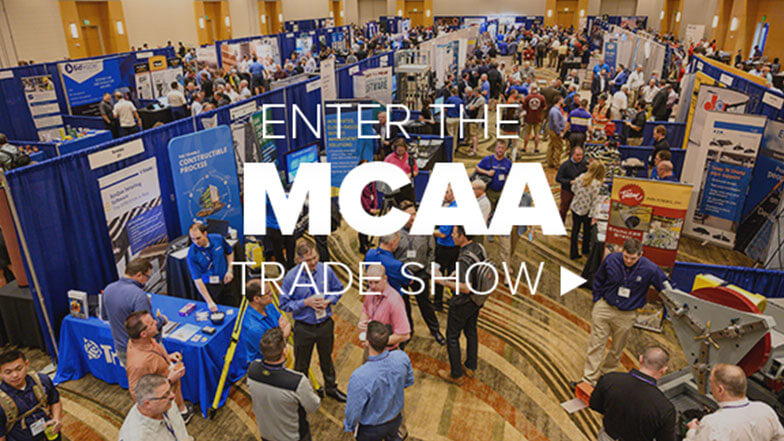
MCAA’s Virtual Trade Show connects our contractor members with the members of MCAA’s Manufacturer/Supplier Council.
Participating companies highlight and link to new products, product lines, services, solutions or web pages of particular interest. Here are just a few of the recent additions:
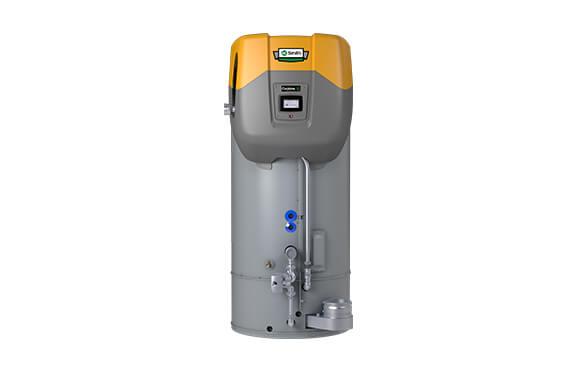
A.O. Smith A. O. Smith’s Cyclone® XL commercial gas water heater operates at 1 million BTU/hour with a smaller footprint than two current Cyclone 500,000 BTU/hr units. A 750,000 BTU/hr Cyclone XL model is also available. The new models feature a unique dual stainless-steel heat exchange system, providing a two-step heat transfer process that delivers thermal efficiencies of 97%. Intelligent Demand Response automatically adjusts the differential set point to increase availability of hot water during large demand periods. www.hotwater.com
ServiceTrade ServiceTrade is the software platform for commercial mechanical and fire contractors. During a chronic skilled labor shortage, we help you increase profit by improving service and project operations, increasing technician productivity, selling more service agreements, and growing customer loyalty.
Visit the Smart Solutions Case Studies area of our website to learn how other mechanical contractors found their win-win with cost-saving and productivity-enhancing applications from members of MCAA’s Manufacturer/Supplier Council.
This section of our website also includes tips and ideas to help your company save money and enhance your productivity. Don’t miss it!
Connect With Additional Manufacturer/Supplier Training
Save yourself time and let MCAA connect you to the latest Manufacturer/Supplier member’s training opportunities. Visit the Manufacturer/Supplier Training area of the Resource Center to get started.
As part of its ongoing commitment to protecting your livelihood and setting the stage for a bright future, MCAA has secured the services of Longbow Public Policy Group to advise our MCAA Government Affairs Committee (GAC). GAC Chair, Jim Gaffney will be passing along information relative to our industry on a regular basis.
On Monday, March 30, 2026 MCAA Lobbying Firm, Longbow Public Policy Group provided the following information:
Trump Administration
Last Friday, President Trump issued a memorandum directing the Department of Homeland Security (DHS) to use available funds to continue paying Transportation Security Administration (TSA) employees during the ongoing DHS shutdown, citing national security concerns and disruptions during peak travel for Spring Break and Easter. Following issuance of the memorandum, DHS said that TSA officers will begin receiving paychecks as early as today. The President announced this executive action last Thursday night shortly before the Senate unanimously approved a measure to fund DHS except Immigration and Customs Enforcement and parts of Customs and Border Protection involved in immigration enforcement. Last Friday, however, Speaker Mike Johnson (R-LA) rejected the Senate-passed bill, and the House instead passed a bill funding all components of DHS through May 22, 2026. Democratic Representatives Henry Cuellar (TX), Don Davis (NC), and Marie Gluesenkamp Perez (D) joined all Republicans in supporting the bill. The House did this knowing that the Senate had already left D.C. for a two-week Easter/Passover recess and would not be back until April 13, 2026. Moreover, Senate Democrats have already signaled that they will not allow the House bill to advance in the Senate. Before the House departed for its Easter recess, Representatives Brian Fitzpatrick (R-PA) and Tom Suozzi (D-NY) released a bipartisan compromise called the Bipartisan ICE Reform Act of 2026 to fully fund all components of DHS while imposing new limits on immigration enforcement, including requirements for immigration enforcement officers to wear body cameras and visible identification, satisfy warrant requirements for certain enforcement actions, and curtail operations at sensitive locations, like churches, courts, and hospitals. So the funding lapse continues for DHS, but TSA agents will be paid while the standoff continues. Amidst the funding standoff, the Senate confirmed and President Trump swore in to office new DHS Secretary Markwayne Mullin.
Oil and gas prices continued to rise and the stock market sold off last week as the conflict in Iran continued. President Trumptold aides he wants to conclude the war within four to six weeks and extended his pause on attacking Iran’s energy infrastructure until April 6th despite Tehran rejecting the Administration’s ceasefire proposal and continuing attacks on Israel, Gulf Arab states, and U.S. military bases in the Middle East. Iran told mediators that it views U.S. peace efforts as trick as additional U.S. Marines and paratroopers arrive in the region and the Pentagon develops options for a potential “final blow” if the Strait of Hormuz remains closed and negotiations fail. Republican lawmakers are starting to question the Administration’s plans in Iran after it requested the reprogramming of $1.5 billion to replenish missile interceptors depleted by the conflict and Trump Administration briefings provided no clear answers on the President’s ultimate strategy for the conflict. House Armed Services Committee Chair Mike Rogers (R-AL) warned the Defense Department could lose congressional support unless it is more transparent with Congress about operations in Iran and related troop deployments. New polling shows declining public support for the conflict, with President Trump’s approval falling to 36%. Only about 35% of those polled support the ongoing conflict and about 61% oppose it. Moreover, just 25% approve of President Trump’s response to cost-of-living concerns as the conflict causes gas prices to rise, prompts inflation forecasts to be revised upward and import prices to increase.
MCAA members who are federal contractors or subcontractors need to know that President Trump signed an Executive Order (EO) last Thursday mandating that federal departments and agencies include clauses in contracts and contract-like instruments prohibiting Diversity, Equity, and Inclusion (DEI)-related practices in hiring, training, and contracting. The MCAA policy team reviewed the EO and wants to be sure members are aware that it specifically bans disparate treatment based on race or ethnicity in recruitment, hiring, promotions, participation in training or mentorship programs, and the selection of vendors or subcontractors. This extends to banning disparate treatment in “participation in, or access or admission to: training, mentoring, or leadership development programs; educational opportunities; clubs; associations; or similar opportunities that are sponsored or established by the contractor or subcontractor.” The order requires federal contractors to provide access to records and information so the government can confirm compliance, monitor subcontractor compliance, and report known or suspected violations. Federal contractors are also required to flow these requirements down through their subcontractors. The order also makes compliance with the DEI prohibition material to federal payment decisions under the False Claims Act and authorizes contract termination, suspension, or debarment for violations. The EO requires the White House Office of Management and Budget (OMB) to issue implementing guidance and direct the U.S. Department of Justice to prioritize enforcement of this order. The EO also compels the Federal Acquisition Regulatory (FAR) Council to update the Federal Acquisition Regulations to incorporate these prohibitions across federal procurements. The MCAA policy team will be watching for the forthcoming OMB implementation guidance and FAR Council revisions for federal acquisition regulations related to this EO. A White House fact sheet on the EO is available here.
Last Wednesday, the Environmental Protection Agency (EPA) issued a temporary emergency fuel waiver allowing nationwide summer sales of ethanol-blended E15 gasoline and removing federal enforcement of state “boutique fuel” requirements in order to increase fuel supply and provide price relief ahead of the summer driving season. The waiver, effective May 1 through May 20, 2026, temporarily suspends low-volatility (Reid Vapor Pressure) limits and blending restrictions, allowing gasoline with 9% to 15% ethanol content to be produced and distributed under a uniform federal standard. U.S. EPA Administrator Lee Zeldin said the agency is prepared to extend the waiver if fuel supply conditions warrant. The EPA action followed Senate Agriculture Committee Chair John Boozman (R-AR) saying last Tuesday that he would support including a provision authorizing year-round sales of higher ethanol blends such as E15 in the forthcoming Farm Bill, provided the Senate Environment and Public Works Committee agrees. Senate Agriculture Committee Ranking Member Amy Klobuchar (D-MN) also voiced support for expanding year-round E15 sales.
MCAA members should be aware that the Pipeline and Hazardous Materials Safety Administration (PHMSA) is considering updates to its enforcement framework that could change how violations are identified and penalized. Last Tuesday, PHMSA issued a request for stakeholder comments on potential updates to its Section 4 Administrative Enforcement Processes, which outline each stage of the agency’s enforcement framework from case initiation through closure. The agency said the review marks the first formal opportunity in roughly a decade to provide transparent input on the document. PHMSA’s Office of Pipeline Safety will accept feedback for 30 days at phmsaenforcement@dot.gov and plans to publish a red-lined version reflecting any revisions, noting that comments relied upon to support any edits may be made public.
Last Monday, the Treasury Department and Internal Revenue Service requested public recommendations for items to be included in the 2026–2027 Priority Guidance Plan, which the agencies use to identify and prioritize tax issues they intend to address during the period from July 1, 2026, through June 30, 2027. Recommended items may include priorities that can be addressed through regulations, revenue rulings, revenue procedures, notices, and other published administrative guidance. Recommendations must be submitted by Friday, May 29, 2026, to be considered for inclusion in the plan. Commenters are not required to use a particular format but should briefly describe the recommended guidance, explain the need for it, and may include an analysis of how the issue should be resolved. For recommendations to modify, streamline, or withdraw existing regulations or other guidance, taxpayers are encouraged to explain how the proposed changes would reduce taxpayer costs or administrative burdens, improve tax administration, or address issues identified in President Trump’s Executive Order 14219, Sections 2(a)(i)–(vii), which concern regulations that may be unconstitutional or unlawful, reflect an improper interpretation of statutory authority, address significant matters without clear authorization, impose unjustified costs on the private sector, hinder technological innovation, or create undue burdens on small businesses. Commenters proposing more than one guidance project are asked to rank their recommendations in order of importance.
Congress
As the MCAA continues discussions on Capitol Hill to advance federal permitting reform to speed the build out of data centers and the energy infrastructure needed to power them, last Wednesday, Senate Majority Leader Chuck Schumer (D-NY) laid out Democrats’ energy policy plans in the event that they retake the majority in Congress. On data centers, Schumer said Democrats will push for “strong, enforceable consumer protections” instead of President Trump’s voluntary “Ratepayer Protection Pledge” signed by several big tech companies to prevent increased consumer electricity costs from data centers. Schumer also endorsed the creation of a “prize-based innovation program” for breakthroughs that make data centers more efficient and emphasized the need for data centers to “pay their fair share” as part of broader efforts to lower costs and protect consumers. He also called for speeding up permit approvals for “climate-friendly” energy sources, upgrading the electric grid, and providing “systematic protection for consumers from rising prices.” Finally, Schumer said Democrats also want to boost credits for geothermal and nuclear energy and reinstate tax credits for wind and solar power terminated in the One Big Beautiful Bill Act. The vision Schumer outlined tracks closely with the Energy Bills Relief Act that we reported on last week that was introduced in the House with 120 Democratic cosponsors. Schumer’s remarks come as congressional Republicans begin preparing a second budget reconciliation bill that could include permitting reforms, although that effort faces challenges given Republicans’ narrow House majority and opposition from members such as Rep. Brian Fitzpatrick (R-PA), who have said they will oppose the package if it includes cuts to social services. The MCAA policy team remains engaged in bipartisan Senate permitting reform negotiations while also working in parallel with House leaders to determine what discrete permitting reforms may be viable under the unique rules of the budget reconciliation process the House is initiating.
Highlighting a schism among congressional Democrats over how to deal with data center development and the concerns it raises, last Wednesday, progressive lawmakers Sen. Bernie Sanders (I-VT) and Rep. Alexandria Ocasio-Cortez (D-NY) introduced the Artificial Intelligence Data Center Moratorium Act. In contrast to the Energy Bills Relief Act and Senator Schumer’s vision, this legislation would impose a nationwide halt to the construction or expansion of large AI data centers until Congress enacts comprehensive federal safeguards governing AI safety, worker protections, consumer risks, environmental impacts, and civil rights issues associated with AI. Under the bill, once these issues are addressed and data center construction resumes, developers would be required to use union labor, pay prevailing wages, utilize project labor agreements, and employ registered apprentices. New data centers that get taxpayer subsidies would also be prohibited from increasing electricity costs or environmental impacts in surrounding communities. The bill would further require federal review and approval of AI products before they are deployed, establish policies aimed at preventing job displacement, and mandate the sharing of AI-related economic gains. The bill expands federal transparency and reporting requirements on data center energy use, emissions, water consumption, financing, and workforce impacts. It also restricts exports of advanced U.S.-origin AI chips and computing hardware to countries that lack comparable AI safety, labor, and environmental protections. A section-by-section on the bill is available here.
MCAA members should be aware of newly proposed bipartisan legislation that could affect business transactions in construction and other industries by increasing the taxes associated with certain mergers and acquisitions. Last Wednesday, Senators Sheldon Whitehouse (D-RI) and Josh Hawley (R-MO) introduced the Stop Subsidizing Giant Mergers Act, which would amend the Internal Revenue Code to eliminate tax-free treatment for certain corporate reorganizations involving companies with combined average annual gross receipts exceeding $500 million over the prior three years. The proposal would apply to a range of merger, acquisition, and asset-transfer transactions and could alter deal structures and investment incentives across industries, including construction. This legislation is not new. Senator Whitehouse introduced it in 2024 with then-Senator JD Vance (R-OH) as the original GOP cosponsor.
Following Senator Markwayne Mullin’s (R-OK) resignation from the Senate last week to assume his new role as Secretary of Homeland Security, Oklahoma Gov. Kevin Stitt (R) appointed Alan Armstrong, the former CEO of Williams Cos., to temporarily fill the Senate vacancy. Armstrong will only be in office for the remainder of this year. But given his background leading one of the nation’s largest natural gas processing and transportation businesses, we are hopeful he will be supportive of MCAA’s permitting reform efforts and continuing work to unwind decarbonization initiatives from the last Administration. Under Oklahoma law, Armstrong is not permitted to run in the November special election to fill the vacancy created by Secretary Mullin’s resignation. Rep. Kevin Hern (R-OK), who has been endorsed by President Trump, is the leading Republican candidate for the seat in the November special election.
MCAA members in Maryland are likely already aware of the federal court ruling upholding Montgomery County, Maryland’s all-electric building mandate. Last Thursday, a federal judge upheld the ordinance, ruling that the county’s ban on gas appliances in new construction is not preempted by the federal Energy Policy and Conservation Act (EPCA) because the ordinance does not regulate how appliances use energy, but instead bans a category of appliances altogether. Industry groups that challenged the ordinance say the decision departs from earlier federal court rulings citing EPCA to strike down laws curtailing or banning gas appliances. The ordinance is scheduled to take effect by the end of 2026.
MCAA members operating in Florida should be aware that last Thursday, the Environmental Protection Agency (EPA) awarded almost $1.7 billion in supplemental appropriations to Florida to improve water infrastructure resiliency and to address lingering issues from Hurricanes Helene and Milton in 2024. Approximately $844 million will be allocated to Florida’s Drinking Water State Revolving Fund (SRF) to make low-interest loans for the planning, design, and construction of eligible drinking water improvement projects and $806 million will be allocated to its Clean Water SRF for the planning, design, and construction of eligible treatment works improvement projects. Additionally, Florida received $35 million for its Clean Water SRF to improve the resilience of septic systems and assess and connect homes served by septic systems to centralized wastewater systems.
Legal challenges tied to methane leaks in aging gas distribution systems are increasing regulatory scrutiny and could accelerate pipeline replacement activity in some markets. A federal magistrate judge in Massachusetts last Wednesday recommended allowing portions of a citizen lawsuit against National Grid to proceed, including claims under the federal Pipeline Safety Act alleging ongoing safety violations tied to methane leaks in the company’s metro Boston gas distribution network, as well as state law claims related to damage to public shade trees. According to plaintiffs, surveys identified numerous leak locations posing potential explosion risks, contributing to tree loss and urban heat impacts, and highlighting concerns about the condition of aging pipeline infrastructure. The recommendation now goes to a district court judge, who will determine whether to adopt the ruling and allow the case to move forward.
MCAA members that work on gas distribution systems should be aware of new federal funding opportunities for pipeline replacement and modernization projects, as well pro-labor factors that will be considered in deciding grant awards. Last Tuesday, the U.S. Department of Transportation’s Pipeline and Hazardous Materials Safety Administration (PHMSA) announced $98 million in available funding from President Biden’s Bipartisan Infrastructure Law’s Natural Gas Distribution Infrastructure Safety and Modernization (NGDISM) grant program, which provides funding for city- and community-owned utilities to repair, replace, or modernize aging, leak-prone gas distribution pipeline systems. This is the final year of the NGDISM program. Per the Notice of Funding Opportunity (NOFO), as part of its application review process, PHMSA will assess whether and how project applicants include union participation and project labor agreements (PLAs). In the NOFO, PHMSA explains that PLAs “promote cost-effectiveness and open competition.” Note, however that the NOFO also says grant applicants must certify that they do not operate any programs promoting diversity, equity, and inclusion initiatives in violation of federal anti-discrimination laws as interpreted by the Trump Justice Department. Applications are due by May 22, 2026.
The Trump Administration continues to shift federal energy priorities away from offshore wind development and toward expanded oil and natural gas production, as evidenced by the Interior Department’s announcement last Monday of an agreement with TotalEnergies under which the company will abandon planned offshore wind development off North Carolina and New York. TotalEnergies pledged to invest $1 billion in the construction of the Rio Grande LNG export facility in Texas, the expansion of shale gas production, and the development of conventional offshore oil resources in the Gulf of America. The federal government will reimburse TotalEnergies the roughly $1 billion the company previously paid in offshore wind lease fees after the new fossil fuel investments are made.
MCAA health plan administrators and contributing employers should be aware of new litigation challenging pharmacy pricing practices that could affect prescription drug costs for employer-sponsored benefit plans. The Central Midwest Regional Council of Carpenters Welfare Fund recently filed a class-action lawsuit in the U.S. District Court for the Southern District of Ohio alleging Kroger pharmacies overcharged employer health plans by excluding lower cash-pay prices from “usual and customary” rates reported on required forms. The complaint cites significant pricing disparities, including claims the plan paid $938 for the psoriasis drug acitretin while cash-pay customers were charged $174, $480 for the ulcerative colitis drug Apriso compared with $115 in cash pricing, and $362 for the opioid overdose reversal drug naloxone versus a $23 cash price. The fund alleges the pricing practices resulted in tens or even hundreds of thousands of dollars in excess costs and asserts claims including fraud, unjust enrichment, and violations of state laws, while seeking reimbursement and an order requiring Kroger to include cash prices in its rate calculations going forward.
MCAA and CNA have recognized companies for their achievements in safety through the MCAA/CNA Safety Excellence Awards. This program, which began in the 1990s, honors member companies that have demonstrated strong safety practices and innovative approaches to achieving high safety and health standards.
The Safety Excellence Awards focus on evaluating safety programs, health initiatives, and the impact of safety innovations within the industry. Companies are divided into five categories based on the number of work hours they report, with winners selected by a committee of industry peers. The awards program provides a platform for companies to showcase their safety efforts and share best practices.
To participate, companies submit detailed descriptions of their safety programs, including the strategies they’ve employed to achieve safety excellence and why they believe they should be recognized. The Safety Awards Selection Taskforce, led by CNA, reviews submissions with an emphasis on safety leadership, a strong safety culture, effective performance indicators, and innovative initiatives that have contributed to the company’s safety achievements.
MCAA congratulates the winners of this year’s MCAA/CNA Safety Excellence Awards:
ICOM Mechanical Inc. | Category 1: 0-200,000 hours
Heffron Company Inc. | Category 2: 200,001-500,000 hours
ICOM Mechanical Inc.Heffron Company Inc.Hurckman MechanicalHFIJF AhernNext Year: Your Company?
These companies have demonstrated a commitment to safety, showcasing their efforts to foster a strong safety culture and create safe working environments for their teams.
MCAA thanks CNA for its continued partnership in the Safety Excellence Awards program. Their collaboration is instrumental in advancing safety standards within the mechanical contracting industry.
The MCAA/CNA Safety Excellence Awards highlight the importance of safety leadership and the ongoing efforts to improve safety and health practices across the industry.
Twenty-five students were recognized with JRGF scholarships totaling $110,000 at MCAA26. Indiana State University emerged as the victors for the Student Chapter Competition and returned to campus with a $10,000 prize, sponsored by DEWALT, following their main stage Final Four presentation in Phoenix. The MVP – Most Valuable Presenter was awarded to Braidyn Hudson from Indiana State University.
California State University, Chico was selected as the 2025-2026 Student Chapter of the Year (also going home with $10,000) and Jonathan Bluey (Virginia Tech), was awarded $5,000 and the distinct honor of being named the Educator of the Year. A brand-new chapter at the University of Missouri–St. Louis was also chartered on stage at MCAA26.
JRGF Scholarships
MCAA President, Brian Hughes and Brian Helm, President of the John R. Gentille Foundation, congratulated the recipients of the following scholarships at the Awards of Excellence Breakfast on March 18, 2026. The students receiving scholarships were selected for their academic performance, leadership skills within their chapter, and interest in developing a career in the mechanical industry.
ATP Inspiring Future Leaders Scholarship Preston McDonald of Indiana State University is the recipient of a $2,500 scholarship provided by ATP. The scholarship was established to recognize, support and inspire students in the mechanical industry.
Robert J. Durr, Sr. – UA/NCPWB Partnering Scholarship Christian Holden of Kent State University received a $2,500 scholarship check in honor of Robert J. Durr, Sr., former chairman of the National Certified Pipe Wilding Bureau Board of Trustees. Robert’s effort and dedication in creating a partnership between the United Association and the NCPWB resulted in the formation of the Joint Welder Testing Program. The scholarship is in its fourth year and is sponsored by the NCPWB.
Josam Endowed Scholarship Tyler Currie of Alfred State College was once again awarded this $2,500 endowed scholarship. Provided that all qualifications are met, Tyler will receive this scholarship again during his senior year. Josam Company established this scholarship endowment to assist a student studying a major related to MCAA’s scope and with intentions of pursuing a career within the mechanical contracting industry.
Ann Mattheis Memorial Scholarship Breyden Lane of Washington State University was awarded a $2,500 scholarship in memory of the former MCAA Director of Career Development, Ann Mattheis. Ann’s dedication and contributions to building the GreatFutures program left an enduring legacy for multiple decades of students and for the overall members of MCAA.
Alan P. O’Shea Memorial Scholarships Milton Eugenio Romero of Fairleigh Dickinson University and Gabriella Siden of the University of Maryland, College Park each received a $2,500 scholarship check in memory of Alan P. O’Shea, former Executive Director of the MCA of New Jersey. The scholarship is sponsored by the MCA of New Jersey.
Ferguson – Women in the Mechanical Industry Scholarships Shelby Gustafson from California State University, Chico and Jill Kennicott from Bradley University each received a $5,000 scholarship, sponsored by Ferguson, to recognize two worthy female students who are invested in a career in the mechanical contracting industry. The two students will also be invited to attend the WiMI Conference in Coronado, CA this June.
Robert T. Armistead Memorial Scholarships Cole McClure of Kansas State University and Jake Prout of Kent State University both received a $5,000 scholarship in memory of Robert “Bob” Armistead. In honor of Bob’s service as MCAA President, the selected winners are required to have served in the role as their local student chapter president. These scholarships were established by Armistead Mechanical, Inc. and the Family of Robert T. Armistead.
William A. Bianco, Jr. Memorial Scholarship Kathryn Murnane of Virginia Tech received a $5,000 scholarship check in memory of a former President of the foundation and MCAA Distinguished Service Award (DSA) recipient, William A. “Bill” Bianco, Jr. The scholarship is sponsored by Exential.
Bolton Family Scholarship Missy Meigs of Pittsburg State University was awarded a $5,000 scholarship to honor the significant contributions the Boltons have provided to the construction industry. This scholarship honors the family’s dedicated volunteer work within the communities they serve in Rhode Island, notably their efforts in aiding children from Spanish- and Portuguese-speaking backgrounds in mastering the English language within the school system and their improvements with the Ronald McDonald House. The scholarship embodies the values of service, community engagement and support for those in need that have been integral to the Bolton family’s legacy.
Donald V. Brown Memorial Scholarship Brock Golden from Ferris State University is the recipient of a $5,000 scholarship sponsored by D.V. Brown and Associates, Inc., and in memory of its founder, Donald V. Brown, Senior.
DEWALT Patriot Scholarships The DEWALT Patriot Scholarship, now in its fifth year, was created to recognize two veterans of the United States military who have valiantly served their country and have chosen to pursue a career related to mechanical contracting. Thank you to DEWALT for honoring our military and to our scholarship recipients for their service. Luis Mazariegos of California State University, East Bay (United States Marine Corps – Combat Engineer, 1371) and Jeff Woodard of the University of Nebraska (United States Navy Hospital Corpsman Third Class- Fleet Marine Force Enlisted Warfare Specialist at 2nd Marine Division) each received a $5,000 scholarship.
EVAPCO, Inc. Engineering Scholarships Madison Deck of Southern Illinois University Edwardsville and Lilyanna Saupan from California State Polytechnic University, Pomona both received a $5,000 scholarship. EVAPCO, Inc. designed this scholarship to recognize students whose goal is to pursue a degree in Mechanical Engineering or Civil Engineering, or a field of study relevant to mechanical contracting / equipment manufacturing that supports the mechanical industry.
Finding Your “GreatFuture” Scholarship This new $5,000 scholarship was presented to Will Pedersen from California State University, Chico. The scholarship was established to academically assist a student as they pursue finding their “GreatFuture” in the mechanical contracting industry. There’s a place for everyone in mechanical, and MCAA is committed to developing programming and resources for the next generation of industry leaders ready to find their future employment home.
Rick and Debbie Gopffarth Mechanical Construction Endowed Scholarship Rileigh Manuel from Pittsburg State University received a $5,000 check for this newly established scholarship. Rick Gopffarth served as the 2024-2025 MCAA President. Following his presidency, both he and Debbie desired to give back to the community that gave them so much and established this scholarship to support the next generation of mechanical construction students. Rick is a firm believer that success comes from strong partnerships, good customers and the value of higher education. Together, Rick and Debbie believe this scholarship will encourage students who share their values to select mechanical for their career path and assist them with building a meaningful career in the industry.
Foster McCarl, Jr. Memorial Scholarship Gianna Delucia from Kent State University received a $5,000 scholarship check in memory of the founder of our foundation, Foster McCarl, Jr.
Reilly Family Memorial Scholarship Lily Lubs from Alfred State College received a scholarship check for $5,000 to commemorate the memory of the John W. Danforth leadership, the Reilly Family. Danforth is a charter member of the MCAA. Kevin “Duke” Reilly served as Danforth’s Chairman/ CEO. Wayne, Patrick and Emmett Reilly contributed a combined 128 years of commitment and loyalty to their company and the industry. This national scholarship symbolizes the Reillys’ many contributions to the mechanical contracting industry.
Trimble Future Estimator Scholarship Brooks Scheelk of Pittsburg State University received a $5,000 check for a scholarship that was developed to recognize a student who is not only interested in mechanical contracting, but specifically someone with an interest in being a mechanical estimator upon graduation. Recipients of this scholarship are also required to be a Student Chapter Competition first-round participant. Likewise, Trimble annually donates complimentary use of Trimble Estimation MEP and Trimble AutoBid for the MCAA student chapter competition teams to utilize while preparing their proposals.
Tyfoom “Become More” Scholarship Joe Robertson of Ball State University was the recipient of a $5,000 scholarship sponsored by Tyfoom. This new scholarship was established to empower the next generation of leaders dedicated to improving culture, safety and engagement in the workplace. The scholarship reflects Tyfoom’s mission to help individuals become more and reach their potential – through consistent communication, training and accountability. This scholarship recognizes students who demonstrate a commitment to becoming more every day – continually striving to improve themselves, their teams, and the world around them.
Viega Scholarship Braidyn Hudson of Indiana State University was the recipient of a $5,000 scholarship sponsored by Viega. Viega has graciously sponsored student chapter activities at the MCAA Convention for many years. The Viega scholarship is now in its 4th year.
Thomas J. Wanner Memorial Scholarship Coleton Haggin of the University of Nebraska received a $5,000 scholarship check in honor of the former MCA/MSCA of Cleveland Executive Director Thomas J. Wanner. Thomas focused on labor relations, collective bargaining, education and training, legislation, codes and business operations for over three decades. This scholarship is sponsored by MCA/MSCA of Cleveland.
Educator of the Year
Jonathan Bluey, faculty advisor for Virginia Tech, was recognized as the 2025-2026 Educator of the Year. He was selected for this honor based on his mentoring, mechanical industry knowledge, chapter activity participation, and involvement in the creation of student-focused networking opportunities with local mechanical contractors through their MCAA Affiliated Association, MCA of Metropolitan Washington, Inc. In addition to a trophy, he received a $5,000 award.
Student Chapter of the Year
California State University, Chico was selected as the 2025-2026 Student Chapter of the Year. Their faculty advisor is Marie Patterson and their MCAA Affiliated Association is Northern California MCA. The Career Development Committee selected the winner based on a rubric that evaluates industry-specific educational opportunities, fundraising and community service efforts, recruitment tactics, and most importantly, mechanical contracting interest. The chapter at California State University, Chico received a trophy and a $10,000 award.
MCAA Student Chapter Competition
Indiana State University won the top prize of $10,000 and a trophy for their outstanding work on this year’s Student Chapter Competition project, the “MCAA Waterpark” in Florida. This included the completion of all aquatic plumbing and any other work related to completing the project, as described in the bid documents. The teams were also tasked with purchasing the HVAC equipment and materials, and providing all necessary labor and construction equipment to complete the entire project scope.
MCAA thanks DEWALT for sponsoring the prizes for the Student Chapter Competition.
It is also with gratitude that we thank Helm Group for supplying the project and to our project partners Procore, Trimble and Ferguson for supplying real-life learning resources to the student participants.
California State University, Chico was the runner-up, placing second and receiving a trophy and a check for $5,000.
California Polytechnic State University, San Luis Obispo and Missouri State University rounded out the final four. Each of these Honorable Mention finalists received trophies and $2,500. Honorable mentions are listed in alphabetical order.
Six additional teams that just missed the final four were recognized with Merit Trophies and checks for $1,000. They are, in alphabetical order:
Binghamton University
Bradley University
Illinois State University
McMaster University
University of Manitoba
Utica University
Most Valuable Presenter
The Career Development Committee recognized a student who did the best job presenting their proposal, whether or not their team won. The audience members voted via a polling link between Final Four presentations and ultimately Braidyn Hudson of Indiana State University was awarded a trophy, a $500 gift card, a complimentary seat in MCAA’s Preparatory Institute for Project Management (Pre-IPM), and the title of 2025-2026 Most Valuable Presenter.
Student Chapter Charter
MCAA is proud of the substantial investments that all of us are making to further the education of the outstanding students represented in our student chapters. One new chapter was chartered during the Closing General Session at MCAA26.
University of Missouri–St. Louis is sponsored by MCA of Eastern Missouri, Inc. and their faculty advisor is George Nnanna, Ph.D., P.E., ASME Fellow.
Carly Carmosino (MCA of Eastern Missouri), University of Missouri–St. Louis (UMSL) Student Chapter Members, and Brian Hughes (MCAA President)
Congratulations to all MCAA26 award winners and scholarship recipients!
Interested in providing a scholarship at MCAA27? Contact JRGF Executive Director, Sean McGuire (smcguire@mcaa.org) for additional details.
New helmet safety research sponsored by the John R. Gentille Foundation (JRGF) and conducted at the Virginia Tech Helmet Lab has produced results that should prompt every jobsite to take a hard look at its head protection standards.
Episode 5 of the Construction Helmet Research Program series explains what the data shows about Type I versus Type II performance.
Helmets were tested under fall-specific conditions, the most common cause of serious head injuries on jobsites. Type II helmets dramatically outperformed traditional Type I hard hats. Workers wearing Type I hard hats experienced significantly more force transferred to the head on impact, translating directly into higher injury risk.
The numbers tell the story. Of every 100 serious head injuries involving workers in Type I hard hats, approximately 65 could have been prevented had those workers been wearing Type II helmets instead. Testing also showed that top-performing Type II helmets reduce the risk of skull fracture by up to 75% compared to lower-performing Type I models. These are not incremental improvements. They represent a fundamental difference in protection.
The reason for the performance gap comes down to construction. Type II helmets contain energy-absorbing materials, typically foam liners, inside the shell. When an impact occurs, those materials compress and absorb force before it reaches the head, reducing skull deformation and lowering the likelihood of fracture. Type I hard hats lack this internal protection layer, leaving workers more exposed in a fall.
Based on this research, the official recommendation is clear: transition to Type II helmets. They are easy to identify by their label, chin strap, and internal liner. The evidence is straightforward. A significant portion of the head injuries happening on jobsites today do not need to happen. Type II helmets are a proven, available solution.
For more information and to follow ongoing helmet ratings for the construction industry, visit the Virginia Tech Helmet Ratings Lab website.
The Six-Part Video Series
To ensure the industry understands the data — and the science behind it — JRGF has produced a six-part short video series that walks contractors step-by-step through the research, testing protocols, findings, and practical implications for construction safety programs. Catch up on what you missed and see what’s coming soon below.
Explaining the Issue: A clear look at how head injuries occur on construction sites and why lateral impacts deserve more attention. Watch the Video
Partnering with Virginia Tech Helmet Labs: Why the industry engaged an independent, nationally recognized testing lab to conduct objective evaluations. Watch the Video
Inside the Testing Process: A detailed explanation of impact testing methods, instrumented headforms, and how linear and rotational forces are measured. Watch the Video
The Star Rating System: How helmets are evaluated beyond minimum standards and how performance differences are quantified. Watch the Video
Explaining the Results: What the data shows about Type I versus Type II performance and how the 75 percent reduction figure was calculated. Watch the Video
Why This Matters to Construction: Practical guidance for contractors evaluating head protection policies in real-world jobsite conditions. Coming Soon!
If you want to fast-track your new and aspiring field leaders in 2026, MCAA has just the program! Foundations of Field Leadership begins in April: once a week for 8 weeks, students spend 90 minutes online with an experienced field leader, who will walk them through best practices and practical strategies of running work and running a crew.
From Planning to Leadership, from Documentation to Safety: our instructors break down the ‘why’ and the ‘how’ of things that every foreman must understand to be successful. The course itself is made up of weekly online lectures with real-time student interaction, quizzes, and short video assignments. Here’s what our past grads had to say about their experience in Foundations of Field Leadership:
“Very easy to listen to the instructor, very knowledgeable and personable.”
“I like learning from someone with a lot of experience and learning how to do the job more efficiently.”
“I appreciated [the instructor’s] content. I’ve been in the trade for 25 years and have only been running work for the last 3 years. I’ve either been in or around all the situations [the instructor] spoke about and appreciated his insight. Great ways to handle things.”
“The information was delivered clearly and was easy to understand. It gave everyone the chance to apply their thoughts and comments.”
“[I appreciated the instructor] acknowledging the fact that being in this class is a step forward in my career, and it feels good to know my hard work and dedication hasn’t gone unnoticed by my company.”
The deadline to sign up is April 3rd. There is no limit on how many new or potential field leaders an MCAA member can enroll, but registration will be done on a first-come, first-served basis. Visit the FFL course webpage to learn more about this exciting opportunity for new and future field leaders, and to sign your people up today!
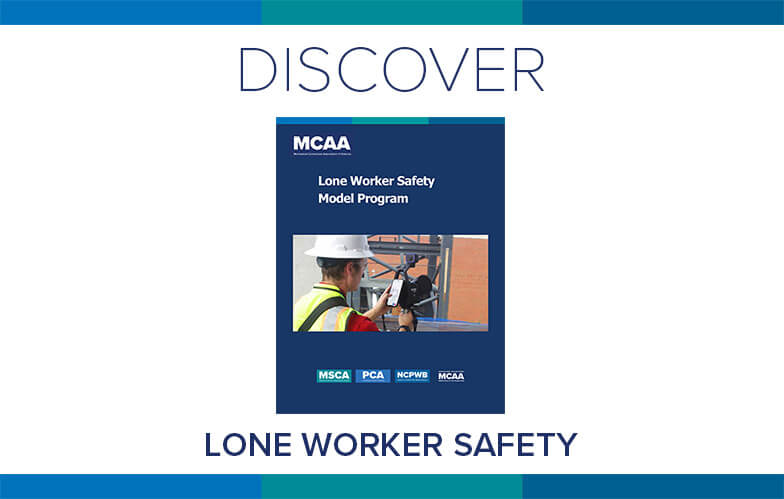
Service technicians may work on their own without ready access to assistance. MCAA’s Lone Worker Safety Model Program helps contractors identify risks and hazards and ensure adequate systems are in place to protect those workers. It’s just one of MCAA’s educational resources that are free to MCAA members as a benefit of membership.
The model program can be easily tailored to meet each company’s specific needs, and highlights these areas and more:
MCAA26 helped attendees see ‘Beyond the Horizon’ in Phoenix, Arizona, with an unforgettable week of inspiration, education, and connection.
President Brian Hughes expressed gratitude to the United Association (UA), General President Mark McManus, UA leadership, affiliated local association executives, and manufacturer and supplier members for their unwavering support and integral role in MCAA.
The week featured key remarks from UA General President McManus, who emphasized the strength of the UA/MCAA partnership. Main stage speakers, including Drew Brees, Zack Kass, Mike Massimino, Inky Johnson, and Ken Schmidt, provided valuable insights and entertainment. Education seminars equipped members for the year ahead, while the Manufacturer/Supplier Council Exhibit facilitated networking and industry collaboration.
Following Wednesday night’s closing dinner, Grammy Award-winning trio Lady A treated attendees to an energetic concert that included hit after hit of their trademark blend of country, rock and pop.
On Thursday, MCAA’s Political Action Committee awarded a Lady A autographed guitar to Beni Monaco after successfully raising more than $26,000 through a raffle.
President Hughes recognized the contributions of retiring MCAA Board of Directors members, stating, “Each of these Board members has contributed tremendously to strengthening this industry, and we want to recognize their service and thank them.”
Honorees and retiring Board of Directors members:
Kat Unger, First Graduate of the AEC Training Program
John P. Geiling, Independent Strategic Advisor
Rick Moreno, President, Astro Mechanical Contractors
Rick Gopffarth, Senior Vice President, Dynamic Systems, Inc. and an MCAA Past President
MCAA President Brian Hughes Welcomes Attendees to PhoenixUA General President Mark McManus Addresses MCAA26 AttendeesPresident Hughes Thanks Colleagues and Family On Stage During the Opening SessionMCAA President Brian Hughes Chats with NFL Hall-Of-Fame Quarterback Drew BreesRick Moreno and MCAA President HughesRick Gopffarth and MCAA President HughesKat Unger and MCAA President HughesBrian Hughes Passes the Gavel to Incoming President Curtis HarbourPresident Curtis Harbour and Immediate Past President Brian Hughes
During the Closing General Session, President Hughes delivered his final remarks before passing the MCAA presidential gavel to his successor, Curtis Harbour. Harbour expressed his gratitude, stating, “Brian, I am honored by this opportunity, and I will do my best. We promise to build on what you have done for MCAA.” As a token of appreciation, MCAA made a donation to The YMCA of Haiti, an organization the Hughes family volunteered with in recent years.
President Harbour acknowledged the national officers serving on MCAA’s Executive Committee and introduced the newest members of the Board of Directors.
Joining President Harbour on the Executive Committee are:
President‑Elect: Michael Russo, Fresh Meadow Mechanical Corporation
Senior Vice President and Treasurer: Scott Hinton, Enerfab
Vice President and Assistant Treasurer: Chris Carter, Murphy Company
Immediate Past President: Brian Hughes, Hughes Environmental Engineering
The newest contractor members of MCAA’s Board of Directors, elected to three-year terms, are:
Dan Heichelbech, Southland Industries
Mindy Rocha, CJ Industries
Adam Wallenstein, Neptune Plumbing & Heating Co.
In his address, President Harbour opened with a nod to the importance of being together in Phoenix, noting, “It’s good to be here with you in Phoenix,” and tying the event’s theme — “Beyond the Horizon” — to the direction the industry is heading. He emphasized that the progress on display was no accident, crediting MCAA leadership and staff who “did the hard work to make this happen.” The remarks set a confident tone focused on momentum, resilience, and a shared vision for the future.
President Harbour went on to highlight the contributions of Brian Hughes, praising him as someone who “has led this association the right way — locally, regionally, and nationally.” He explained that Hughes’ leadership ensured MCAA’s strategic plan “works both directions,” aligning national priorities with real conditions on the ground. Even in a challenging year, he noted, the industry “didn’t slow down,” underscoring the strength and determination of its members.
President Harbour then turned toward the future, identifying education and partnership as the two priorities of his term as MCAA president. He pointed to major tech companies investing “real money behind the future” as a sign of both opportunity and urgency. Importantly, he reaffirmed that “MCAA isn’t just for the biggest contractors — and it never should be,” emphasizing that mid‑size and small companies benefit because the association “creates opportunities.” His message underscored a commitment to inclusivity, growth, and shared success across the entire industry.
Save the Date: MCAA27
Looking ahead, MCAA27 will take place in San Diego, California, from March 7-11, 2027. Mark your calendars and join us for another impactful convention.
The Manufacturer/Supplier Training area of MCAA’s website connects our contractor members with training opportunities available from the members of MCAA’s Manufacturer/Supplier Council.
Participating companies highlight and link to new webinars and training opportunities across their product lines, services, solutions or web pages. Here are just a few of the recent additions:
Conex Bänninger Conex Bänninger offers online training for >B< MaxiPro, the innovative, flame-free press-fit solution specially designed for ACR applications. From training courses to industry updates, you will have all you need to press ahead.
SLOAN Sloan sensor faucets come with various power options ideal for many varying environments. This training will help you identify the best faucet power supply option for your specific facility.
MCAA’s Virtual Trade Show connects our contractor members with the members of MCAA’s Manufacturer/Supplier Council.
Participating companies highlight and link to new products, product lines, services, solutions or web pages of particular interest. Here are just a few of the recent additions:
Ridge Tool Company For more than 100 years, RIDGID has been providing certainty and efficiency to the professional trades by delivering innovative plumbing, mechanical and HVAC tools.
SPX Cooling Tech, LLC Tune in and tune up your evaporative cooling knowledge! If you haven’t made it to a live Marley® webinar yet, you’re in luck. Visit the #SPXMarley on-demand library for viewing at your convenience.
Visit the Smart Solutions Case Studies area of our website to learn how other mechanical contractors found their win-win with cost-saving and productivity-enhancing applications from members of MCAA’s Manufacturer/Supplier Council.
This section of our website also includes tips and ideas to help your company save money and enhance your productivity. Don’t miss it!
Connect With Additional Manufacturer/Supplier Training
Save yourself time and let MCAA connect you to the latest Manufacturer/Supplier member’s training opportunities. Visit the Manufacturer/Supplier Training area of the Resource Center to get started.
Thank you to everyone who joined us in Phoenix, Arizona, for the MCAA26 Annual Convention. Your participation, engagement, and support made this year’s convention a meaningful and successful gathering for our association and the mechanical contracting industry.
Leadership Transitions
We extend our sincere thanks to Outgoing MCAA President Brian Hughes, President of Hughes Environmental Engineering, Mahwah, New Jersey, for his leadership and dedicated service to the association. His commitment and steady guidance helped advance MCAA’s mission and strengthen the organization over the past year.
We are pleased to welcome Curtis Harbour, Vice President of Labor Relations at Southland Industries, Houston, Texas, as MCAA’s incoming President. We look forward to his leadership and the perspective he brings as the association moves forward.
Appreciation for Outgoing Board and Executive Committee Members
MCAA thanks the outgoing members of the Board of Directors and Executive Committee for their time, insight, and service to the association.
Honorees and retiring Board of Directors members:
John P. Geiling, Independent Strategic Advisor
Rick Moreno, President, Astro Mechanical Contractors
Rick Gopffarth, Senior Vice President, Dynamic Systems, Inc.
Joining President Harbour on the Executive Committee are:
President‑Elect: Michael Russo, Fresh Meadow Mechanical Corporation
Senior Vice President and Treasurer: Scott Hinton, Enerfab
Vice President and Assistant Treasurer: Chris Carter, Murphy Company
Immediate Past President: Brian Hughes, Hughes Environmental Engineering
Newly Elected Board Members
The newest contractor members of MCAA’s Board of Directors, elected to three-year terms, are:
Dan Heichelbech, Southland Industries
Mindy Rocha, CJ Industries
Adam Wallenstein, Neptune Plumbing & Heating Co.
We appreciate their willingness to serve and look forward to their contributions.
Thank You to Our Sponsors
MCAA extends its sincere appreciation to the many sponsors whose support made the MCAA26 Annual Convention possible. Their commitment to the association and to the mechanical contracting industry plays a vital role in delivering high‑quality education, meaningful networking opportunities, and a successful convention experience for our members. View a complete list of MCAA26 sponsors at mcaaconvention.org.
A Week of Insight, Education, and Connection
The week featured key remarks that reinforced the strength of our industry and the importance of collaboration. United Association General President Mark McManus addressed attendees and spoke to the UA’s ongoing initiatives, underscoring the continued strength of the UA/MCAA partnership. MCAA extends its sincere thanks to General President McManus for joining us in Phoenix and for his continued partnership.
Main stage speakers provided perspective, motivation, and practical insight, while educational sessions equipped members with tools and ideas for the year ahead. The Manufacturer / Supplier Exhibit once again served as a central hub for networking, conversation, and industry collaboration. Manufacturer / Supplier members were also on hand throughout the convention to continue the discussion.
More to Come
This is just the beginning of the MCAA26 story. A full convention wrap‑up article—highlighting key moments, speakers, and takeaways—will be shared later this week.
Thank you again for being part of MCAA26. We appreciate your continued involvement and look forward to seeing you at future MCAA events.
If you want to fast-track your new and aspiring field leaders in 2026, MCAA has just the program! Foundations of Field Leadership begins in April: once a week for 8 weeks, students spend 90 minutes online with an experienced field leader, who will walk them through best practices and practical strategies of running work and running a crew.
From Planning to Leadership, from Documentation to Safety: our instructors break down the ‘why’ and the ‘how’ of things that every foreman must understand to be successful. The course itself is made up of weekly online lectures with real-time student interaction, quizzes, and short video assignments. Here’s what our past grads had to say about their experience in Foundations of Field Leadership:
“Very easy to listen to the instructor, very knowledgeable and personable.”
“I like learning from someone with a lot of experience and learning how to do the job more efficiently.”
“I appreciated [the instructor’s] content. I’ve been in the trade for 25 years and have only been running work for the last 3 years. I’ve either been in or around all the situations [the instructor] spoke about and appreciated his insight. Great ways to handle things.”
“The information was delivered clearly and was easy to understand. It gave everyone the chance to apply their thoughts and comments.”
“[I appreciated the instructor] acknowledging the fact that being in this class is a step forward in my career, and it feels good to know my hard work and dedication hasn’t gone unnoticed by my company.”
The deadline to sign up is April 3rd. There is no limit on how many new or potential field leaders an MCAA member can enroll, but registration will be done on a first-come, first-served basis. Visit the FFL course webpage to learn more about this exciting opportunity for new and future field leaders, and to sign your people up today!
As part of its ongoing commitment to protecting your livelihood and setting the stage for a bright future, MCAA has secured the services of Longbow Public Policy Group to advise our MCAA Government Affairs Committee (GAC). GAC Chair, Jim Gaffney will be passing along information relative to our industry on a regular basis.
On Monday, March 23, 2026 MCAA Lobbying Firm, Longbow Public Policy Group provided the following information:
Trump Administration
As military operations in Iran continued last week, the Pentagon is preparing a supplemental funding request exceeding $200 billion to sustain military operations and replenish depleted weapons stockpiles, setting up a likely congressional battle over additional war funding. Even Trump allies in Congress like Sen. Roger Marshall (R-KS) are skeptical of such a large supplemental request and Senate Democratic Leader Chuck Schumer (D-NY) called the request “preposterous” and “unacceptable,” noting that $200 billion is more than the U.S. spent at the height of the war in Iraq. Some Republicans think a second reconciliation bill that can be passed on a party line vote is the only way to advance additional war funding. Meanwhile, oil and gas prices continued to rise with the national average for regular gasoline hovering around $4 per gallon and diesel over $5.00 per gallon. To stem these rising fuel prices, the President announced a 60-day waiver of the Jones Act allowing foreign-flagged vessels to transport commodities between U.S. ports. The Administration is also considering lifting sanctions on Iranian oil at sea to keep oil and gas prices down, but denied that it is considering restricting U.S. oil and gas exports. Iran continued targeting energy infrastructure across the Middle East, knocking out about 17% of Qatar’s liquefied natural gas (LNG) export capacity, damage that officials say will sideline roughly 12.8 million tons of LNG per year from global markets for three to five years while repairs are completed. Amid the widening energy shock, the International Energy Agency is urging governments, businesses, and households to adopt short-term demand-reduction measures such as expanded telework, lower highway speed limits, greater use of public transportation and ride-sharing, and reduced business air travel, arguing that behavioral and policy changes may be needed alongside supply-side interventions to stabilize global fuel markets.
The MCAA policy team was busy last Friday analyzing the potential infrastructure development ramifications of President Trump’s “National AI Legislative Framework” that makes recommendations to Congress for a law establishing a single federal standard governing artificial intelligence and to generally preempt the creation of a patchwork of “cumbersome” state-level AI regulations. While the Framework generally calls for preempting state laws on AI, there are exceptions. For example, the Framework says that a national standard should not preempt state and local zoning laws or local determinations about the location of AI infrastructure. The President’s Framework urges Congress to enact streamlined permitting processes for the construction and operation of data centers and related infrastructure to “accelerate AI infrastructure buildout and enhance grid reliability.” This broad proposal is consistent with the permitting reforms MCAA has been advocating. It also calls for any AI legislation to aid in developing an AI-ready workforce. The President also called on Congress to enact into law the “Ratepayer Protection Pledge” proposal from his State of the Union Address that seeks to prevent increased consumer electricity costs from data centers.
Last week, the Occupational Safety and Health (OSHA) rolled out two new initiatives. Last Wednesday, OSHA launched its “OSHA Cares” initiative, an agency-wide compliance assistance effort aimed at helping businesses better understand and meet federal workplace safety requirements. The program is designed to expand access to OSHA experts and compliance assistance specialists, improve the availability of training and educational resources, and promote more consistent support for employers during inspections and enforcement meetings. As part of the program, OSHA’s Directorate of Enforcement Programs will implement a training initiative to standardize how OSHA Compliance Safety and Health Officers provide real-time guidance to employers during workplace inspections. Rollout of the OSHA Cares initiative followed the announcement last Monday of OSHA’s new Safety Champions Program, a cooperative initiative aimed at helping employers strengthen workplace safety and health practices. The voluntary program has three tiers—Introductory, Intermediate, and Advanced—aligned with OSHA’s recommended safety management principles, including hazard identification, worker participation, training, and program evaluation. Employers may participate independently or with guidance from safety experts.
As the MCAA continues to engage the Trump Administration on our shared priority of expanding domestic nuclear energy, we learned last week that the Nuclear Regulatory Commission is considering drafting a rule that would replace its long-standing “as low as reasonably achievable” (ALARA) radiation protection standard with a less rigid system focused on fixed dose limits and targeted exceptions. The proposal, which could apply across NRC-regulated nuclear power plants, fuel cycle facilities, and medical and industrial users of radioactive materials, is part of a broader Trump Administration effort to accelerate and reduce the cost of developing nuclear power. There is concern that weakening the foundational ALARA safety principle could increase public health risks associated with nuclear energy. The NRC is working towards releasing a proposed rule for public comment by the end of April.
MCAA members with work that has been impacted by the Trump Administration’s pauses on federal funding for infrastructure and other federally supported activity should be aware that last Tuesday, the U.S. First Circuit Court of Appeals largely upheld a lower court injunction blocking the Administration from freezing $3 trillion dollars in federal financial assistance. The court held that the Office of Management and Budget’s directive to pause spending while reviewing programs for alignment with the President’s executive orders and priorities was likely improper and failed to consider the reliance interests of funding recipients.
Last week, the MCAA continued lobbying on Capitol Hill to advance permitting reform by working to build on renewed bipartisan engagement on the issue from the Ranking Members for the two key committees with jurisdiction over permitting reform—Senators Sheldon Whitehouse (D-RI), Ranking Member on Environment & Public Works (EPW) and Martin Heinrich (D-NM), Ranking Member on Energy and Natural Resources (ENR). Whitehouse and Heinrich reengaged after the Justice Department declined to appeal court decisions blocking the Administration’s efforts to stop work on offshore wind projects already under construction and after some positive developments on other renewable projects. The Senators warned, however, that they expect no additional Administration interference with already-permitted wind projects and further movement on other renewable energy projects for the larger permitting talks to remain productive. Reports last week that the Administration is considering paying France’s TotalEnergies nearly $1 billion to halt two planned wind projects offshore New York and North Carolina that are not yet under construction do not seem to be halting discussions on permitting reform. The exact scope of a Senate permitting bill remains unclear, but we expect any bill that comes out of the Senate negotiations to be broader than the “SPEED Act” that we worked to get through the House in December. Senate legislation is likely to more broadly accelerate approvals for both fossil fuel and clean energy projects, strengthen transmission capacity and grid reliability, and reduce judicial review timelines—akin to the SPEED Act. Senate negotiators also want to address “permit certainty,” while Democrats want to ensure the Administration cannot continue to interfere with previously-permitted renewable energy projects or deprive renewable projects of the benefits of permitting reforms. The Senate is also trying to figure out the extent to which a permitting reform bill must address community and environmental concerns around infrastructure development, particularly as it relates to the construction of data centers and their associated energy and water needs.
The discussion on permitting reform in the Senate comes as federal, state, and local policymakers are increasing scrutiny of AI infrastructure projects. On March 13th, Senate Environment and Public Works Committee Ranking Member Sheldon Whitehouse (D-RI) and Senate Energy and Natural Resources Committee Ranking Member Martin Heinrich (D-NM)—the leading Democrats on the Senate’s permitting reform negotiations—launched an investigation into eight AI companies regarding their plans for new gas-fired power plants to fuel large data center developments. In letters to Meta, OpenAI, xAI, Fermi America, American Intelligence & Power Corporation, Joule, Crusoe, and Fundamental Data, the lawmakers raised concerns about the potential greenhouse gas emissions, local air pollution, and long-term economic assumptions associated with relying primarily on natural gas generation to meet growing AI-related electricity demand. Notably for the MCAA, the Senators are requesting information on whether the projects will incorporate carbon capture technologies, utilize lower-methane-intensity gas supplies, and consider alternative power sources such as renewables, nuclear, or battery storage. The lawmakers also raised concerns about the scale of proposed facilities, including Pacifico Energy’s planned 7.65-gigawatt GW Ranch project in Texas. The companies were asked to respond to the senators’ questions by March 27th. At the state level, Washington lawmakers sent Gov. Bob Ferguson (D) legislation to end sales tax exemptions for data centers, including waivers on equipment, installation, and maintenance costs. The legislation would also halt new exemptions and sunset existing benefits beginning July 1. Meanwhile, local officials in Lowell, Massachusetts approved a one-year moratorium on new data center construction amid a debate over expanding an existing data center. The moratorium was passed over the objections of construction unions that emphasized the jobs the project would create. Residents and environmental advocates prevailed by highlighting concerns about noise, diesel backup fuel storage, and increased water and energy consumption.
Last Thursday, the Senate Homeland Security Committee voted 8-7 to advance Senator Markwayne Mullin’s (R-OK) nomination to be the Secretary of Homeland Security to the full Senate. Committee Chair Rand Paul (R-KY) was the only Republican to vote against Mullin and Sen. John Fetterman (D-PA) was the only Democrat to support his nomination. The vote comes as negotiations continued into the weekend over reopening the Department of Homeland Security (DHS). Senate Democrats have tied additional funding to changes in immigration enforcement practices, while the White House has countered with proposals that include expanded use of body-worn cameras, clearer officer identification standards, limits on certain enforcement actions, enhanced oversight of detention facilities, and codification of protections against the deportation or detention of U.S. citizens. As the DHS shutdown continues and Transportation Security Administration airport screeners work without pay, Transportation Secretary Sean Duffy warned travelers to expect much more serious problems with airport operations if TSA personnel miss additional paychecks. The White House is seeking to go around Democratic leadership to get a deal. Border Czar Tom Homan and other senior Administration officials are engaging directly with centrist Senate Democrats who previously broke with party leadership on government funding votes. As the shutdown drags on, Senate Majority Leader John Thune (R-SD) pressured lawmakers to get a deal on DHS funding by threatening to delay the Senate’s planned Easter recess at the end of this week if no deal is reached. Meanwhile, Representatives Brian Fitzpatrick (R-PA) and Tom Suozzi (D-NY) are preparing their own bipartisan compromise to reopen DHS.
As the conflict in Iran contributes to global market volatility and rising fuel costs, many lawmakers have renewed urgency about accelerating deployment of renewable energy and strengthening grid reliability. To this end, last Wednesday, 120 House Democrats introduced the Energy Bills Relief Act. The sweeping bill seeks to lower household electricity costs by accelerating deployment of renewable power and modernizing the electric grid. The legislation would restore a range of clean energy tax credits repealed in the One Big Beautiful Bill Act, create new incentives for utilities to improve system efficiency, pass savings on to consumers, and provide financial assistance to help prevent struggling households from having their electricity shut off. The bill is unlikely to garner substantial GOP support, however, because it also seeks to impose new requirements on the development of fossil fuels. For example, it would require the Energy Department to determine that new LNG export terminals would not raise domestic energy prices or worsen climate impacts before granting approvals. It also clarifies federal authority over siting major interstate transmission lines to speed grid expansion and limits the Administration’s use of emergency powers to extend the operation of coal and other fossil fuel plants that the Administration has used to keep generating capacity online. In addition, the legislation seeks to prevent data centers and other large energy users from shifting costs onto residential ratepayers and includes provisions aimed at curbing alleged price gouging by energy companies.
MCAA members in Ohio should know that the U.S. Departments Energy and Commerce entered into a partnership with SoftBank and AEP Ohio to redevelop Energy Department land in southern Ohio to modernize energy infrastructure and develop advanced computing. As part of the partnership, Softbank company SB Energy plans to build 10 gigawatts (GW) of new power generation, including 9.2 GW of natural gas generation for a data center development at the Portsmouth Site in Pike County, Ohio. SB Energy is also investing $4.2 billion with AEP Ohio to upgrade and build new transmission lines in Southern Ohio. Construction is expected to begin this year.
As the Trump Administration continues to press for the deployment of more nuclear energy to improve the domestic power supply and grid reliability, MCAA members operating in Tennessee and Alabama should be aware that last Thursday President Trump and Japanese Prime Minister Sanae Takaichi announced a $40 billion nuclear power project between GE Vernova Inc. and Hitatchi Ltd. to build BWRX-300 small modular nuclear reactors in the two states. The agreement is the latest initiative supported by the $550 billion U.S.–Japan investment fund established as part of a broader trade arrangement between the U.S. and Japan that included reductions in U.S. tariffs on Japanese autos and other goods.
MCAA members operating in Alaska should be aware that last Wednesday, the Interior Department announced that a new oil and gas lease sale in the National Petroleum Reserve in Alaska generated more than $163 million in total receipts from 187 leases covering roughly 1.3 million acres. Officials said the sale, the first in the reserve since 2019 and the first conducted under the One Big Beautiful Bill Act, set program records for revenue and number of tracts receiving bids. The Bureau of Land Management offered more than 5 million acres in the sale, with proceeds to be shared with Alaska and local North Slope communities.
MCAA members involved in public water infrastructure work in the western U.S. should be aware of new federal funding to improve water infrastructure in California, Idaho, North Dakota, South Dakota, Utah, and Wyoming. Last Tuesday, the Interior Department announced $889 million in funding from the One Big Beautiful Bill Act for Bureau of Reclamation projects to improve water conveyance, expand water storage, and modernize water infrastructure in these states. California will receive $540 million for Central Valley water system upgrades, including $235 million for Delta-Mendota Canal rehabilitation, $200 million for Friant-Kern Canal subsidence correction, $50 million for San Luis Canal reliability improvements, $15 million to enhance pumping capacity at the Tehama-Colusa Canal Authority facility, and $40 million for planning and preconstruction activities tied to raising Shasta Dam, which would add roughly 634,000 acre-feet of water storage. North Dakota is getting $100 million to support the Eastern North Dakota Alternate Water Supply Project. Utah will receive $100 million to fund replacement of the aging Highline Canal with an enclosed pipeline. And Wyoming is getting $100 million to finance long-term repairs to the Fort Laramie Tunnels. There is also $30 million for a conveyance and pump storage project in Idaho and $11 million for the Belle Fourche Siphon lining project in South Dakota.
MCAA members working on federal projects should note new False Claims Act (FCA) enforcement action tied to alleged overcharging on construction-related equipment. Last Tuesday, the Justice Department announced a $10.5 million settlement agreement with industrial and metal fabrication companies W International LLC, W International SC LLC, Precision Metal Equipment Handling LLC, and Edward Walker to resolve allegations the companies violated the FCAby knowingly overcharging the U.S. Air Force and the U.S. Navy for weld tables. The companies were subcontracted for a project to refurbish and equip a large-scale welding facility and submitted claims for payment that overcharged for weld tables supplied for the facility.
MCAA members operating in and around the Gulf of America should note that on March 13th, the Interior Department’s Bureau of Ocean Energy Management approved BP’s production plan for the Kaskida ultradeepwater oil project located roughly 250 miles off the coast of Louisiana in the Gulf of America. The approximately $5 billion development is expected to begin producing about 80,000 barrels of oil per day from an initial phase of six wells starting in 2029, tapping a geologic formation believed to contain significant long-term crude resources. The approval advances one of the first major new offshore projects considered under the Trump Administration’s broader push to increase domestic fossil fuel production amid elevated global energy prices and supply disruptions. Additional federal permitting steps remain before drilling can commence, and environmental groups have indicated the decision may face legal challenges.
Like a compass guiding explorers across new terrain, the WiMI Conference is designed to help attendees gain clarity about their professional direction, strengthen their sense of purpose, and build meaningful relationships with others navigating similar paths. This year’s theme — COMPASS: Charting Your Course, Connecting Your Purpose — reflects the journey many professionals take as they grow within the mechanical contracting industry.
Through dynamic keynote presentations, engaging workshops, and interactive roundtables, participants will explore the many directions of leadership, personal growth, and professional development. COMPASS invites attendees to pause, reflect, and recalibrate — embracing where they’ve been, where they are today, and where they’re headed next. Together, the WiMI community will chart the course forward with confidence, authenticity, and connection.
Setting the Direction: Opening Day
The conference will begin with a welcome from WiMI Chair Wendy Glauber, who will officially kick off the event and set the tone for a powerful and collaborative experience. Attendees will also hear remarks from MCAA President Curtis Harbour, highlighting the importance of supporting and advancing women across the mechanical contracting industry.
The opening general session will feature Stephanie McShane, who will present Career Path Mapping, a session focused on helping professionals gain clarity and direction in their careers. Career path mapping helps demystify professional progression by identifying opportunities within organizations and empowering individuals to create and own their own development roadmap. This session will encourage attendees to actively shape their careers with intention and confidence.
Innovation, Leadership, and Impact
Day two begins with an energizing general session from technology futurist Crystal Washington, titled Future-Proof Yourself: Innovate and Thrive in Times of Uncertainty.
The new normal of consistent change is leaving leaders concerned about being left behind. Instead of implementing half-baked, panic-driven ideas, it’s time to identify the breadcrumbs — secret hints — the future has left for us to find. In this talk, technology futurist Crystal Washington will show you how to innovate, thrive, and enjoy the ride!
Following the keynote, attendees will participate in a variety of morning and afternoon education sessions and roundtables designed to provide practical insights and peer learning opportunities. Topics will span the full spectrum of industry roles and leadership development, including:
Project Management
Executive Leadership
Dispatching and Operational Excellence
Mental Health Awareness through VitalCog Training
Career growth and leadership strategies
These sessions encourage open discussion and the sharing of real-world experiences, allowing attendees to learn from both industry experts and one another.
Giving Back to the San Diego Community
A highlight of this year’s conference will be a meaningful partnership with the San Diego Rescue Mission (SDRM). Together, WiMI and SDRM will host an interactive team-building give-back experience focused on addressing one of San Diego’s most pressing challenges: homelessness.
During this hands-on event, attendees will hear a powerful recovery story and actively participate in an initiative that supports individuals and families experiencing homelessness throughout San Diego County. The experience is designed not only to give back to the local community but also to inspire reflection on the impact collective action can create.
The day will conclude with an on-site networking reception, offering attendees the opportunity to continue conversations, strengthen relationships, and celebrate the vibrant WiMI community in a relaxed and welcoming environment.
Sustaining Success: The Closing Keynote
The final day of the conference will begin with a third round of education sessions and roundtables before transitioning into the Closing General Session, featuring Erin Stafford.
Her keynote, The Secret to Sustain Peak Performance, addresses one of today’s most important professional challenges: maintaining energy, motivation, and focus while navigating demanding careers.
Success today requires more than hard work — it demands intentional strategies that support long-term performance without sacrificing wellbeing. Erin will share practical insights to help leaders and teams stay energized, maintain momentum, and achieve extraordinary results while sustaining balance and clarity.
Attendees will leave this session — and the conference — feeling recharged, focused, and equipped with tools to thrive both personally and professionally.
Join the Journey
The 2026 WiMI Conference promises to be an unforgettable experience where inspiration meets action. With world-class speakers, meaningful conversations, hands-on learning opportunities, and a beautiful coastal setting, this year’s event will help attendees discover their direction, strengthen their purpose, and build lasting connections across the industry.
Whether you are just beginning your journey in mechanical contracting or leading teams at the highest levels, WiMI 2026 offers the opportunity to pause, reflect, and chart the next stage of your professional path.
Register hereto join us in Coronado as we set our direction, empower our purpose, and move forward — together.
HVACR service companies may be thinking about adding plumbing to their company’s service offerings, but where do they start? MSCA’s Plumbing Service 101 Workbook Series highlights the benefits of offering plumbing service and investment challenges to consider to help those companies decide whether to take the leap. It also provides tips and resources that may be of interest to those with existing plumbing service operations. It’s just one of MCAA’s educational resources that are free to MCAA members as a benefit of membership.
Access the full list of modules, including detailed descriptions of what is included in each, in the Resource Center.
MCAA’s Virtual Trade Show connects our contractor members with the members of MCAA’s Manufacturer/Supplier Council.
Participating companies highlight and link to new products, product lines, services, solutions or web pages of particular interest. Here are just a few of the recent additions:
Trane Cool Air, Hot Takes is the fun and smart HVAC Podcast. Catch up before Season 4 drops!
WennSoft WennSoft is the construction and field service technology leader, focused on mechanical and non-mechanical specialty trades, facilities maintenance and other large asset or equipment-centric industries.
Visit the Smart Solutions Case Studies area of our website to learn how other mechanical contractors found their win-win with cost-saving and productivity-enhancing applications from members of MCAA’s Manufacturer/Supplier Council.
This section of our website also includes tips and ideas to help your company save money and enhance your productivity. Don’t miss it!
Connect With Additional Manufacturer/Supplier Training
Save yourself time and let MCAA connect you to the latest Manufacturer/Supplier member’s training opportunities. Visit the Manufacturer/Supplier Training area of the Resource Center to get started.
As part of its ongoing commitment to protecting your livelihood and setting the stage for a bright future, MCAA has secured the services of Longbow Public Policy Group to advise our MCAA Government Affairs Committee (GAC). GAC Chair, Jim Gaffney will be passing along information relative to our industry on a regular basis.
On Monday, March 16, 2026 MCAA Lobbying Firm, Longbow Public Policy Group provided the following information:
Trump Administration
Last Friday, President Trump issued two executive orders aimed at reducing housing costs by addressing both housing supply and access to financing. The first order entitled, “Removing Regulatory Barriers to Affordable Home Construction,” directs federal agencies, including the Environmental Protection Agency, Army Corps of Engineers, Department of Housing and Urban Development, Department of Transportation, Department of Energy, Department of Agriculture, and Federal Housing Finance Agency to review and, where appropriate, revise federal requirements affecting residential development, such as Clean Water Act permitting standards, stormwater and environmental review processes, energy efficiency and water use rules, and federal grant and infrastructure programs tied to housing development. The order also calls for new federal guidance encouraging state and local governments to adopt practices such as streamlined permitting timelines, expanded use of manufactured housing, and fewer regulatory constraints on suburban and exurban residential growth. A fact sheet on the order is available here. The second order “Promoting Access to Mortgage Credit,” directs federal financial regulators to consider potential changes intended to expand mortgage credit availability, particularly through community and smaller banks. The order highlights possible revisions to ability-to-repay and qualified mortgage requirements, mortgage disclosure and appraisal rules, capital and liquidity standards applicable to residential lending, supervisory treatment of construction and servicing activities, and broader adoption of digital mortgage processes such as electronic closings and remote notarization. A fact sheet on the order is available here.
As the MCAA continues to track the fallout from the Supreme Court’s decision invaliding President Trump’s global tariffs imposed under the International Emergency Economic Powers Act (IEEPA), we wanted to make MCAA members aware that last week, the Administration announced two new Section 301 tariff investigations targeting foreign trade practices. The first investigation focuses on industrial overcapacity in export-reliant economies that U.S. officials say use subsidies to undercut American producers and could lead to higher tariffs on major trading partners including China, India, Mexico, Japan, South Korea, Vietnam, and the European Union. An “illustrative list” of covered sectors includes energy products, steel, aluminum, autos, batteries, chemicals, electronics, machinery, semiconductors, and other transportation and industrial goods. A fact sheet on this investigation is available here. The Office of the U.S. Trade Representative (USTR) will publish a Federal Register notice seeking public comments by April 15, 2026 and USTR plans to hold a public hearing on May 5, 2026. The second investigation will examine 60 economies, including China, Canada, India, Mexico, Japan, South Korea, and Vietnam over alleged failures to combat forced labor and could result in additional tariffs on goods from nations determined to have inadequate policies or practices related to the importation of goods produced with forced labor. A forthcoming Federal Register notice on this investigation is available here and USTR plans to a public hold hearing on April 28, 2026, with written comments and requests to appear due by April 15, 2026. Although Section 301 proceedings often take months or years, U.S. Trade Representative Greer said the Administration aims to complete both reviews by mid-July, when the 10% tariffs imposed under Section 122 following the Supreme Court’s recent ruling are set to expire.
As surging electricity demand and interconnection constraints continue to shape timelines for large data center, industrial, and energy projects, the Department of Energy’s Office of Electricity last Thursday announced a $1.9 billion funding opportunity under the Bipartisan Infrastructure Law’s Speed to Power through Accelerated Reconductoring and other Key Advanced Transmission Technology Upgrades (SPARK) program to accelerate modernization of the nation’s power grid and address rising electricity demand. DOE will prioritize funding for projects in three areas: (1) grid reliability and resilience improvements; (2) deployment of smart grid technologies to enhance efficiency, monitoring, and operational flexibility; and (3) large multi-jurisdictional transmission demonstrations intended to facilitate development of new large electricity loads. Concept papers are due April 2, 2026, with full applications due May 20, 2026. DOE expects to announce selections this August, and an informational webinar will be posted on the Office of Electricity website by March 19, 2026.
Staff in charge of compliance risk and mitigation at MCAA member companies should be aware of the U.S. Justice Department’s new “Corporate Enforcement and Voluntary Self-Disclosure Policy” (CEP) released last week. It establishes a single framework for resolving corporate criminal cases. Under the policy, companies that promptly self-report previously unknown misconduct, fully cooperate with investigators, and undertake timely remediation may avoid federal prosecution and penalties, although they would still be required to pay restitution and forfeit illicit gains. Companies that do not qualify for full voluntary self-disclosure or whose misconduct involves aggravating factors may still receive non-prosecution agreements and reduced penalties (50 to 75% below the lower end of the federal sentencing guidelines), shorter resolution terms, and avoid having to hire outside compliance monitors. The CEP applies across most Justice Department components handling criminal matters and is intended to shape how companies conduct internal investigations, evaluate the timing of disclosures, and negotiate enforcement outcomes.
As we previously noted, the MCAA has been anticipating more activity on implementation of President Trump’s April 2025 Executive Order on Preparing Americans for High-Paying Skilled Trade Jobs of the Future following the confirmation of Henry Mack to lead the Department of Labor’s Employment and Training Administration at the end of last year. It began in earnest last Monday when the Department of Labor’s (DOL) Office of Apprenticeship (OA) released three circulars and one bulletin revising guidelines for Registered Apprenticeship Programs and the standards governing the sponsors of apprenticeship programs, State Apprenticeship Agencies (SAA), and State Apprenticeship Councils (SAC).
Circular 2026-01 revises program design requirements for registered apprenticeship programs (RAPs) by eliminating the 12-month on-the-job learning requirement for competency-based RAPs, removing caps on allowable training-hour variation in hybrid and time-based RAPs, and lifting the 50% limit on credit for prior work experience for all types of RAPs. The guidance also encourages use of end-point assessments to verify apprentice competency and reiterates safety oversight expectations for RAPs in high-risk industries, such as construction, transportation, and mining.
Circular 2026-02 clarifies that SAAs must retain authority over core RAP registration, administration, and oversight functions. SAAs are prohibited from formally or informally delegating responsibilities such as determining apprenticeable occupations, approving program standards, or suspending programs to SACs. The guidance directs states to amend any laws, regulations, and practices that allow SACs to exercise such powers and warns that DOL may approve programs directly in SAA states if state processes create inappropriate barriers or delays.
Circular 2026-03 establishes a standardized methodology for calculating apprenticeship completion rates based on defined participant cohorts and expected completion timelines. It launches a new public data portal on Apprenticeship.gov displaying national and state completion and cancellation rates by industry.
Bulletin 2026-35 commits DOL OA to issuing program registration determinations within 30 days and introduces a public “shot clock” website tracking registration timelines and monthly approvals for applications submitted to DOL OA. While SAAs are encouraged to adopt similar benchmarks, the 30-day standard does not apply to SAAs.
The Employment and Training Administration will host a public webinar on March 27, 2026, at 1:00 p.m. ET (register here) to discuss the new guidance documents and their implications for RAP sponsors, prospective applicants, SAAs, and SACs and plans to release additional training modules through the Registered Apprenticeship Academy following the webinar.
Also on Monday, the Department of Education published a proposed rule to implement changes to the federal Pell Grant program implementing the One Big Beautiful Bill Act’s creation of “Workforce Pell Grants.” As proposed, Workforce Pell Grants would allow eligible students to receive aid for short-term workforce training programs lasting roughly 8 to 15 weeks and between 150 and 599 clock hours (or equivalent credit hours). Programs serving as the classroom or formal training part of a registered apprenticeship program would be treated as meeting key eligibility criteria, including alignment with high-skill, high-wage, or in-demand occupations and employer hiring needs. Under the rule, students could receive Pell assistance only for these programs. They would be ineligible if non-federal grants or scholarships cover their full cost of participation. The proposal establishes detailed approval and accountability requirements for eligible workforce programs, including certification by state governors in consultation with workforce development boards and review by the Department of Education. Programs would be required to meet completion and job placement thresholds and comply with a new “value-added earnings” standard under which graduates’ median earnings must exceed program tuition and fees. Programs that fail to meet these benchmarks or lose state approval could lose eligibility for Workforce Pell Grants. The Education Department will be coordinating with the U.S. Department of Labor on guidance for programs connected to registered apprenticeships. Comments on the proposed rule are due April 8, 2026.
As Congress continues debating changes to the Renewable Fuel Standard (RFS) program, last week, the Department of Justice announced a settlement with Chevron U.S.A. Inc. under which the company agreed to pay a civil penalty of just over $1 million for violations of the existing RFS program. In June 2023, Chevron disclosed that between January and August 2022 it had invalidly generated more than 2.2 million advanced biofuel credits, known as Renewable Identification Numbers (RINs), on renewable diesel volumes that had already been used for RIN generation and were subsequently sold to third parties. To remediate the violation, Chevron retired valid RIN credits valued at approximately $3.6 million prior to executing the settlement. The agreement was filed by the Justice Department’s Environment and Natural Resources Division in federal district court in Texas and is intended to reinforce compliance and integrity in the RFS credit market.
As MCAA monitors the newly confirmed General Counsel and members of the NLRB, we wanted to be sure members were aware that on Friday March 6th, the U.S. Sixth Circuit Court of Appeals ruled that the National Labor Relations Board (NLRB) exceeded its authority in issuing the 2023 Cemex decision. Cemex allowed the Board to impose bargaining orders when employers commit unfair labor practices during union election campaigns. The ruling arose from a dispute at Brown-Forman’s Woodford Reserve distillery in Kentucky, where the NLRB had ordered the company to bargain with a Teamsters affiliate after finding the company attempted to undermine union support during an organizing campaign by offering wage increases and other benefits ahead of a representation election the union ultimately lost. While the court upheld the findings that Brown-Forman committed unfair labor practices, it vacated the NLRB’s bargaining order issued under the Cemex framework and sent the case back to the Board.
Congress
Last Thursday, the Senate voted 89–10 to pass the 21st Century ROAD to Housing Act, legislation aimed at lowering housing costs by increasing supply, streamlining environmental review, and limiting certain corporate home-buying practices. The MCAA has been engaged on this legislation watching for proposals that would curtail the application of federal prevailing wage or the use of project labor agreements (PLAs) on federally-funded or federally-assisted multi-family housing projects. A Trump-backed provision in the bill restricting large institutional investors from purchasing certain single-family homes has drawn opposition from House conservatives, who argue the policy unfairly constrains private investment and conflicts with elements of the House-passed housing package focused on deregulating smaller financial institutions. House GOP leadership is also concerned about the Senate version of the bill. Speaker Mike Johnson (R-LA) told members that major policy differences remain between the House and Senate as Majority Leader Steve Scalise (R-LA) and Financial Services Chair French Hill (R-AR) indicated the legislation could require a formal conference to resolve disputes. MCAA will be on guard throughout any House-Senate conference process to ensure problematic language impacting prevailing wage and PLAs does not get added.
Last week, MCAA saw some meaningful movement related to its advocacy in the U.S. Senate on federal permitting reform. Last Thursday, Senate Majority Leader John Thune (R-SD) said the chamber could turn to legislation on federal permitting reform for energy and infrastructure projects after next week’s debate on the SAVE Act, a bill to require voter ID and proof of U.S. citizenship to vote in federal elections. Thune described permitting reform as an economic and energy policy priority that could advance if lawmakers show a willingness to cooperate. His comments came as key Senate Democrats started reengaging on permitting reform negotiations after the Trump Administration quietly began allowing renewable energy projects to go forward following court decisions invalidating the Administration’s efforts to halt offshore wind projects. But it is unclear if divisions emerging among congressional Democrats over how to address rising electricity costs tied to data center growth will impede progress on permitting reform. A small but vocal group of progressive lawmakers—including Sen. Bernie Sanders (I-VT) and Reps. Pramila Jayapal (D-WA), Maxwell Frost (D-FL), and Hank Johnson (D-GA)—are urging a federal moratorium on new data center construction over concerns about energy use, water demand, and community impacts. While the data center moratorium has drawn bipartisan opposition, powerful House Energy and Commerce Committee Chair Brett Guthrie (R-KY) has expressed interest in addressing localized impacts from data center development without endorsing a nationwide pause.
Despite the razor-thin House Republican majority, Speaker Mike Johnson (R-LA) last Tuesday said he hopes to move another reconciliation bill focused on reducing costs for Americans by addressing waste, fraud, and abuse, citing the types of fraud Republicans say is occurring in Democratic states like Minnesota, which was the subject of recent Congressional hearings. House Budget Committee Chair Jodey Arrington (R-TX) suggested using reconciliation to revisit proposals to reduce Medicaid spending that were excluded from last year’s reconciliation package due to the Senate’s “Byrd Rule,” while also identifying potential Pentagon spending cuts to offset new defense investments sought by President Trump after Speaker Johnson said that a supplemental funding package for the Iran conflict is “inevitable.” But as last week ended, the prospects for a second reconciliation bill were uncertain because President Trump made no mention of a second reconciliation bill when he spoke at the House Republican Caucus retreat. He told House Republicans their top priority should be enacting the SAVE Act requiring proof of U.S. citizenship to vote. Without Trump working to unify the GOP, as he did for the first reconciliation bill that became the One Big Beautiful Bill Act, it will be difficult for House leadership to garner the near unanimous support within their caucus required move another reconciliation package.
There were a handful of developments in races for the U.S. Senate last week. In Maine, Democratic Senate candidate Graham Platner received an endorsement from Sen. Martin Heinrich (D-NM). It was Platner’s third endorsement by a sitting U.S. Senator in his primary race against Gov. Janet Mills (D-ME). In Oklahoma, House Republican Policy Committee Chair Kevin Hern (R-OK) announced he will run for the U.S. Senate seat being vacated by Sen. Markwayne Mullin (R-OK), who was nominated to lead the Department of Homeland Security. And a growing number of independent candidates including Seth Bodnar in Montana, Dan Osborn in Nebraska, Brian Bengs in South Dakota, and Todd Achilles in Idaho are launching Senate campaigns in deep-red states, arguing they may be more competitive than Democrats in traditionally Republican territory. The Democratic parties in most of these states, however, are refusing to step aside, raising concerns that competing Democratic and Independent candidates could split the anti-GOP vote.
MCAA members operating in Texas should be aware that last Wednesday, President Trump announced on social media that America First Refining will build the first new U.S. oil refinery in 50 years in Brownsville, Texas. The project is being funded through a $300 million investment from privately-held Reliance Industries, an Indian company that owns the world’s largest oil refinery in Jamnagar, India. The new refinery will be designed to process 100% American shale oil.
At an infrastructure summit last Tuesday, Open AI CEO Sam Altman and North America’s Building Trades Unions (NABTU) President Sean McGarvey announced a collaboration aimed at expanding training pathways into the skilled construction trades as demand grows for infrastructure supporting advanced artificial intelligence. The partnership is intended to help ensure construction of AI-related facilities supports union careers, strengthens union-registered apprenticeship programs, and creates economic opportunity in communities where projects are built. The organizations said the collaboration will focus on engagement related to workforce development, labor standards, project safety, and policy considerations affecting infrastructure expansion. As part of the initiative, OpenAI committed to supporting NABTU’s TradesFutures nonprofit effort to expand recruitment and pre-apprenticeship preparation for construction careers.
MCAA members in New York should be aware that U.S. Energy Secretary Chris Wright and Rep. Mike Lawler (R-NY) held a press conference to call on New York Gov. Kathy Hochul (D-NY) to rebuild and restart the Indian Point nuclear power plant on the Hudson River roughly 25 miles north of New York City. Rep. Lawler and Secretary Wright stressed that reviving the facility could help address rising electricity demand and high energy costs in the greater New York area. Before it was shuttered in 2021, the nuclear plant provided roughly 25% of New York City’s electricity. Holtec International is currently overseeing decommissioning activities at Indian Point. Rep. Lawler and Secretary Wright said the site should redeveloped as part of a broader “nuclear renaissance.” Holtec believes the facility could be rebuilt with updated safety systems while potentially increasing generation capacity by up to 10%.
JRGF Internship Grants are available for both Employers and Affiliated Associations for 2026 planned internships (employers) and support programs (associations). Click the corresponding link, fill out the form and apply for a grant to enhance the practical hands-on education of students interested in exploring a career in the mechanical contracting industry. Don’t delay, grant forms are due by April 1st.
Employers – Due April 1st
What are the 2026 Internship Grant Details for Employers?
These grants are intended to offer support to mechanical contracting companies that are new to offering internships, are small companies, or are looking to grow their internship programs in the mechanical industry.
$1,000 grant (25 total selected, based on application).
Submitted by the company.
One application per company location.
Intern may be from any 4-year accredited college or university. The internship must be in the mechanical contracting industry.
The minimum eligible internship duration is eight weeks and may be planned to occur at any time during 2026.
What’s the timeline for the Employer Form?
Forms are due by April 1, 2026, for planned 2026 internships.
Employers will be notified of grant awards in May 2026.
Affiliated Associations – Due April 1st
What are the 2026 Internship Grant Details for Affiliated Associations?
These grants are intended to offer support for the development and growth of local student chapter programming that creates new employment opportunities or student inclusivity at events with potential employers and/or mentoring programs or new resources for student chapters.
$5,000 grant (5 total selected, based on application).
Submitted by the Affiliated Association Executive or Staff Member.
One application per Affiliated Association, covering all related 4-year schools with student chapters.
What’s the timeline for the Affiliated Association Form?
Forms are due by April 1, 2026, for 2026 calendar year plans.
Affiliated Associations will be notified of grant awards in May 2026.
Student Chapter Internship Grants
When do grants for Student Chapters open?
The application period for 2026 Internship Grants for Student Chapters has closed (based on 2025 calendar year employment).
2027 Student Chapter forms (based on 2026 calendar year employment) will be released on September 14, 2026, and will be due January 15, 2027.
Questions about Internship Grants? Contact Michele Hoffman (mhoffman@mcaa.org).
Be sure to check out the JRGF website to explore the work the John R. Gentille Foundation is doing to further education and research in the mechanical industry.
At its July 18–19, 2025 meeting, the MCAA Board of Directors reviewed and advanced a series of proposed bylaws changes designed to modernize membership classifications and ensure the long‑term sustainability of Association funding. MCAA members will be voting on these changes at MCAA26.
The proposed amendments address two key areas of the Bylaws—Article V (Membership) and Article VI (Dues)—and reflect the Board’s ongoing commitment to aligning MCAA governance with the evolving structure and needs of the mechanical contracting industry.
If approved by the membership, the changes mean that:
All contractor members will now have to be signatory to a labor agreement with the UA. This has always been the practice, now made official by inclusion in the bylaws.
The MCAA BoD may now elect to have a second and final deferment of the dues increase of $0.01 every three years. The next dues increase is now scheduled for January 1, 2028.
January 1, 2027 the maximum hours on which dues are payable will go from 300,000 per branch office to 350,000.
January 1, 2029 the maximum hours on which dues are payable will go from 350,000 per branch office to 400,000.
The new M/S membership structure.
The voting will take place during the Annual Business Meeting on Thursday, March 19, 2026.